



EU Health Data API
1.0.0-ballot - ballot
150
EU Health Data API
1.0.0-ballot - ballot
150
EU Health Data API, published by HL7 Europe. This guide is not an authorized publication; it is the continuous build for version 1.0.0-ballot built by the FHIR (HL7® FHIR® Standard) CI Build. This version is based on the current content of https://github.com/euridice-org/eu-health-data-api/ and changes regularly. See the Directory of published versions
The actor model defined here is an orchestration of existing IHE actors and specifications, combined together into high-level composite actors. Actors and transactions are inherited from dependent IHE profiles, and those actors are stacked, constrained and potentially modified.
This is similar to the approach taken in the MHDS specification, but with a more narrow subset of specifications fit to the European situation.
Document exchange is defined with 3 actors:

These composite actors inherit existing actors from the IUA, PDQm, and MHD specifications:
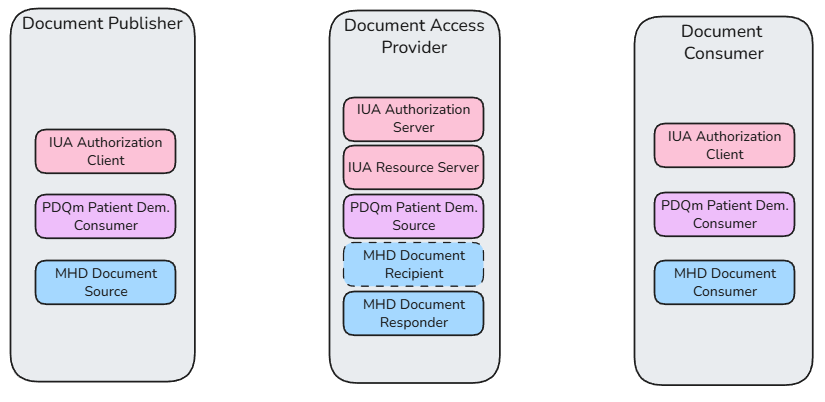
Document Publisher
Document Access Provider
Document Submission Option (when accepting external publication):
Document Consumer
This leads to the following required transactions between these actors:
sequenceDiagram
    participant Publisher as Document Publisher
    participant Provider as Document Access Provider
    participant Consumer as Document Consumer

    Publisher->>Provider: Get Access Token (IUA ITI-71)
    Provider-->>Publisher: access_token
    Publisher->>Provider: Patient Lookup (PDQm ITI-78)
    Provider-->>Publisher: Patient Bundle
    Publisher->>Provider: Simplified Publish (MHD ITI-105)
    Provider-->>Publisher: Response

    Consumer->>Provider: Get Access Token (IUA ITI-71)
    Provider-->>Consumer: access_token
    Consumer->>Provider: Patient Lookup (PDQm ITI-78)
    Provider-->>Consumer: Patient Bundle
    Consumer->>Provider: Find Document References (MHD ITI-67)
    Provider-->>Consumer: DocumentReference Bundle
    Consumer->>Provider: Retrieve Document (MHD ITI-68)
    Provider-->>Consumer: Document Content
See the following functional pages for detailed transaction information:
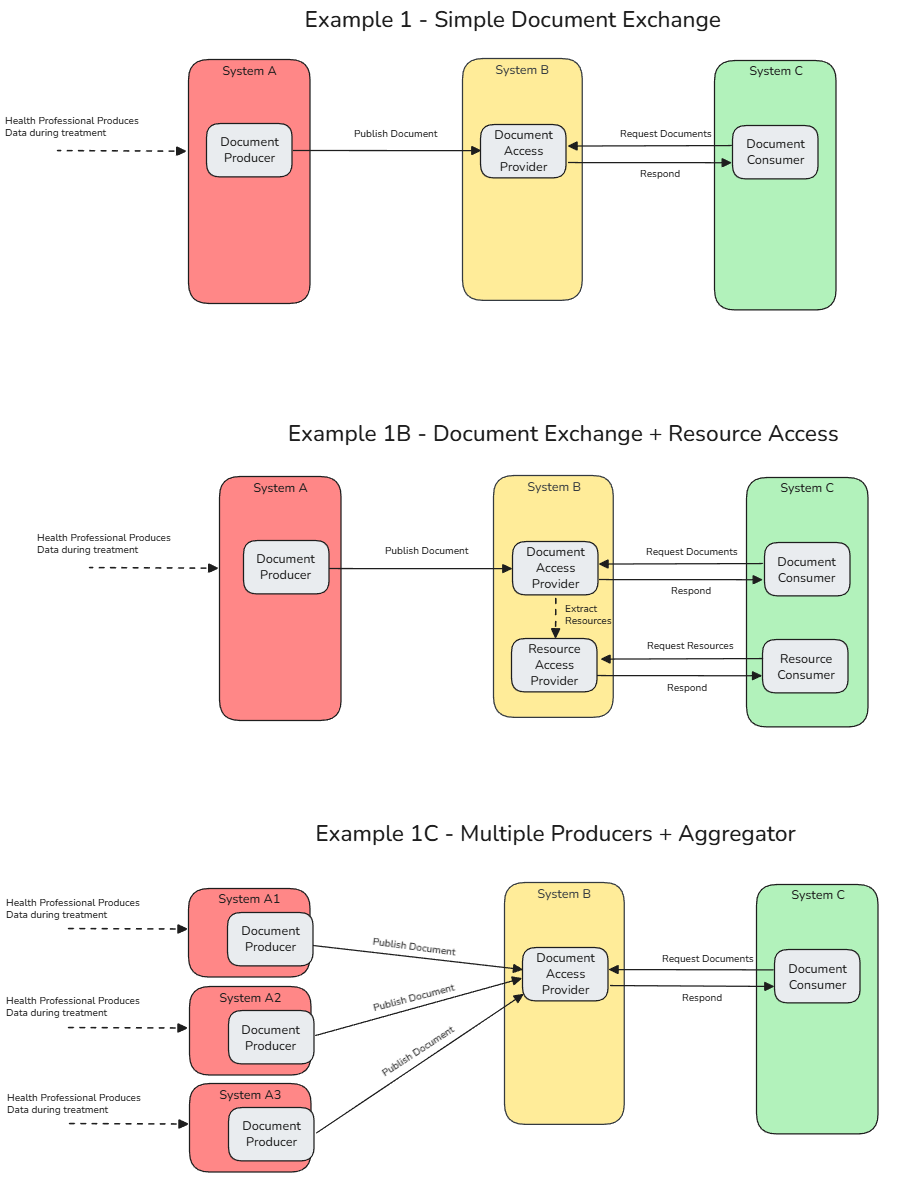
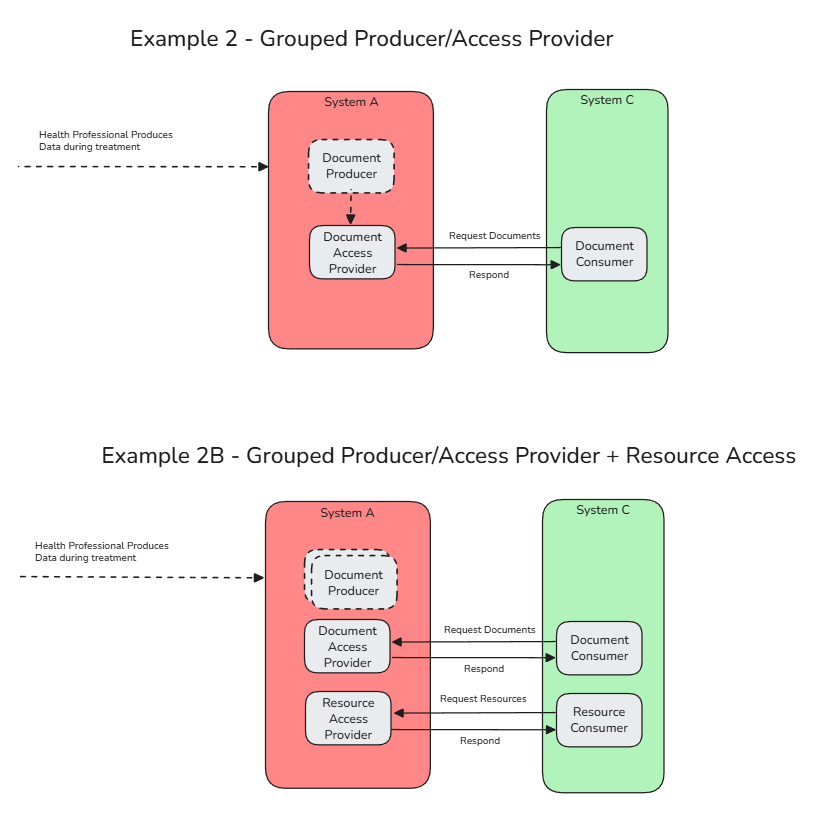
This can be combined with content profiles defined by each EHDS Priority Category, for those categories that are primarily represented as a FHIR Document. For example, a system can be a Lab Result Document Publisher, a Patient Summary Document Consumer, or a Imaging Manifest Document Access Provider.
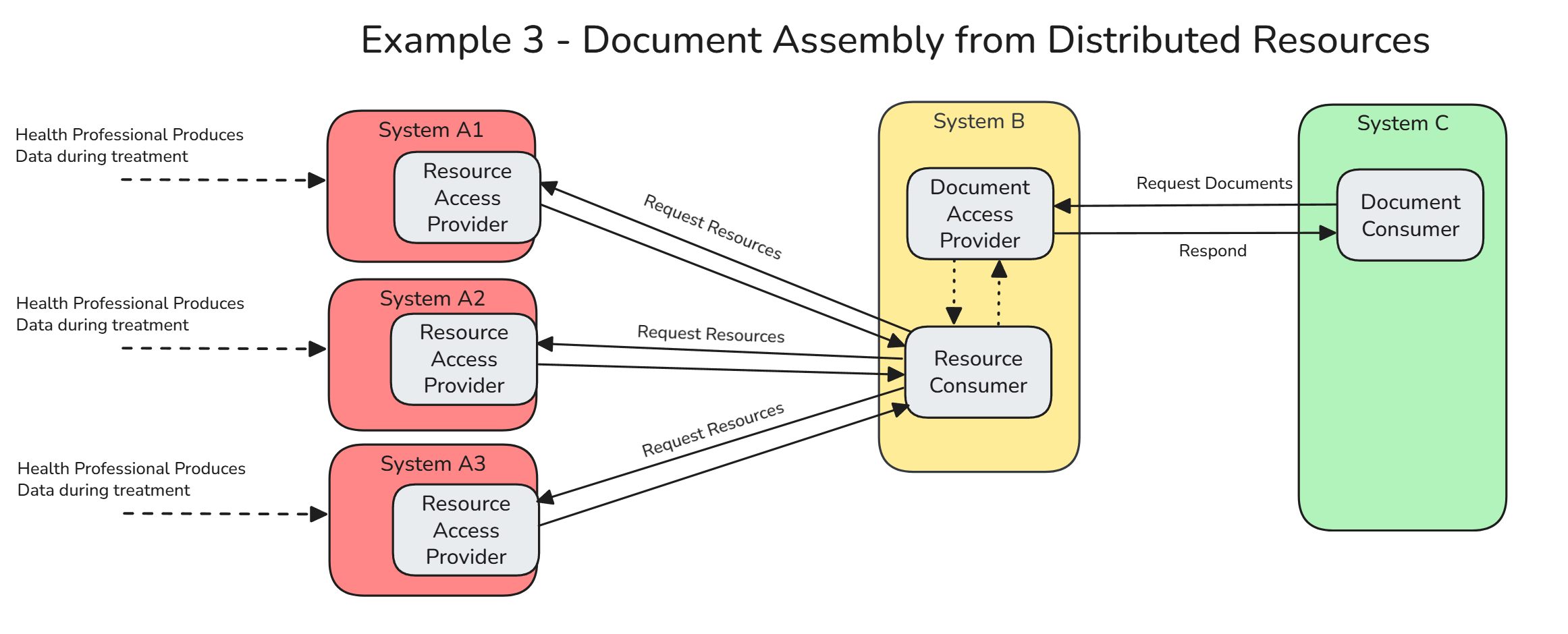
It is also useful in many cases to transact with individual FHIR resources. For this purpose, two resource-based actors are defined:

These composite actors inherit existing actors from the IUA, PDQm, and International Patient Access (IPA) specifications (with QEDm alignment where compatible):
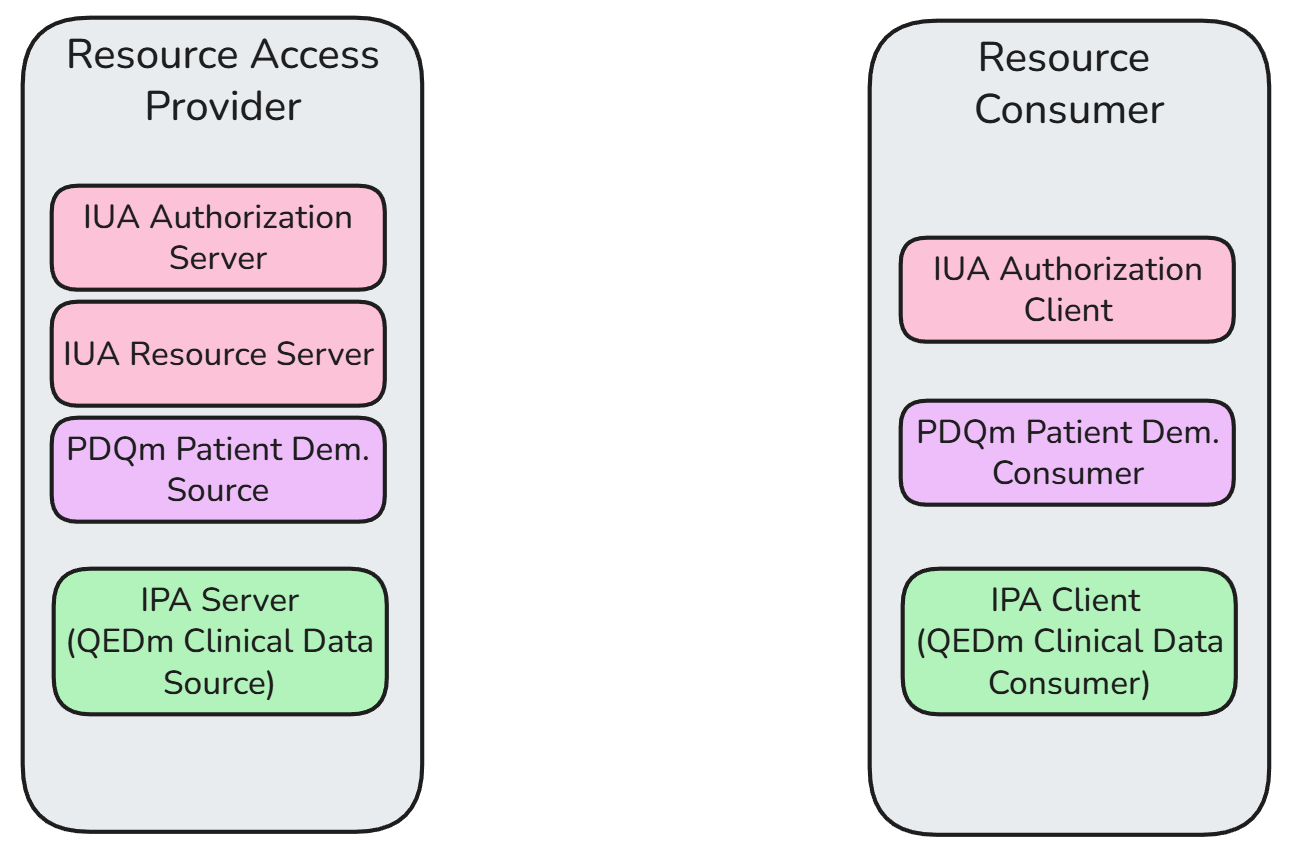
Resource Access Provider
Resource Consumer
This leads to the following required transactions between these actors:
sequenceDiagram
    participant Provider as Resource Access Provider
    participant Consumer as Resource Consumer

    Consumer->>Provider: Get Access Token (IUA ITI-71)
    Provider-->>Consumer: access_token
    Consumer->>Provider: Patient Lookup (PDQm ITI-78)
    Provider-->>Consumer: Patient Bundle
    Consumer->>Provider: Resource Query (IPA)
    Provider-->>Consumer: Resource Bundle
Note: This diagram assumes a bundled Authorization Server. When using external authorization infrastructure (hospital, regional, or national level), the authorization flow differs. See Authorization Server Deployment for details.
IG © 2025+ HL7 Europe.
Package hl7.fhir.eu.health-data-api#1.0.0-ballot based on FHIR 4.0.1.
Generated
2026-10-07

