
Colorado BHA FHIR Implementation Guide
0.3.0-current - ci-build

Colorado BHA FHIR Implementation Guide
0.3.0-current - ci-build
Colorado BHA FHIR Implementation Guide, published by Colorado Behavioral Health Administration. This guide is not an authorized publication; it is the continuous build for version 0.3.0-current built by the FHIR (HL7® FHIR® Standard) CI Build. This version is based on the current content of https://github.com/CoBHA/CoBHRM-FHIR-IG/ and changes regularly. See the Directory of published versions
| Page standards status: Informative |
The covered providers engage with covered clients (Patients) for covered services such as Substance Use Disorder (SUD) treatment and mental health (MH) treatment. There are a variety of events during these engagements that are important to capture and report to BHA, such as client admissions, discharges, and updates to client information. This section describes the key events in the workflow of behavioral health data exchange and the associated reporting requirements to BHA.
The engagements with the clients (Patient) are often long term engagements that span multiple months or years, and there may be multiple episodes (EpisodeOfCare) that occur during the course of the engagement. For example, a client may be admitted to a provider for SUD treatment program (EpisodeOfCare), then later discharged, and then readmitted at a later date due to remission. Each of these episodes (EpisodeOfCare) would need to be captured and reported to BHA according to the specifications in this IG. For any given client (Patient), and any given type of reportable treatment program (EpisodeOfCare), there may be multiple treatment activities (Encounter), and updates that occur over time, and all of these treatment activities (Encounter), if a reportable event happened during the Encounter, would need to be captured and reported to BHA to ensure accurate and comprehensive data collection.
At the top level, the overall engagement of a client (Patient) with a covered provider is not reportable, so is displayed only for illustrative purposes. Within that overall engagement, there may be multiple kinds of reportable "programs" that would recorded as a "program" type EpisodeOfCare, such as a SUD treatment program or a mental health (MH) treatment program. When an a reportable "program" (EpisodeOfCare) starts an Admission QuestionnaireResponse is reported, and when the "program" (EpisodeOfCare) is done a Discharge QuestionnaireResponse is reported. Within each of those "program" type EpisodeOfCare, there may be treatment activities (Encounter) that would be recorded, if they are reportable events, as an Encounter resource. There may also be updates to client information that would be recorded as updates to the relevant FHIR resources (e.g., updates to the Patient resource for demographic information, updates to the Condition resource for diagnosis information, etc.).
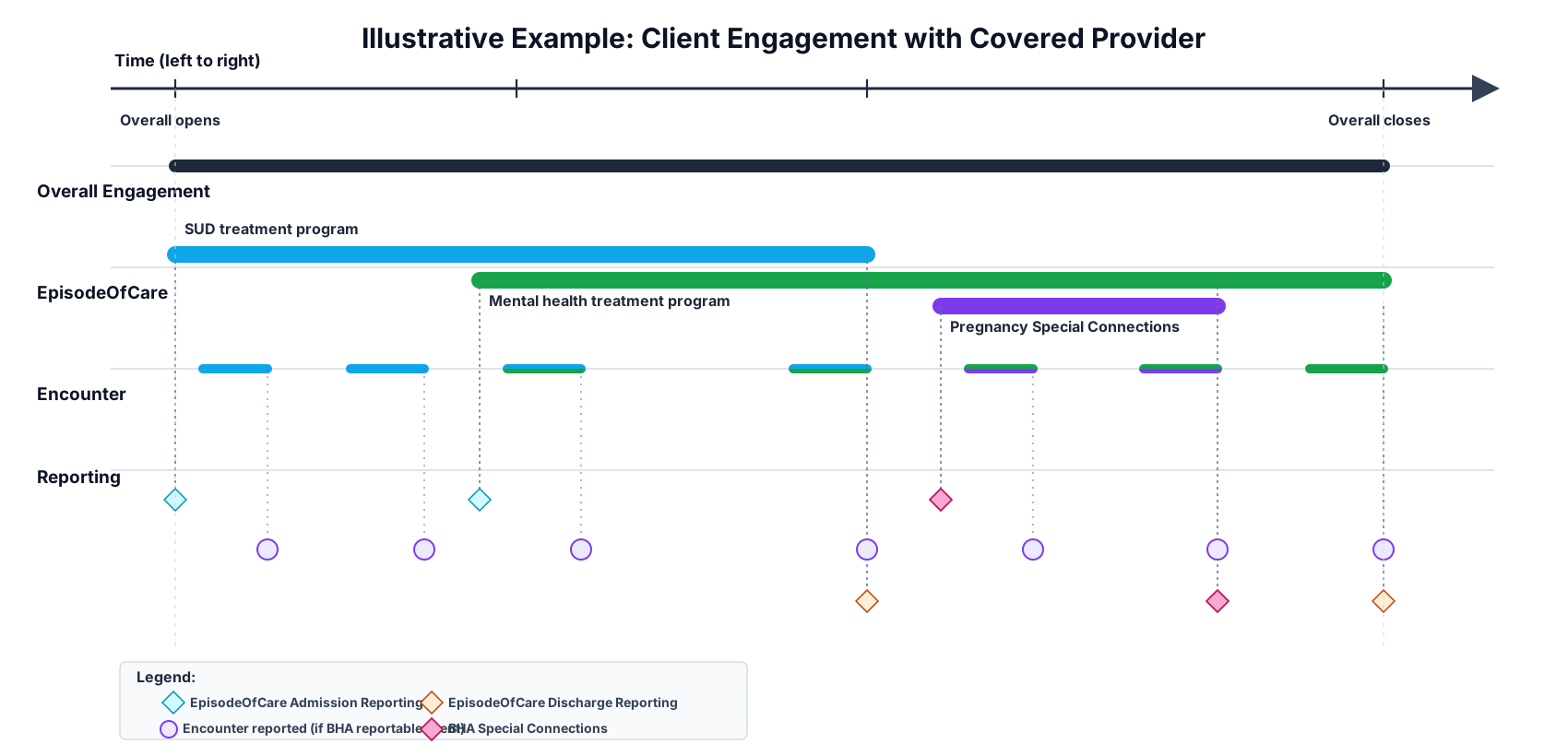
Note: The above illustrative does not include updates. Such as if details in the Client (Patient) demographics change, or diagnosis details are updated. These updates would be captured as updates to the relevant FHIR resources (e.g., Patient resource, Condition resource, etc.) and would also be reported to BHA according to the specifications in this IG.
The covered providers may report to BHA directly or through intermediaries such as Behavioral Health Administrative Service Organizations (BHASOs). The reporting may occur in real-time or in batches, depending on the provider's capabilities and the requirements set by BHA. The following focuses on the reporting of key events such as admissions, discharges, and updates to client information directly to BHA.
The above diagram shows when the key reporting milestones would occur for the different types of events (admissions, discharges, updates to client information, pregnancy status updates, birth updates) in relation to the overall EpisodeOfCare and the program-specific EpisodeOfCare timelines. The specific timing and frequency of reporting to BHA may vary based on the provider's capabilities and the requirements set by BHA, but the diagram illustrates the general workflow and key events that would be captured and reported according to this IG.
These may be reported as they happen, individual reporting events per patient per milestone. However they covered providers may choose to report in batches. Taking all of the events that occur for a given patient within a given time period (e.g., a day, a week, etc.) and reporting them together in a batch to BHA. The specific timing and frequency of reporting to BHA may vary based on the provider's capabilities and the requirements set by BHA, but the key events that would be captured and reported according to this IG would remain consistent regardless of whether the reporting is done in real-time or in batches. This would be done using a FHIR Bundle transaction with all of the relevant resources (e.g., Patient, Encounter, Condition, and QuestionnaireResponse resources).
BHA would process the incoming data and generate OperationOutcome responses to indicate the success or failure of the reporting. If there are any errors in the reported data (e.g., missing required fields, invalid values, etc.), BHA would include details about the errors in the OperationOutcome response so that the covered providers can address the issues and resubmit the data as needed. If the reporting is successful, BHA would acknowledge receipt of the data and may provide additional information or feedback as appropriate based on the content of the reported data.
Sequence Diagram of a Batch Reporting Workflow:
sequenceDiagram
    participant Provider
    participant BHA

    Provider->>BHA: Send Batch Report (FHIR Bundle)
    BHA->>BHA: Process Incoming Data
    alt If Errors in Data
        BHA->>Provider: Return OperationOutcome with Error Details
        Provider->>Provider: Address Issues and Resubmit Data
    else If Reporting Successful
        BHA->>Provider: Return OperationOutcome Acknowledging Receipt
    end
Given the Illustrative Example above. If the whole overall engagement took place in the span of time that falls within a single reporting period (e.g., a week), then the covered provider may choose to report all of the events that occurred during that engagement together in a single batch report to BHA at the end of the reporting period. This batch report would include all of the relevant resources (e.g., Patient, EpisodeOfCare, Encounter, Condition, and QuestionnaireResponse resources) for all of the events that occurred during that overall engagement. BHA would then process the batch report and generate an OperationOutcome response as described above. If there are any errors in the reported data, BHA would include details about the errors in the OperationOutcome response so that the covered providers can address the issues and resubmit the data as needed. If the reporting is successful, BHA would acknowledge receipt of the data and may provide additional information or feedback as appropriate based on the content of the reported data.
More likely the overall engagement happens over a ver long time, and the reporting is triggered multiple times. Common triggers may be at the end of the EpisodeOfCare, or on a weekly basis.
IG © 2025+ Colorado Behavioral Health Administration.
Package us.co.bha-ig#0.3.0-current based on FHIR 4.0.1.
Generated
2026-10-20
Links: Table of Contents |
QA Report
| 