


EU Health Data API
0.1.0 - ci-build
150
EU Health Data API
0.1.0 - ci-build
150
EU Health Data API, published by HL7 Europe. This guide is not an authorized publication; it is the continuous build for version 0.1.0 built by the FHIR (HL7® FHIR® Standard) CI Build. This version is based on the current content of https://github.com/bvdh/jwg-api/ and changes regularly. See the Directory of published versions
| Official URL: http://hl7.eu/fhir/euridice-api/ImplementationGuide/hl7.fhir.eu.euridice-api | Version: 0.1.0 | |||
| Computable Name: EuridiceApiSpecification | ||||
Copyright/Legal: Copyright HL7 Europe. Licensed under Creative Commons public domain (CC0 1.0). |
||||
This IG is under active development. Feedback and issues are tracked on GitHub Issues. This IG is not yet tracked on HL7 Jira. Please join our weekly meetings to participate in this development.
The European Health Data Space (EHDS) regulation describes an obligation for EHR systems to include an Interoperability Component that does the following:
This Implementation Guide:
See Regulatory Anchors page for more detail on the link to the EHDS regulation requirements, and the technical interpretation of those requirements used here.
The intended audiences of this Implementation Guide are:
Manufacturers of EHR systems: EHR vendors looking to develop support for APIs that meet the needs of EHDS should refer to the Functional Requirements for a list of functional specifications EHRs should support.
Architects of national infrastructures: National eHealth agencies looking to understand how to use the capabilities of EHRs required by EHDS to meet the goals of EHDS in their Member States should refer to the Implementation for examples of how the EHR APIs can be used for the EHDS use cases.
We define exchange patterns by inheriting and defining transactions, system actors, and associated capability statements from existing IHE and HL7 specifications:
We define composite actors that inherit and combine actors defined in these existing specifications. See Actors and Transactions for detailed actor definitions, transactions, and actor grouping.
At a high level, the following actors are specified:
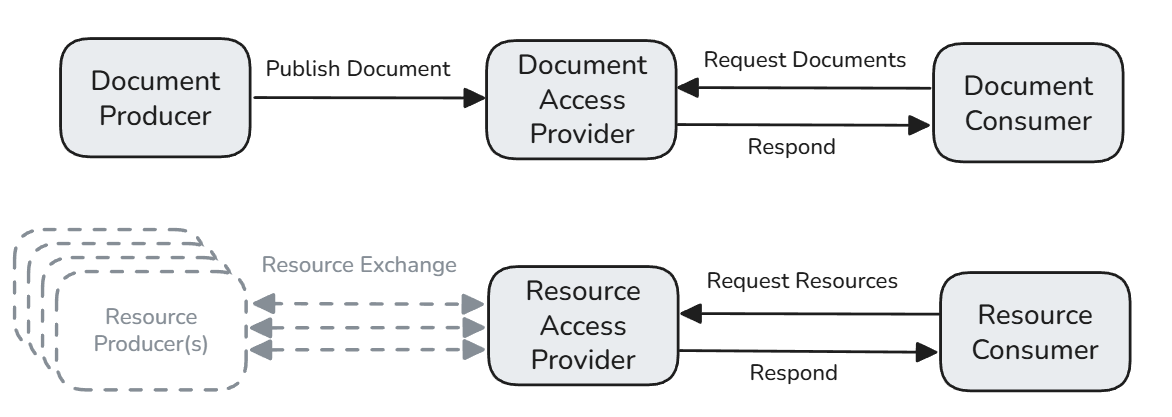
These resource actors are initially scoped for search + read. See Resource Access for detailed discussion and possible approaches for resource exchange patterns.
Josh Priebe, Epic
Bas van den Heuvel, Philips
Giorgio Cangioli, HL7 Europe
dr Kai Heitmann, HL7 Europe
Andreas Klingler, IHE Europe
Katie Reynolds, Epic
Janos Vincze, IHE Europe
IG © 2025+ HL7 Europe.
Package hl7.fhir.eu.euridice-api#0.1.0 based on FHIR 4.0.1.
Generated
2026-01-30

