








This fragment is available on en/index.html
This publication includes IP covered under the following statements.
| Type | Reference | Content |
|---|---|---|
| web | github.com | Clinical Practice Guidelines, published by HL7 International / Clinical Decision Support. This guide is not an authorized publication; it is the continuous build for version 2.0.0 built by the FHIR (HL7® FHIR® Standard) CI Build. This version is based on the current content of https://github.com/HL7/cqf-recommendations/ and changes regularly. See the Directory of published versions |
| web | www.who.int | Personas are the types of participants in the recommendations of a healthcare guideline, including practitioners, patients, nurses, community health workers, and care partners. The personas identified in this code system are defined based on the WHO recommendation for Classifying health workers . This recommendation uses codes from the International Standard Classification for Occupations but defines several additional categories of health workers. In addition, the codes in that recommendation are focused on health workers, so codes for patient and care partner personas need to be considered as well. Where a code from the ISCO exists, it is used. Where a WHO recommended health worker category is used, a code is constructed beginning with a W. Where a code is introduced by this implementation guide, it is constructed beginning with a C. Note that the content is incomplete, pending a computable representation of the WHO recommendations. |
| web | www.ilo.org | Personas are the types of participants in the recommendations of a healthcare guideline, including practitioners, patients, nurses, community health workers, and care partners. The personas identified in this code system are defined based on the WHO recommendation for Classifying health workers . This recommendation uses codes from the International Standard Classification for Occupations but defines several additional categories of health workers. In addition, the codes in that recommendation are focused on health workers, so codes for patient and care partner personas need to be considered as well. Where a code from the ISCO exists, it is used. Where a WHO recommended health worker category is used, a code is constructed beginning with a W. Where a code is introduced by this implementation guide, it is constructed beginning with a C. Note that the content is incomplete, pending a computable representation of the WHO recommendations. |
| web | hl7.me | NLM Forms Library |
| web | hl7.me | NLM Forms Library |
| web | wiki.ihe.net | This is a metadata field from XDS/MHD . |
| web | drive.google.com |
* GIN McMaster Checklist
* IOM Guidance |
| web | journals.lww.com |
* Adapting Clinical Guidelines for the Digital Age
* An Integrated Process for Co-Developing and Implementing Written and Computable Clinical Practice Guidelines * Integrated Process tables: https://stacks.cdc.gov/view/cdc/131006An Evaluation Framework for a Novel Process to Codevelop Written and Computable Guidelines * Evaluation framework tool: https://stacks.cdc.gov/view/cdc/131007 |
| web | www.cochranelibrary.com | Formulate measurable and/or observable clinical questions using the Patient/population, Intervention, Comparison, and Outcomes (PICO) Process |
| web | www.cochranelibrary.com | * Patient/population, Intervention, Comparison, and Outcomes (PICO) Process |
| web | www.gradeworkinggroup.org | Use a consistent GRADE (Grading of Recommendations Assessment, Development and Evaluation) scale that is publicly documented and linked to evidence statementsUse a structured, machine-readable format to consistently declare each recommendation and its GRADE |
| web | jats4r.org |
* JATS4R
* GIN McMaster Checklist * IOM Guidance * EBMonFHIR - Clinical Decision Support - Confluence (hl7.org) * Agency for Healthcare Research and Quality (AHRQ) Systematic Review Data Repository (SRDR+) |
| web | drive.google.com |
* JATS4R
* GIN McMaster Checklist * IOM Guidance * EBMonFHIR - Clinical Decision Support - Confluence (hl7.org) * Agency for Healthcare Research and Quality (AHRQ) Systematic Review Data Repository (SRDR+) |
| web | docs.google.com | Use the evidence-based structure and requirements for guidelines related systematic reviews, evidence reports, and supplementary data and materials . |
| web | goodwin.libguides.com |
* https://goodwin.libguides.com/c.php?g=309484\&p=2066254
] * United States Core Data for Interoperability (USCDI) | Interoperability Standards Advisory (ISA) (healthit.gov) * Value Set Authority Center (nih.gov) Additional Resources for International Community: * InternationalPatientSummaryIG (hl7.org) * International Classification of Health Interventions (ICHI) (who.int) * CDS Authoring Tool (ahrq.gov) * FHIR Clinical Guidelines (v0.2.0) (Current) (hl7.org) * FFT Decision Tree Example |
| web | www.who.int |
* https://goodwin.libguides.com/c.php?g=309484\&p=2066254
] * United States Core Data for Interoperability (USCDI) | Interoperability Standards Advisory (ISA) (healthit.gov) * Value Set Authority Center (nih.gov) Additional Resources for International Community: * InternationalPatientSummaryIG (hl7.org) * International Classification of Health Interventions (ICHI) (who.int) * CDS Authoring Tool (ahrq.gov) * FHIR Clinical Guidelines (v0.2.0) (Current) (hl7.org) * FFT Decision Tree Example |
| web | semver.org | Guideline developers should have a clear versioning policy for all updates to their evidence and guidance following common version algorithms while taking into consideration the level of incorporated changes Major, Minor, and Patch .Maintain an open, transparent, and continually learning and updated system based on the latest set of evidence available. |
| web | semver.org |
* https://semver.org/
* https://www.hl7.org/fhir/valueset-version-algorithm.html |
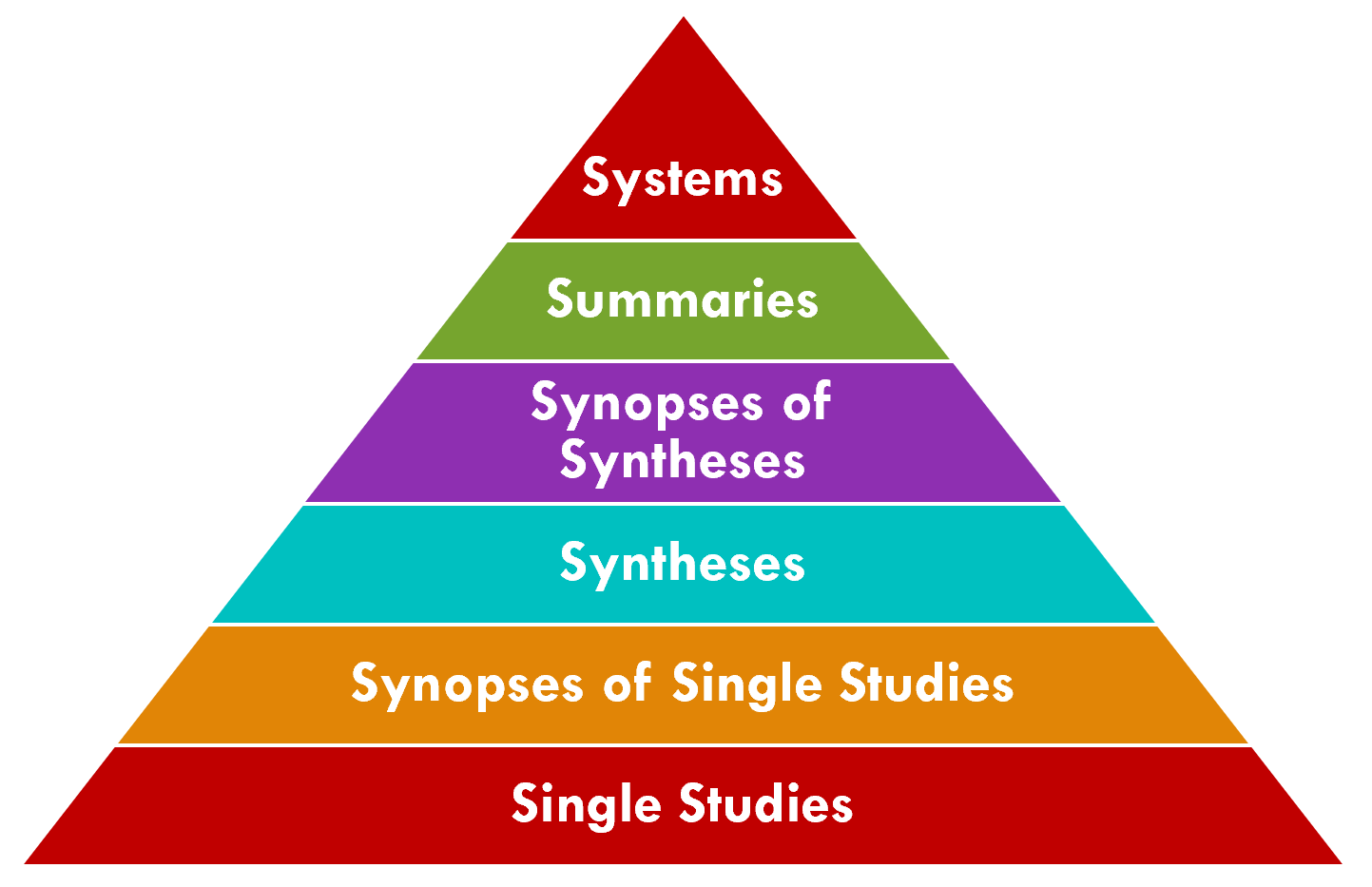
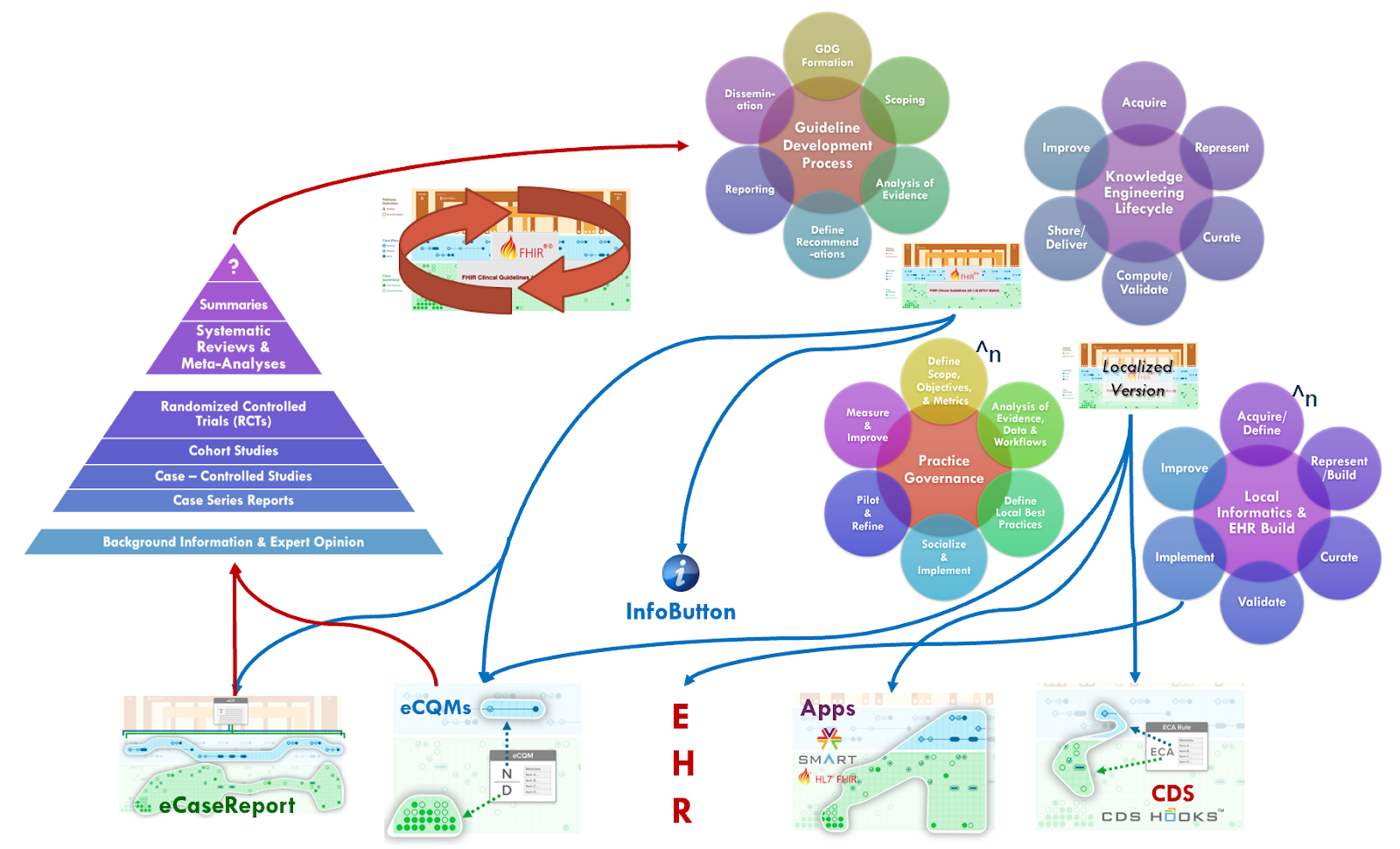
| web | hslmcmaster.libguides.com | The CPG has the potential to address the "systems" level (i.e., peak of the pyramid), which is described as: “Integrating information from the lower levels of the hierarchy with individual patient records, systems represent the ideal source of evidence for clinical decision-making.” ( ref ). The CPG affords the ability to directly insert guideline recommendations into electronic health records (EHRs) and clinical information systems based on reasoning over real-world, patient-specific clinical data to be considered directly in the context of clinical and shared decision-making. |
| web | cebgrade.mcmaster.ca | There is a significant amount of information contained within the various evidence sources. Different types of evidence may also contain different types of information, yet much of this information is similar, related, and/or overlapping. There are numerous approaches and tools in the evidence ecosystem (evidence-based practice and knowledge synthesis communities of practice) for abstracting, decomposing, structuring, organizing, and evaluating the information contained within the evidence sources. This information is then used to summarize and synthesize derivative knowledge, often through systematic review and meta-analysis. These methodologies are beyond the scope of this document, but more detailed resources may found from these communities of practice ( https://cebgrade.mcmaster.ca/guidelinechecklistonline.html#Summarizingtable ). PICOTS as described above is one systematic means of extracting information from the evidence that may be particularly useful in the CPG. |
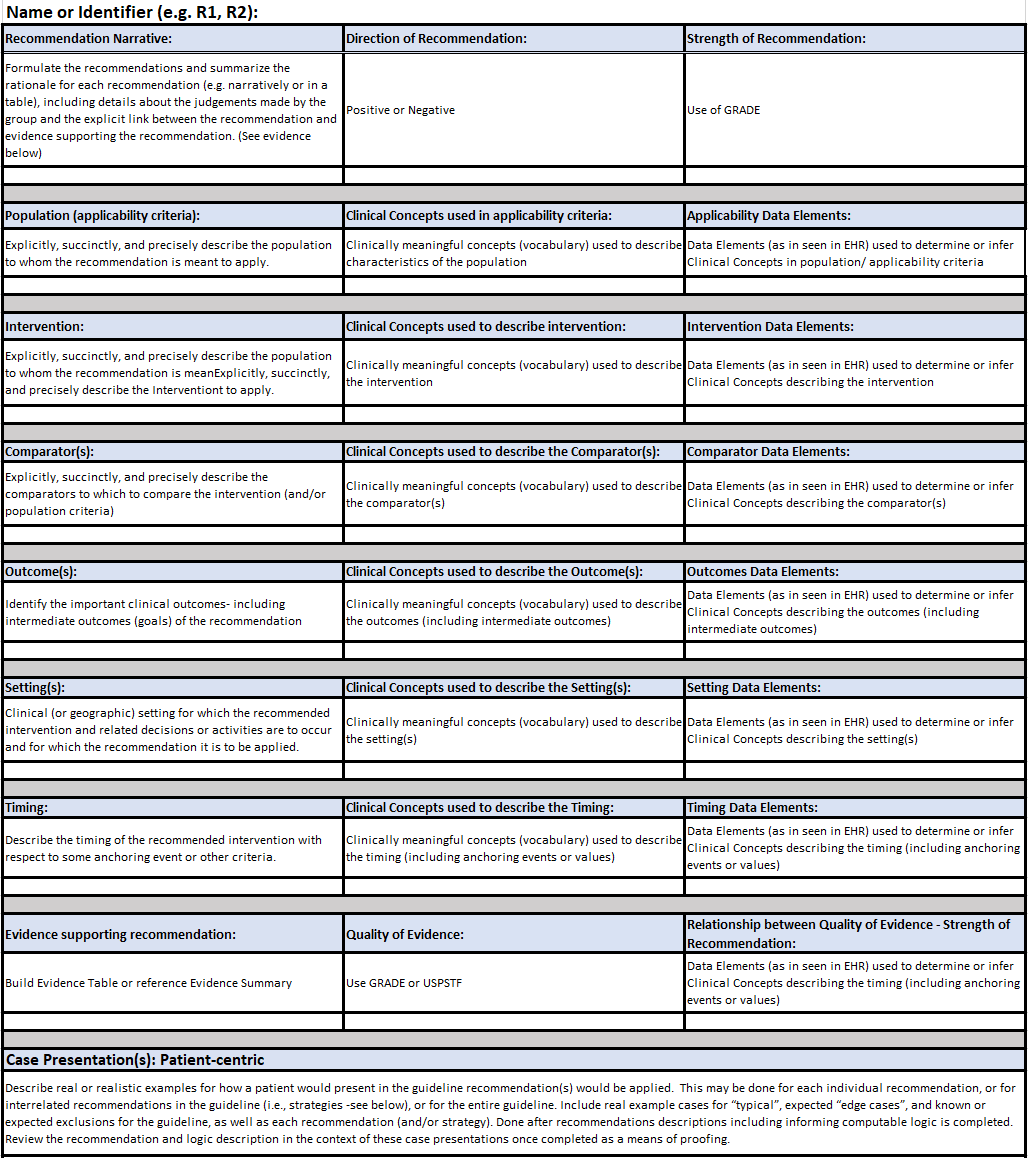
| web | cebgrade.mcmaster.ca | Recommendations are proposals pertaining to the best course of action put forth by an authoritative source or body related to a condition, procedure, clinical decision, or activity. They are often expressed as summary tables with a column for succinct, clear, and specific narrative descriptions of the recommendation as well as additional columns for the directionality of the recommendation (to do or not do an activity), strength, and quality of evidence for each recommendation. They may further include additional visual aids such as decision trees and/or flow diagrams. Often, they also call out portions of a recommendation and/or how the recommendations hang together that lack evidence and may have relied on expert consensus. Closely correlated to the recommendations are supplemental information on how the recommendation was determined and the evidence for each recommendation. This often includes evidence summaries, evidence-to-recommendation tables, and narrative discussion for how the guideline development group arrived at their decisions/recommendations. ( https://cebgrade.mcmaster.ca/guidelinechecklistonline.html#Developingtable ; https://cebgrade.mcmaster.ca/guidelinechecklistonline.html#Wordingtable ) |
| web | cebgrade.mcmaster.ca | Recommendations are proposals pertaining to the best course of action put forth by an authoritative source or body related to a condition, procedure, clinical decision, or activity. They are often expressed as summary tables with a column for succinct, clear, and specific narrative descriptions of the recommendation as well as additional columns for the directionality of the recommendation (to do or not do an activity), strength, and quality of evidence for each recommendation. They may further include additional visual aids such as decision trees and/or flow diagrams. Often, they also call out portions of a recommendation and/or how the recommendations hang together that lack evidence and may have relied on expert consensus. Closely correlated to the recommendations are supplemental information on how the recommendation was determined and the evidence for each recommendation. This often includes evidence summaries, evidence-to-recommendation tables, and narrative discussion for how the guideline development group arrived at their decisions/recommendations. ( https://cebgrade.mcmaster.ca/guidelinechecklistonline.html#Developingtable ; https://cebgrade.mcmaster.ca/guidelinechecklistonline.html#Wordingtable ) |
| web | cebgrade.mcmaster.ca | ( https://cebgrade.mcmaster.ca/guidelinechecklistonline.html#Reportingtable ; https://cebgrade.mcmaster.ca/guidelinechecklistonline.html#Disseminationtable ). |
| web | cebgrade.mcmaster.ca | ( https://cebgrade.mcmaster.ca/guidelinechecklistonline.html#Reportingtable ; https://cebgrade.mcmaster.ca/guidelinechecklistonline.html#Disseminationtable ). |
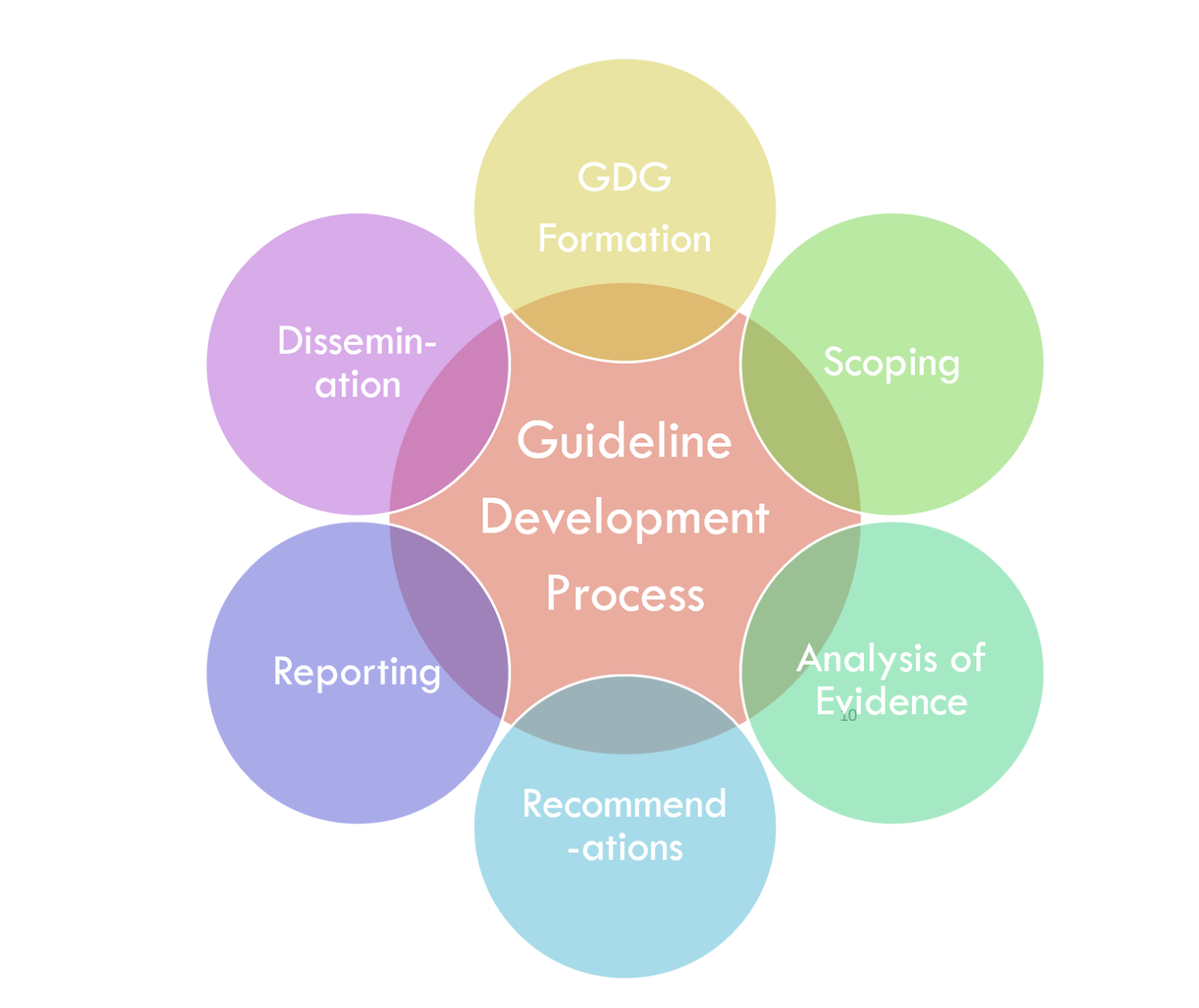
| web | cebgrade.mcmaster.ca | Clinical practice guidelines are systematically developed statements to assist clinical practitioner and patient decisions about appropriate care for specific clinical conditions, procedures, and/or similarly scoped activities. Guidelines consist of recommendations for patient care, which are based on scientific research and data (evidence), vetted through rigorous processes of a review and synthesis by recognized domain and methodological experts and other key stakeholders (e.g. patient and caregiver advocates) to guide healthcare decisions and activities for defined scope. A guideline may consist of one or more recommendations, contextualizing information, the possible means or strategies for bringing together or orchestrating recommendations, and other relevant considerations. A recommendation is a proposal pertaining to the best course of action put forth by an authoritative source or body (e.g. governmental or professional society convened guideline development group). More detailed descriptions of and best practices for the guideline development process may be found at numerous publicly available resources (e.g., https://www.ncbi.nlm.nih.gov/books/NBK209539/pdf/Bookshelf_NBK209539.pdf ; https://cebgrade.mcmaster.ca/guidelinechecklistonline.html ; https://doi.org/10.7326/0003-4819-153-3-201008030-00010 ; https://www.nccih.nih.gov/health/providers/clinicalpractice ) and are beyond the scope of this document, though a few key concepts will be covered. |
| web | doi.org | Clinical practice guidelines are systematically developed statements to assist clinical practitioner and patient decisions about appropriate care for specific clinical conditions, procedures, and/or similarly scoped activities. Guidelines consist of recommendations for patient care, which are based on scientific research and data (evidence), vetted through rigorous processes of a review and synthesis by recognized domain and methodological experts and other key stakeholders (e.g. patient and caregiver advocates) to guide healthcare decisions and activities for defined scope. A guideline may consist of one or more recommendations, contextualizing information, the possible means or strategies for bringing together or orchestrating recommendations, and other relevant considerations. A recommendation is a proposal pertaining to the best course of action put forth by an authoritative source or body (e.g. governmental or professional society convened guideline development group). More detailed descriptions of and best practices for the guideline development process may be found at numerous publicly available resources (e.g., https://www.ncbi.nlm.nih.gov/books/NBK209539/pdf/Bookshelf_NBK209539.pdf ; https://cebgrade.mcmaster.ca/guidelinechecklistonline.html ; https://doi.org/10.7326/0003-4819-153-3-201008030-00010 ; https://www.nccih.nih.gov/health/providers/clinicalpractice ) and are beyond the scope of this document, though a few key concepts will be covered. |
| web | cebgrade.mcmaster.ca | The guideline development group is the multi-stakeholder, cross-functional team assembled to develop the guideline. It often includes members from the target audience (specialist and primary care clinicians), content experts, patients and caregivers, front-line clinicians, evidence-based practice experts, outcomes and quality experts, usability experts, experts in medical and shared decision-making, methodology experts, and experts in health economics. ( https://cebgrade.mcmaster.ca/guidelinechecklistonline.html#GuidelineGroupMembershiptable ). |
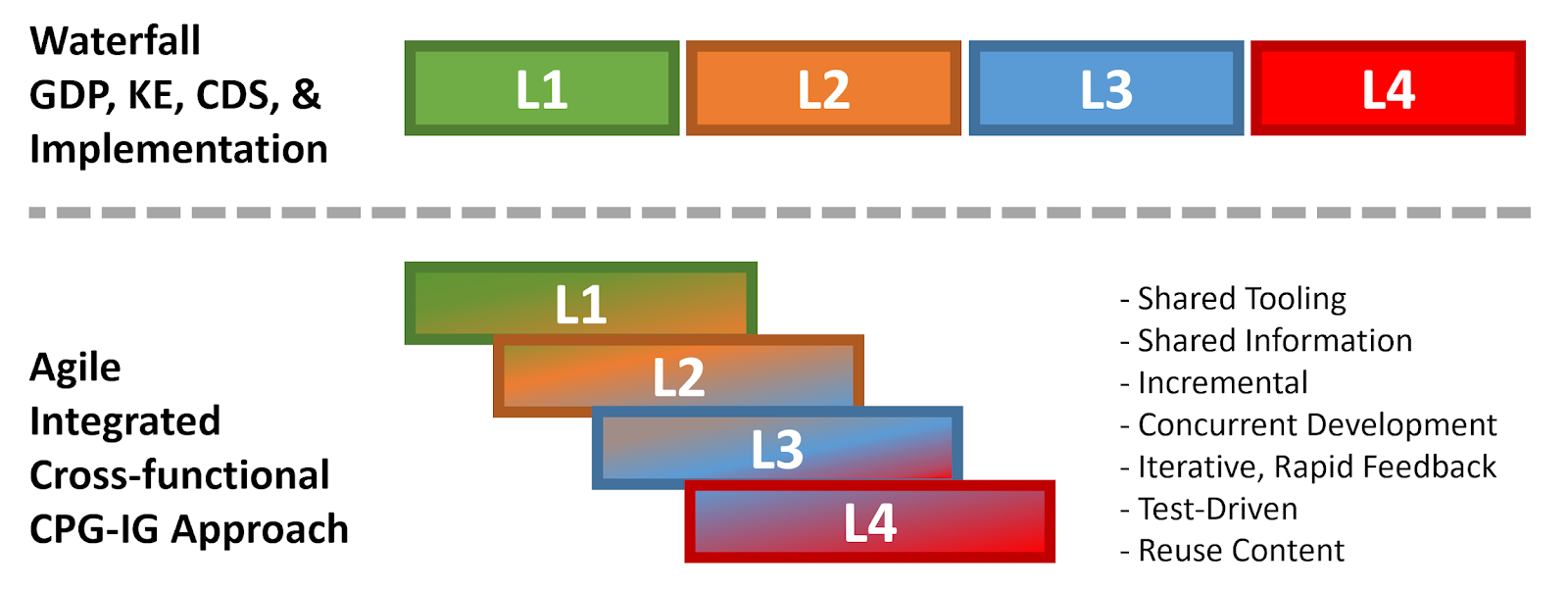
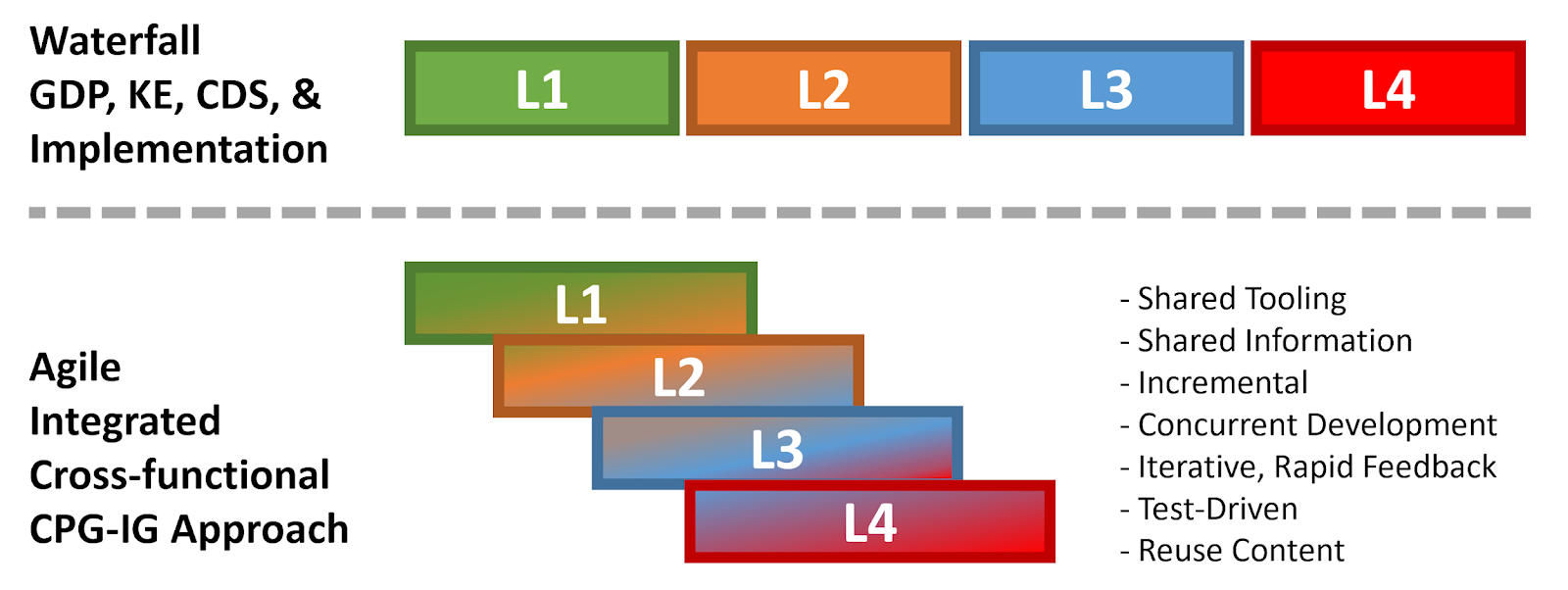
| web | www.amia.org | For the digital CPG, we will need to add a few more experts to the guideline development group or have a few key resources serve cross-functional roles with a Knowledge engineering team (see section on “Knowledge Engineering”). These may include experts in creating computable representations of the guideline such as: knowledge extraction and/or elicitation, terminologists and/or ontologists, clinical research informatics ( ref ), clinical informatics, clinical decision support, cognitive informatics, knowledge formalism and expression, measurement science and measure development, user experience (UX), and user-centered design. These experts often start with a “paper” or narrative guideline but will likely produce much higher fidelity, accurate, and usable expressions of the guideline through a more “agile” approach to concurrent, integrated, and cross-functional approach to guideline development and knowledge engineering. |
| web | cebgrade.mcmaster.ca | Scoping refers to the process and establishment of criteria to describe and constrain the focus of the guideline. It addresses who is the target user of the guideline, who it applies to, and what is addressed in the guideline. This is typically based on various factors, including high prevalence and burden of disease, avoidable mortality and morbidity, high cost, emerging diseases or emerging care options, variation in clinical practice, and rapidly changing evidence. The PICOTS Typology (i.e., population, intervention, comparison, outcome, timeframe) is often used in scoping and correlates closely to the eligibility criteria for the CPG ( https://cebgrade.mcmaster.ca/guidelinechecklistonline.html#Prioritytable ). |
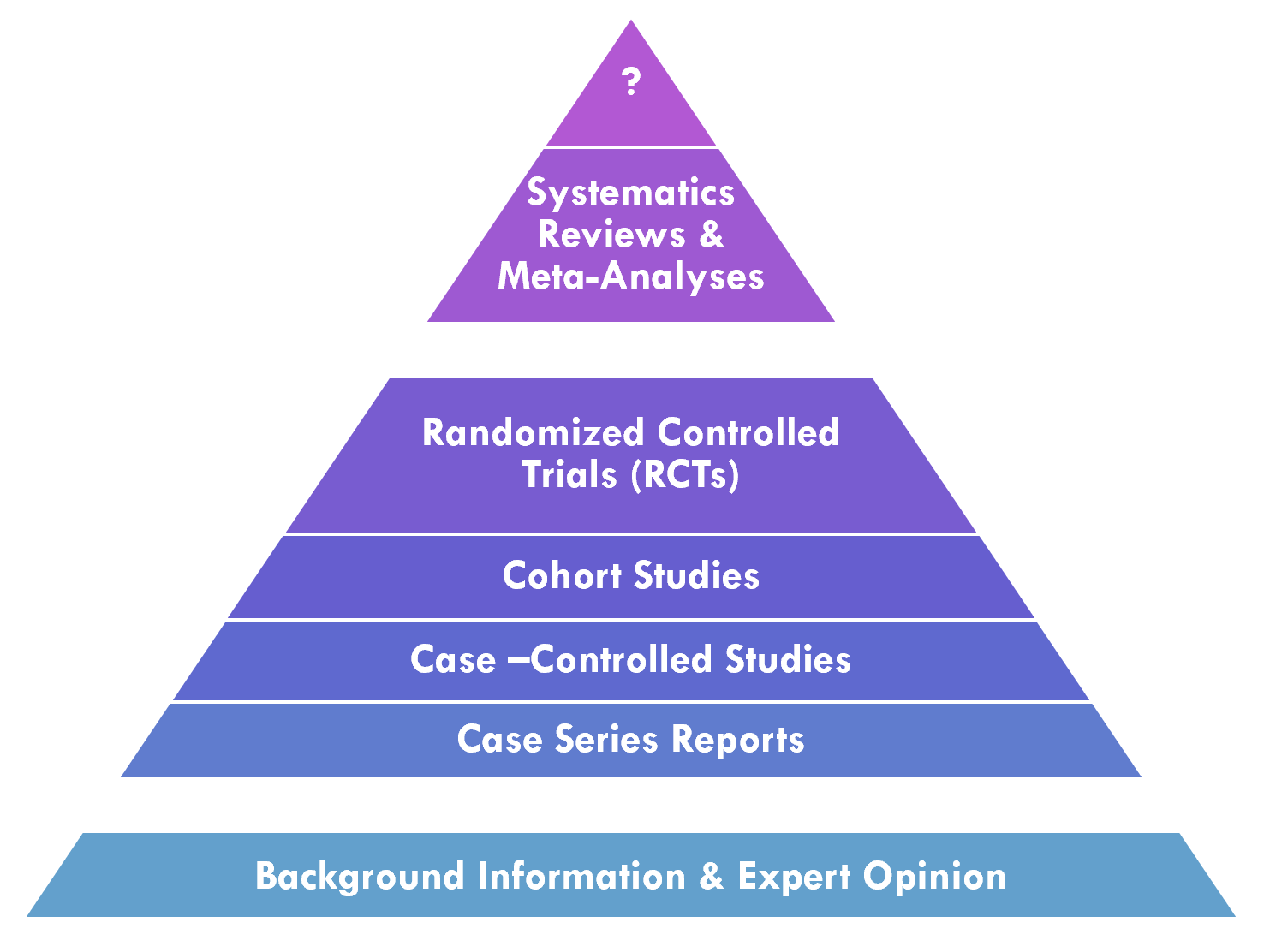
| web | doi.org | The 6S Evidence Pyramid is another framing on the quality or validity of the evidence that may be of particular interest to the CPG-IG (implementation guide) ( ref ). The highest level is Systems where information from the lower levels of the hierarchy are integrated with individual patient records (e.g., CPG content delivered into clinical workflow using real-world evidence with patient data) |
| web | protege.stanford.edu | Knowledge authoring is the process by which a domain expert directly expresses their tacit knowledge into more formalized representations of this knowledge. This is often done using tools such as editors that facilitate the knowledge translation process through business logic affordances and constraints) in the tooling that provide mappings from domain concepts (e.g., expert mental models) to knowledge representations derived from knowledge asset meta-models defined by knowledge architects as well as pre-existing content from an established knowledge bases (e.g., ontologies and terminologies). The use of description logic and editors (e.g. Protege ) to create a domain ontology for a CPG is one such example. Another may be the modification of the CDS Connect Authoring tool for ECA Rules that fit the CPG profiles (e.g. CPGRecommendations, CPGStrategies, and CPGPathways). Authoring tools enable a subject matter knowledge engineer to perform much of the knowledge translation activities, though some understanding of the target expression language is nearly requisite. |
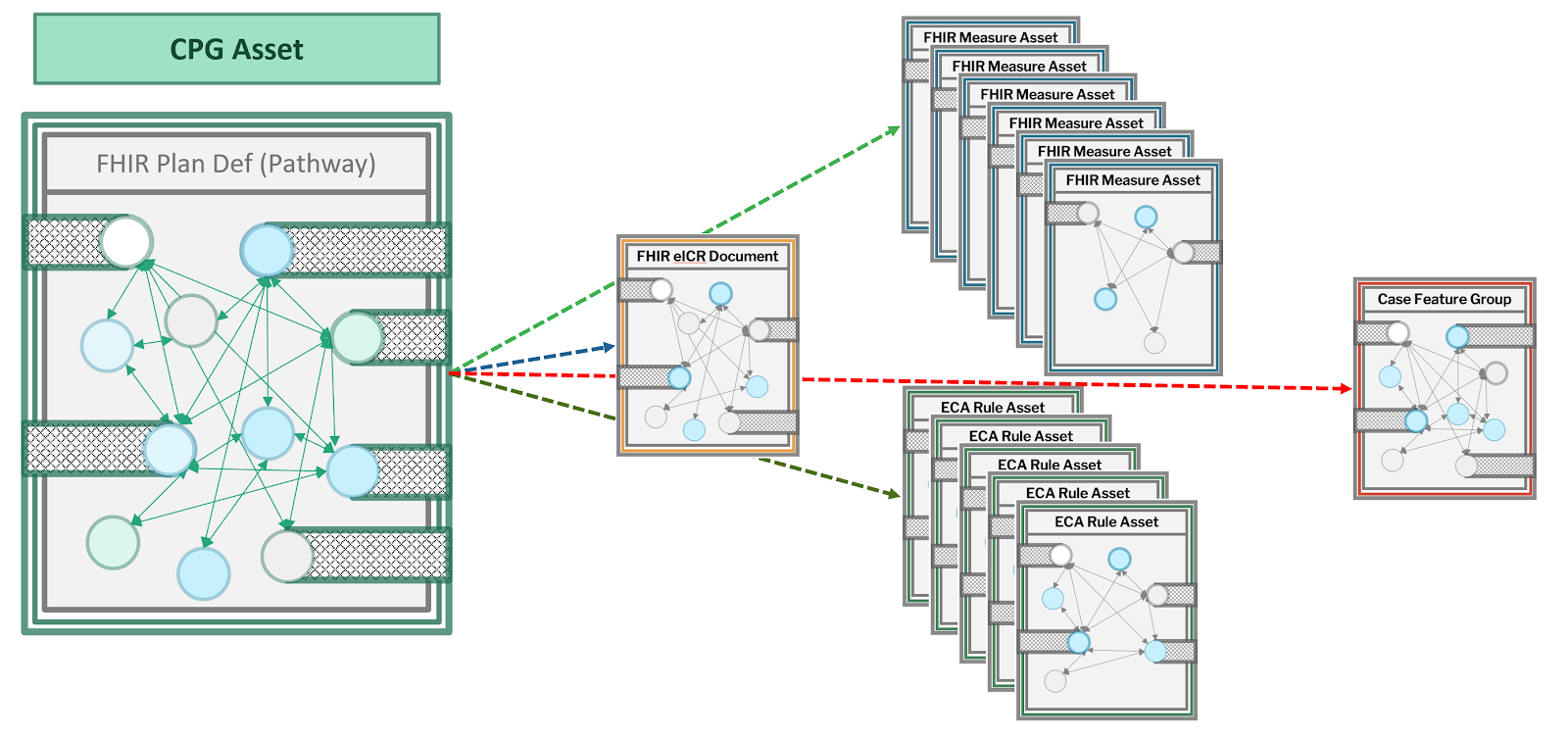
| web | blog.ncqa.org | Using the CPG approach and the, and its knowledge architecture components, such as Case Features and eCaseReport, may afford new opportunities to leverage Knowledge Discovery across the full guideline lifecycle. This may include improved logic for determining Case Features, probabilistic models for Case Features to be used in decision logic, and even discovering new Case Features (e.g. risk and severity scores, more and more precise descriptions of disease and/or clinicopathological states, new or improved data inputs for Case Features). The use of NLP in clinical settings is another emerging approach for Case Feature extraction where critical patient-level information is only, or nearly only available in clinical narratives. NLP mentions, concepts, or other features (or any other knowledge discovery method for that matter), may be further included as data inputs for expression logic for Case Features. This is currently being done for quality measures ( ref ), has an expression language related to CQL ( ClarityNLP ) for clinical phenotyping, and is on the near-term roadmap as a built-in feature for CQL. |
| web | claritynlp.readthedocs.io | Using the CPG approach and the, and its knowledge architecture components, such as Case Features and eCaseReport, may afford new opportunities to leverage Knowledge Discovery across the full guideline lifecycle. This may include improved logic for determining Case Features, probabilistic models for Case Features to be used in decision logic, and even discovering new Case Features (e.g. risk and severity scores, more and more precise descriptions of disease and/or clinicopathological states, new or improved data inputs for Case Features). The use of NLP in clinical settings is another emerging approach for Case Feature extraction where critical patient-level information is only, or nearly only available in clinical narratives. NLP mentions, concepts, or other features (or any other knowledge discovery method for that matter), may be further included as data inputs for expression logic for Case Features. This is currently being done for quality measures ( ref ), has an expression language related to CQL ( ClarityNLP ) for clinical phenotyping, and is on the near-term roadmap as a built-in feature for CQL. |
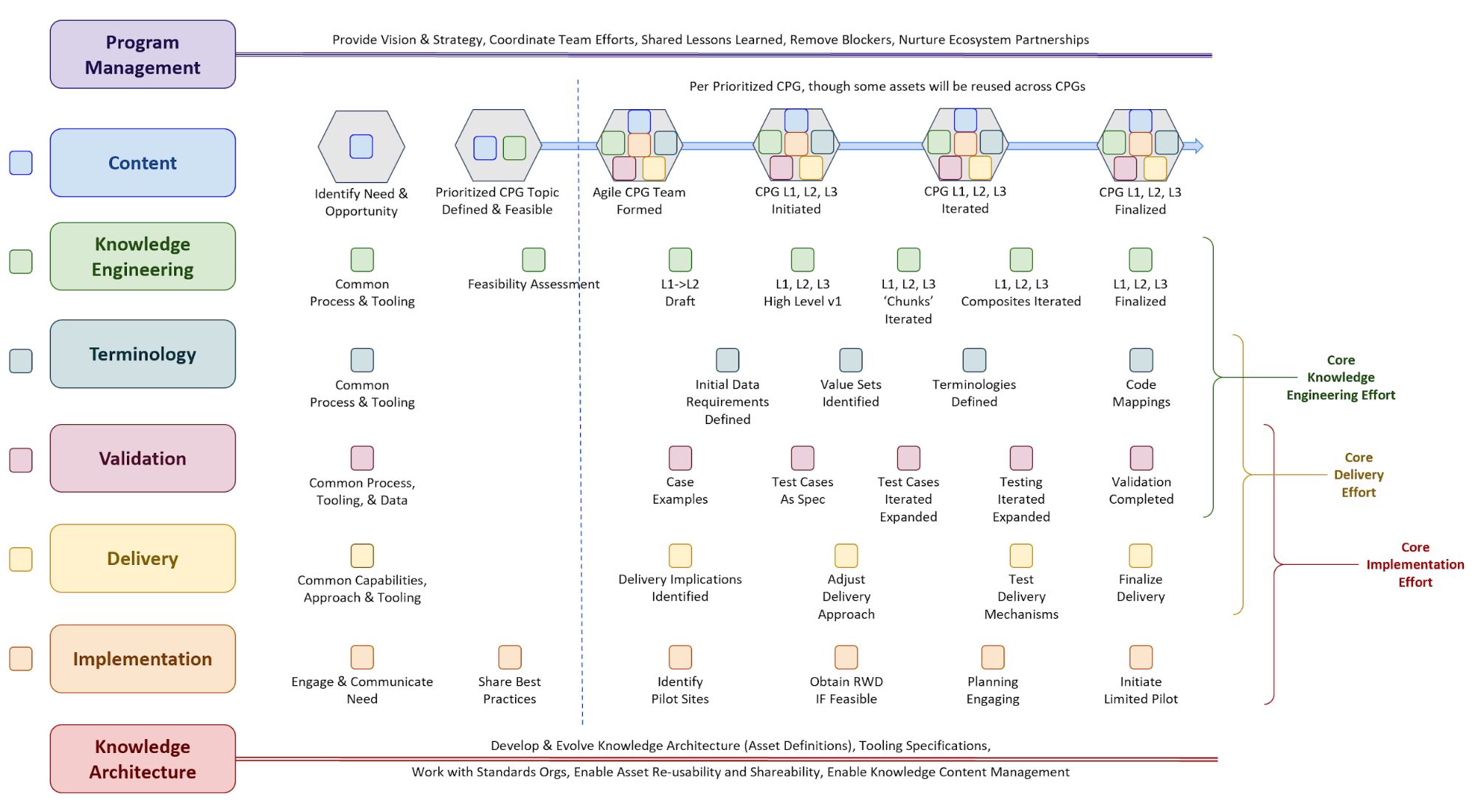
| web | domainlanguage.com | An Agile approach affords numerous, significant benefits for the knowledge engineering lifecycle, particularly in the context of CPG development. Many, if not most, Agile principles from software development can be applied to knowledge engineering, however, the fundamental principles as well as best practices of knowledge-driven systems and knowledge engineering must be adhered to as well. For instance, the knowledge architecture (the definitions of relationships between knowledge assets as manifested in the knowledge base) and knowledge representation requirements in constraints must be respected. In fact, the knowledge architecture and knowledge representations of afford a critical Agile practice- Domain-driven design ( ref ) and even take it further using well established knowledge-based approaches in the broad, deep, and complex healthcare domain. The knowledge-driven system approach further enables numerous other Agile best practices as described in part below. |
| web | www.ontotext.com | More advanced knowledge content management systems may retain related data assets (e.g refined gold standard data sets as used in validation) together with their explicit linkages (e.g. provenance) to each other data assets as well as to their respective knowledge assets. This further enables various machine learning approaches and capabilities to be employed within the knowledge content management system (against linked knowledge and data assets including terminologies and ontologies described above) to further aid in the discovery of related, like, and/or conflicting knowledge assets to further accelerate the knowledge engineering processes. In the context of an integrated or concurrent CPG development and implementation approach (as described in the sections on Knowledge Implementation and Test-driven Knowledge Engineering), the use of real-world data, as previously described, may be leveraged in a similar or even more advanced manner (for example as a knowledge graph ). Such an example would be to use machine learning capabilities within the context of the knowledge base and its related assets to discover and suggest new CPGCaseFeatures to the knowledge engineer. Many of these advanced features may be used not only at ‘author-time’ (asset development), but also at ‘run-time’ (note: HL-7 Definitional Assets and even CQL affords a means to call referenced external services). |
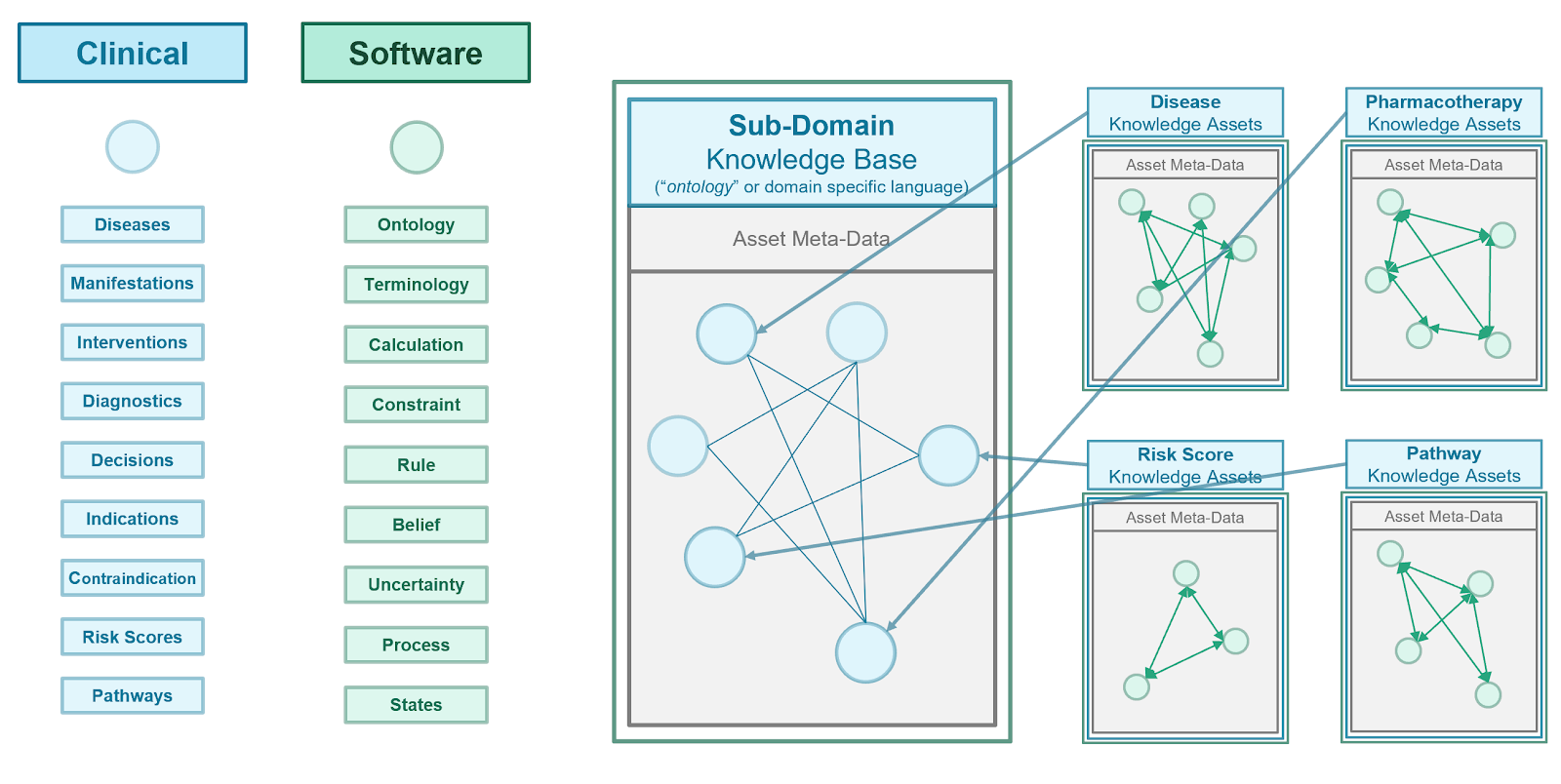
| web | precisionmedicine.duke.edu | To ensure integrity across all knowledge assets in a knowledge content management system, an asset’s definition (metamodel) often references a common, shared asset metadata meta-model (definition of the metadata that may or must be used across all assets in a common knowledge base). Additional information about and approaches to metadata are described by the Mobilizing Computable Biomedical Knowledge (MCBK) ( ref , ref ) and OMG (ref) |
| web | deepblue.lib.umich.edu | To ensure integrity across all knowledge assets in a knowledge content management system, an asset’s definition (metamodel) often references a common, shared asset metadata meta-model (definition of the metadata that may or must be used across all assets in a common knowledge base). Additional information about and approaches to metadata are described by the Mobilizing Computable Biomedical Knowledge (MCBK) ( ref , ref ) and OMG (ref) |
| web | www.openinfobutton.org | Infobuttons facilitate contextually querying resources such as a library containing clinical practice guideline recommendations from within clinical information systems at the point-of-need (e.g., EHRs). In other words, “Infobuttons” are context-sensitive links embedded in EHR systems. They use information about the patient, user, clinical setting, and EHR task to anticipate clinicians' information needs and provide links to online clinical resources that may meet these information needs.” Infobuttons provide a means for a healthcare professional to leverage a subset of the identified patient-level information to perform a facilitated search from within the patient record. |
| web | www.openinfobutton.org | More on the standard and HL7 Infobutton product and the OpenInfoButton Project is available elsewhere. |
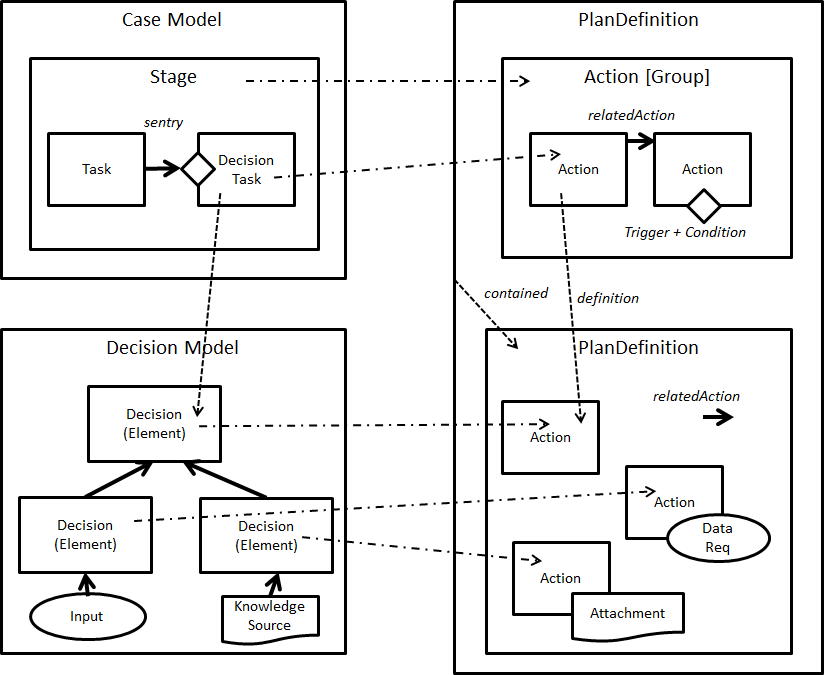
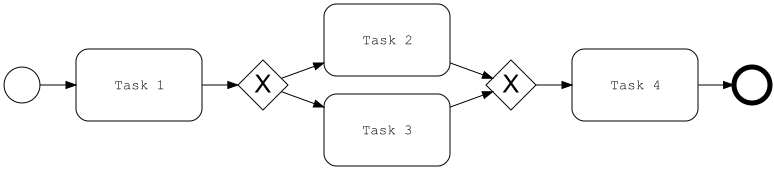
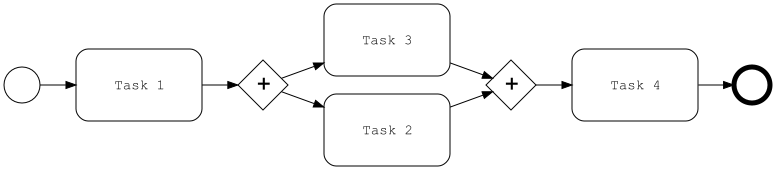
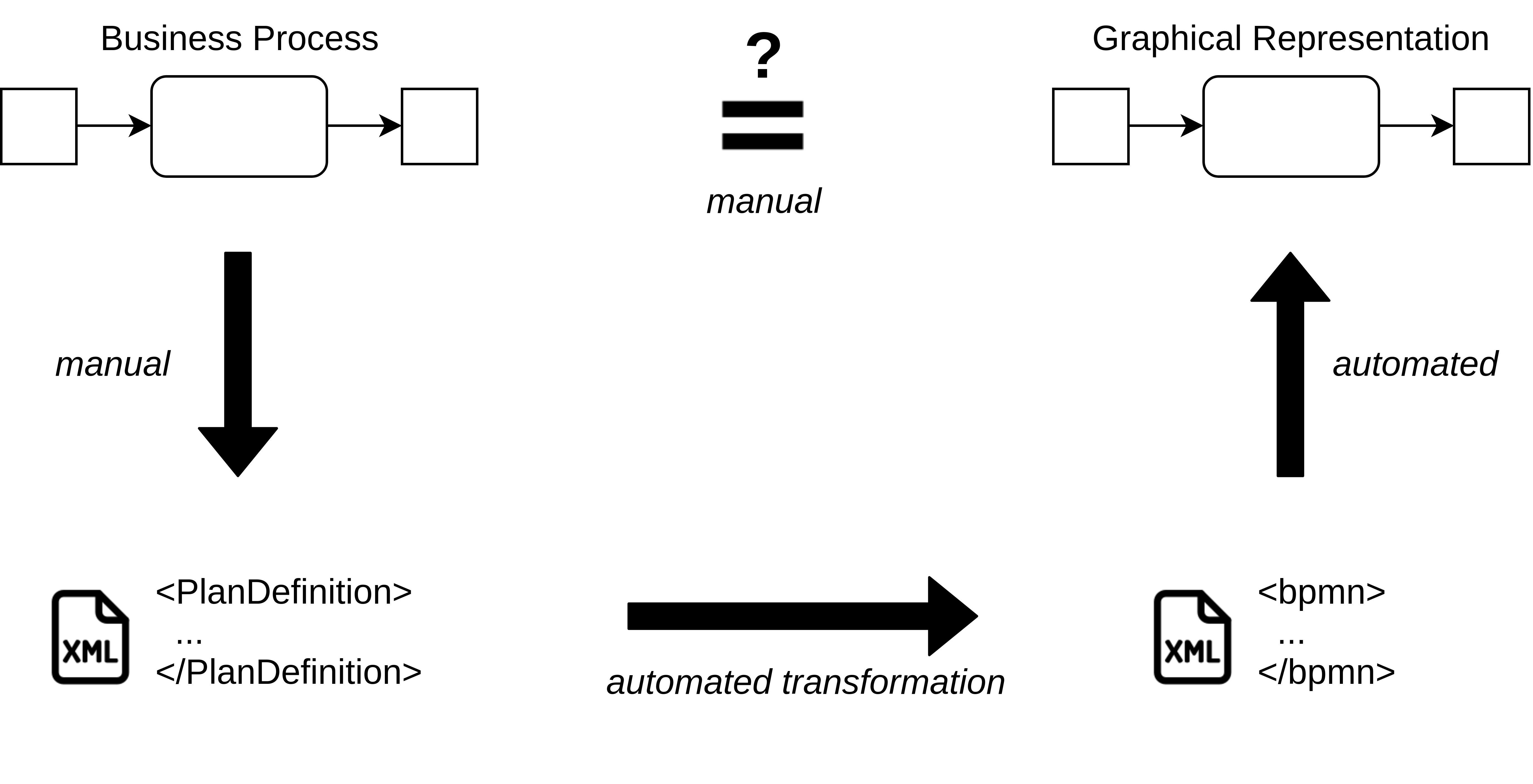
| web | workflowpatterns.com | Focusing on process semantics, this section provides mappings between BPMN and PlanDefinition, informed by the workflow patterns work done at the Eindhoven University of Technology and Queensland University of Technology, and applied to FHIR by a joint project between the University of Applied Sciences Upper Austria ("FH Hagenberg") and CGM Clinical Austria for a prototype for medical boards (project "KIMBo"). |
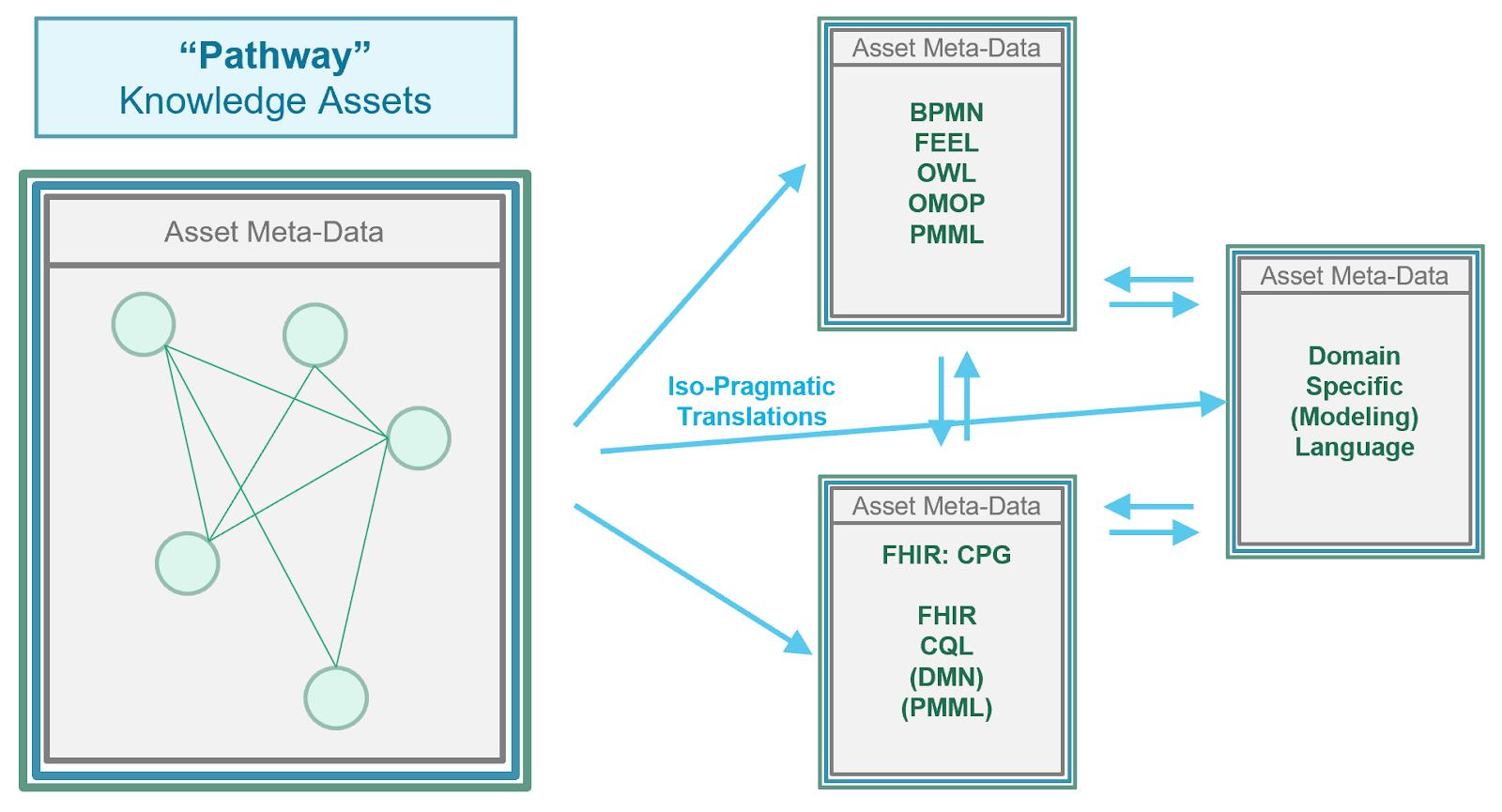
| web | workflowpatterns.com | The definition of a Process is specified using either BPMN or a FHIR PlanDefinition, then the Atlas Transformation Language (ATL) can be used to transform between the two, using the Control Flow and Data Flow patterns as a metamodel. |
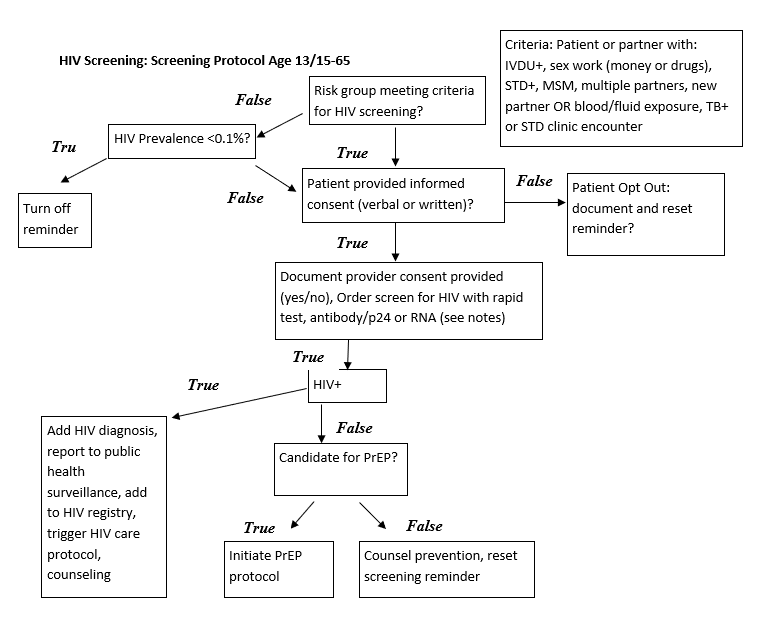
| web | www.uspreventiveservicestaskforce.org | Supplemental Content USPTF June 2019 HIV Screening Screening for HIV Infection - US Preventive Services Task Force Recommendation Statement |
| web | jamanetwork.com | Supplemental Content USPTF June 2019 HIV Screening Screening for HIV Infection - US Preventive Services Task Force Recommendation Statement |
| web | jamanetwork.com | Screening for HIV Infection in Pregnant Women |
| web | cqframework.org | Antenatal Care Guidelines |
| web | cqframework.org | Anthrax Post-Exposure Prophylaxis |
| web | cqframework.org | Chronic Disease Management - Chronic Kidney Disease |
| web | cqframework.org | Opioid Prescribing Guideline 2016 |
| web | cqframework.org | Hepatitis B Adult Immunization Forecasting |
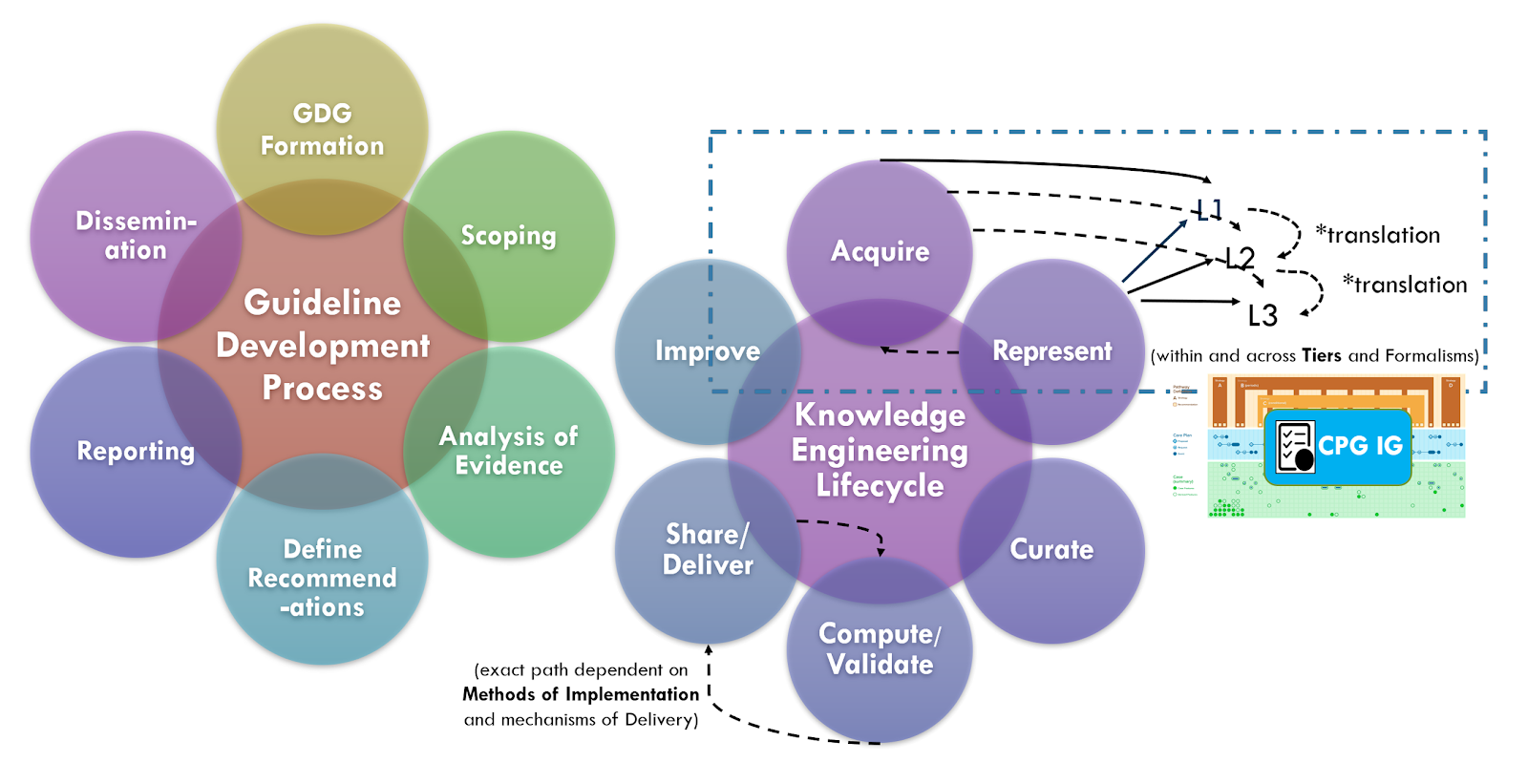
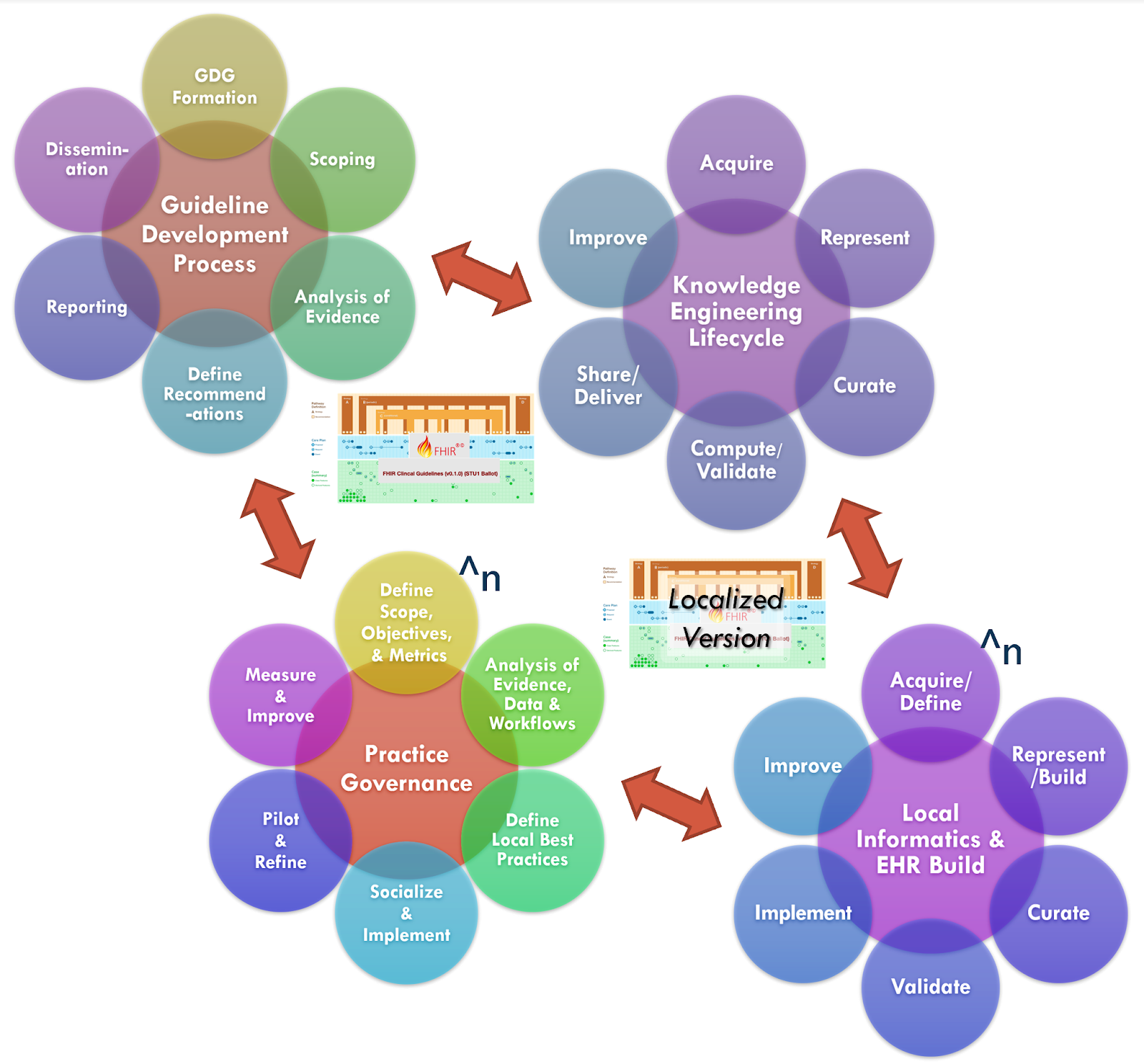
| web | journals.lww.com | This IG has been developed through multi-organizational and multidisciplinary efforts ( Adapting Clinical Guidelines for the Digital Age , SMART Guidelines , holistically involving a range of stakeholders, including those who work at the beginning of the process (e.g., guideline developers) to the end users (e.g., clinical implementation team representatives, health IT developers, patients/patient advocates), and others in between (e.g., informaticists, communicators, evaluators, public health organizations, clinical quality measure and clinical decision support developers). |
| web | www.who.int | This IG has been developed through multi-organizational and multidisciplinary efforts ( Adapting Clinical Guidelines for the Digital Age , SMART Guidelines , holistically involving a range of stakeholders, including those who work at the beginning of the process (e.g., guideline developers) to the end users (e.g., clinical implementation team representatives, health IT developers, patients/patient advocates), and others in between (e.g., informaticists, communicators, evaluators, public health organizations, clinical quality measure and clinical decision support developers). |
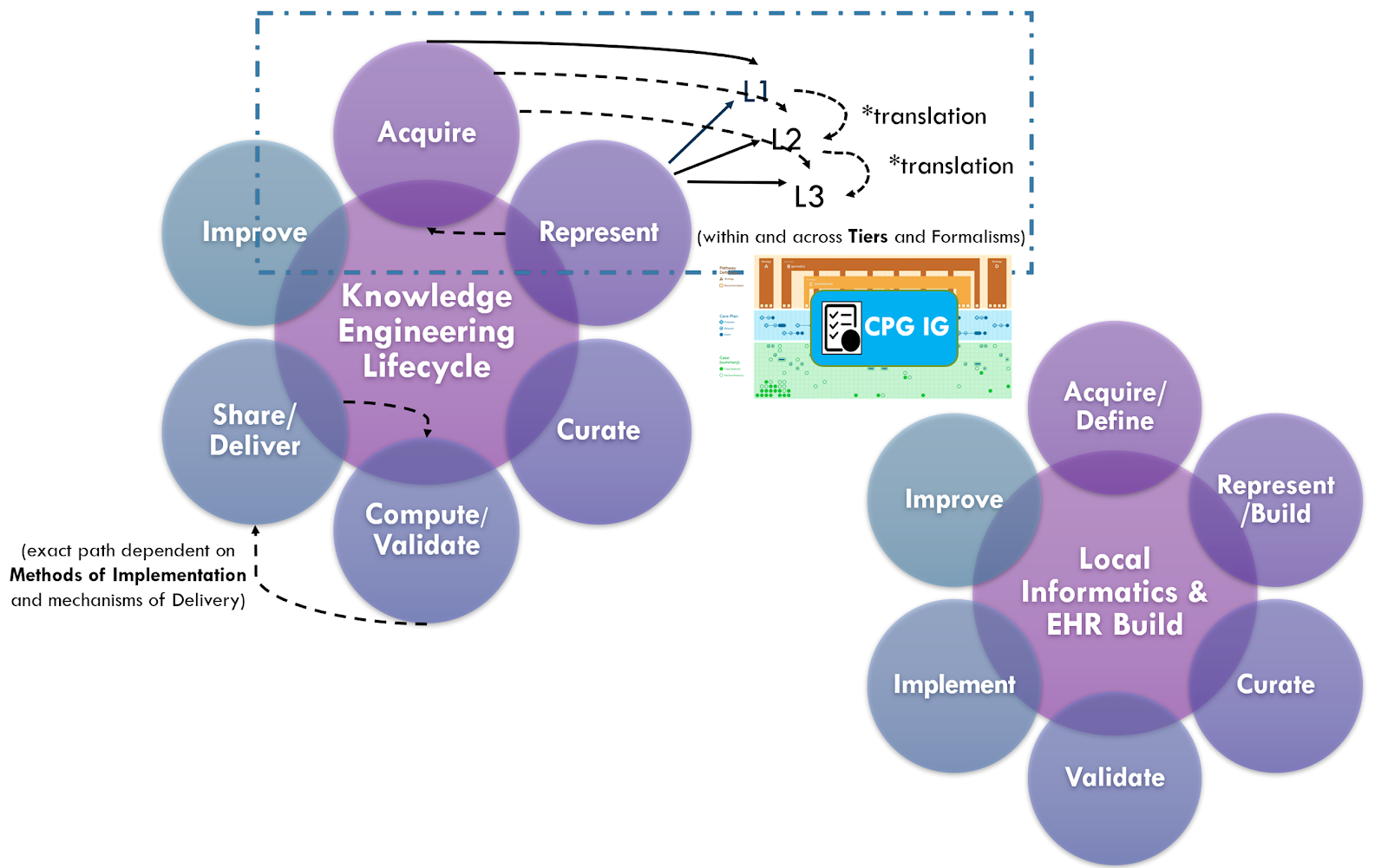
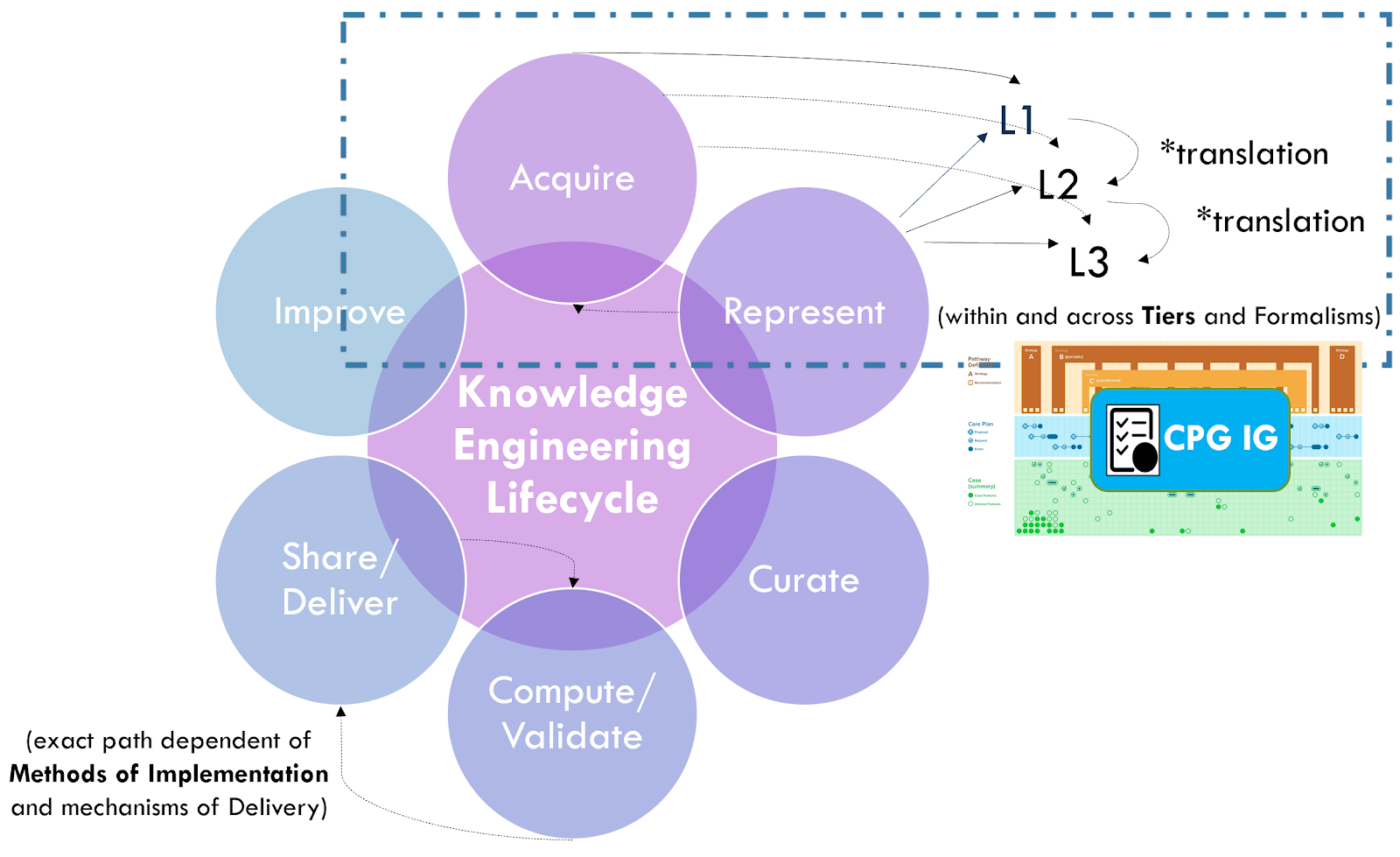
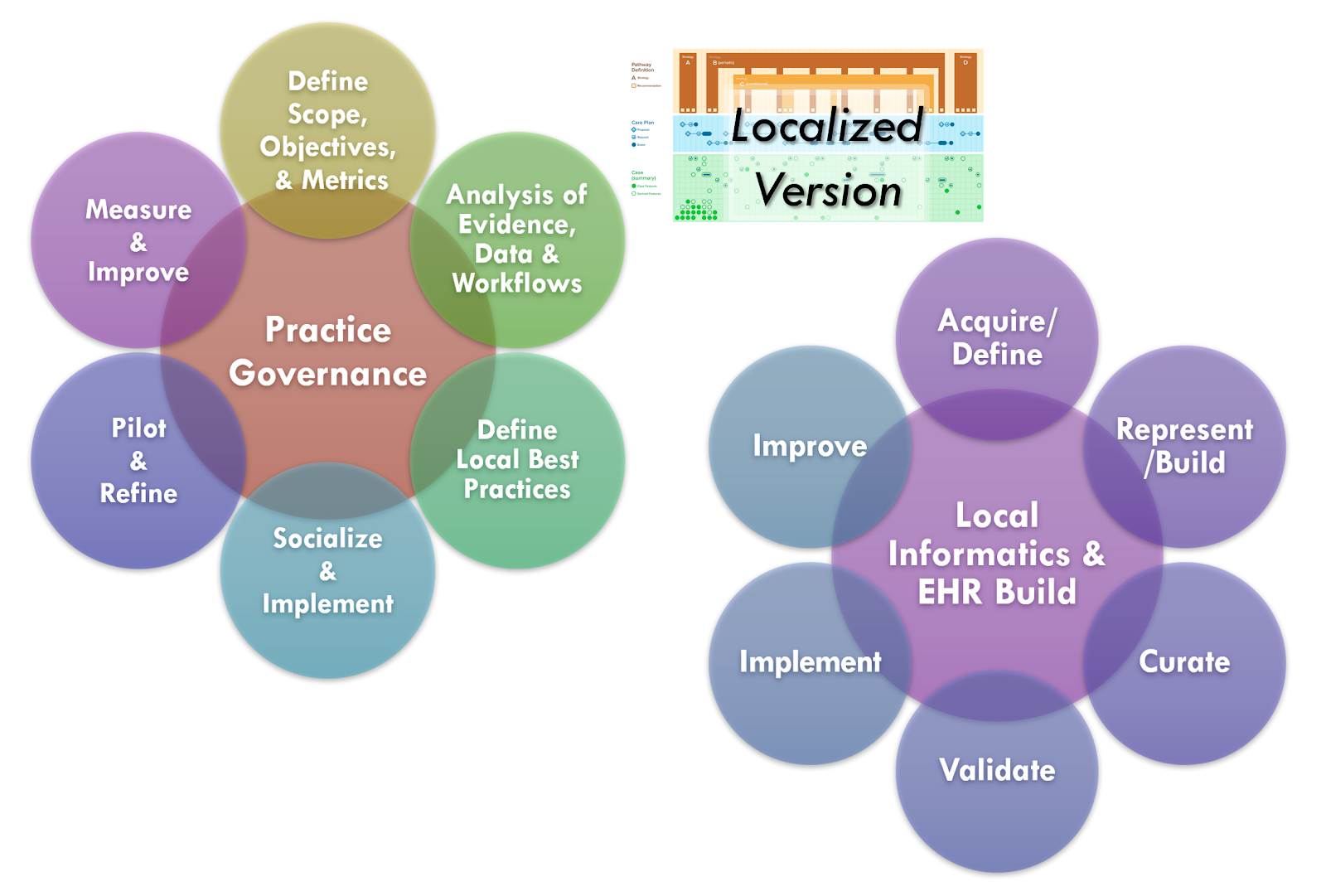
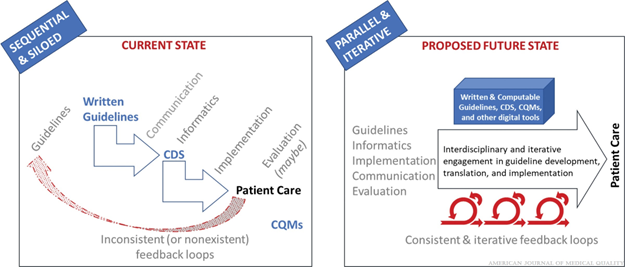
| web | journals.lww.com | Figure 1.1 High-level current state (siloed and sequential) and proposed future state (parallel and iterative) process for guideline development and implementation Source . |
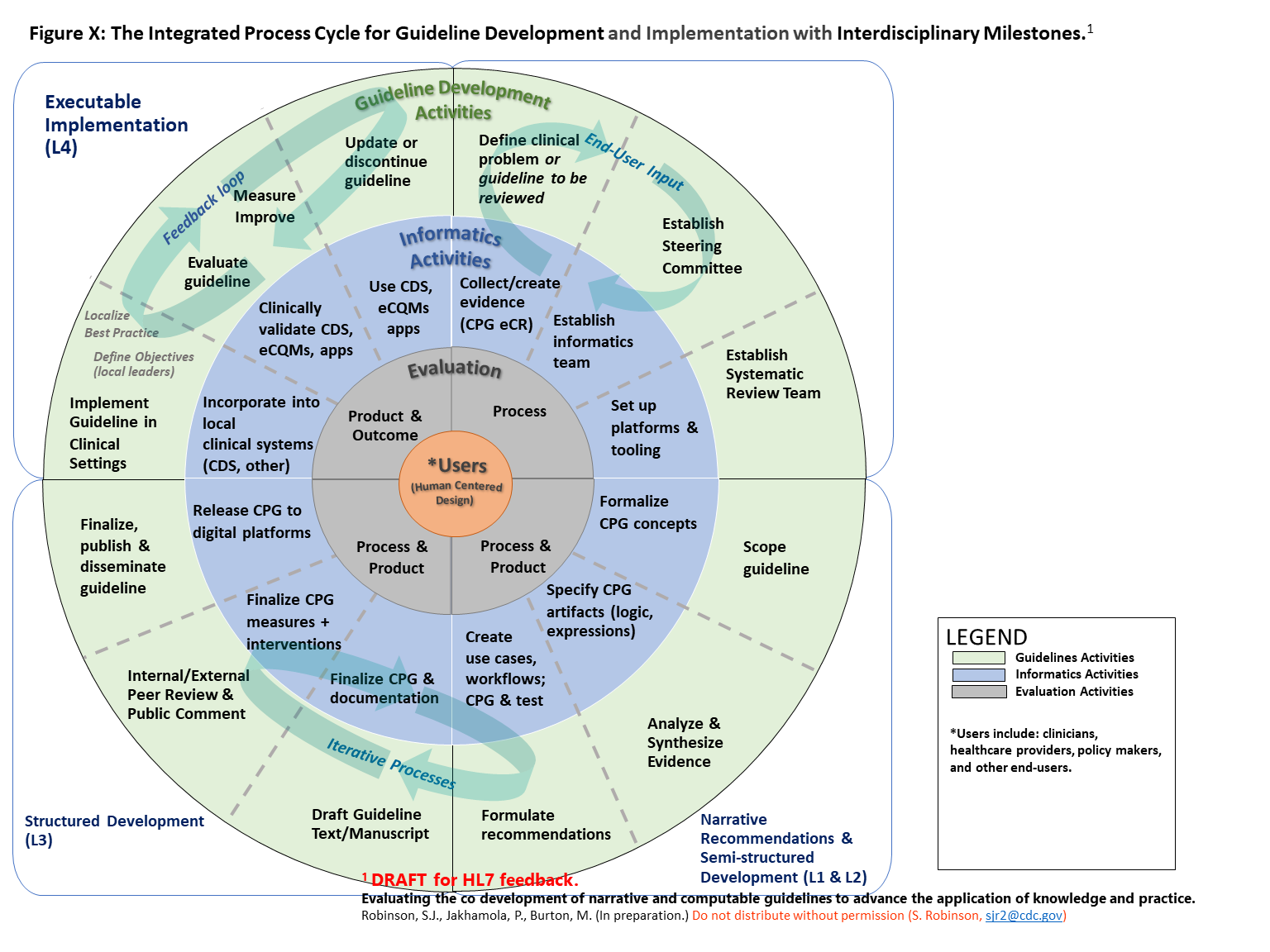
| web | journals.lww.com | An integrated guideline/guidance development and implementation process, referred to as "the integrated process" Source |
| web | journals.lww.com | Figure 1.3 The integrated process with integrated evaluation in guideline development and implementation, showing a human-cnetered design approach to co-develop marrative and computable guidelines and build in evaluation, with feedback and feedforward loops throughout the process. ( Source and Source ). |
| web | journals.lww.com | Figure 1.3 The integrated process with integrated evaluation in guideline development and implementation, showing a human-cnetered design approach to co-develop marrative and computable guidelines and build in evaluation, with feedback and feedforward loops throughout the process. ( Source and Source ). |
| web | journals.lww.com | Much of this work has been informed by several international efforts, including the U.S. Centers for Disease Control and Prevention’s (CDC’s) Adapting Clinical Guidelines for the Digital Age initiative ( ref ), the World Health Organization’s (WHO’s) Antenatal Care Guidelines ( ref ), the HL7 Clinical Decision Support and Clinical Quality Information Working Groups, and numerous other publicly funded and private sector initiatives, including local health system implementations of guidelines and in-workflow pathways. |
| web | www.who.int | Much of this work has been informed by several international efforts, including the U.S. Centers for Disease Control and Prevention’s (CDC’s) Adapting Clinical Guidelines for the Digital Age initiative ( ref ), the World Health Organization’s (WHO’s) Antenatal Care Guidelines ( ref ), the HL7 Clinical Decision Support and Clinical Quality Information Working Groups, and numerous other publicly funded and private sector initiatives, including local health system implementations of guidelines and in-workflow pathways. |
| web | doi.org | A multi-layered framework for disseminating knowledge for computer-based decision support. Journal of the American Medical Informatics Association 2011 Dec; 18(Suppl 1): i132-i139. https://doi.org/10.1136/amiajnl-2011-000334 |
| web | doi.org | An Ontological Framework for Adaptive Medical Workflow. Journal of Biomedical Informatics Volume 41, Issue 5, October 2008, Pages 829-836. https://doi.org/10.1016/j.jbi.2008.05.012 |
| web | www.ilo.org | International Standard Classification of Occupations (ISCO). http://www.ilo.org/public/english/bureau/stat/isco/index.htm |
| web | www.who.int | Classifying health workers: Mapping occupations to the international standard classification. World Health Organization. https://www.who.int/hrh/statistics/Health_workers_classification.pdf |
| web | academic.oup.com | Comparing Computer-interpretable Guideline Models: A Case-study Approach. Journal of the American Medical Informatics Association Volume 10, Issue 1, January 2003, Pages 52–68. https://doi.org/10.1197/jamia.M1135 |
| web | www.sciencedirect.com | Computer-interpretable clinical guidelines: A methodological review. Journal of Biomedical Informatics Volume 46, Issue 4, August 2013, Pages 744-763. https://doi.org/10.1016/j.jbi.2013.06.009 |
| web | academic.oup.com | Computerization of workflows, guidelines, and care pathways: a review of implementation challenges for process-oriented health information systems. Journal of the American Medical Informatics Association, Volume 18, Issue 6, November 2011, Pages 738–748. https://doi.org/10.1136/amiajnl-2010-000033 |
| web | www.sciencedirect.com | Conceptual alignment of electronic health record data with guideline and workflow knowledge. International Journal of Medical Informatics 64 (2001) 259–274. https://doi.org/10.1016/S1386-5056(01)00196-4 |
| web | academic.oup.com | GEM: A Proposal for a More Comprehensive Guideline Document Model Using XML. Journal of the American Medical Informatics Association, Volume 7, Issue 5, September 2000, Pages 488–498. https://doi.org/10.1136/jamia.2000.0070488 |
| web | www.sciencedirect.com | GLIF3: a representation format for sharable computer-interpretable clinical practice guidelines. Journal of Biomedical Informatics Volume 37, Issue 3, June 2004, Pages 147-161. https://doi.org/10.1016/j.jbi.2004.04.002 |
| web | academic.oup.com | Modelling biological processes using workflow and Petri Net models. Bioinformatics, Volume 18, Issue 6, June 2002, Pages 825–837. https://doi.org/10.1093/bioinformatics/18.6.825 |
| web | www.aehin.org | Operationalizing Guideline-based Care. Presentation at the 2013 AeHIN General Meeting. http://www.aehin.org/Meetings/2013AeHINGeneralMeeting/AGM13Files3.aspx |
| web | www.sciencedirect.com | Representation primitives, process models and patient data in computer-interpretable clinical practice guidelines: A literature review of guideline representation models. International Journal of Medical Informatics, Volume 68, Issues 1–3, 2002, Pages 59-70, ISSN 1386-5056, https://doi.org/10.1016/S1386-5056(02)00065-5. |
| web | ucum.org |
The UCUM codes, UCUM table (regardless of format), and UCUM Specification are copyright 1999-2009, Regenstrief Institute, Inc. and the Unified Codes for Units of Measures (UCUM) Organization. All rights reserved. https://ucum.org/trac/wiki/TermsOfUse
Show Usage
|
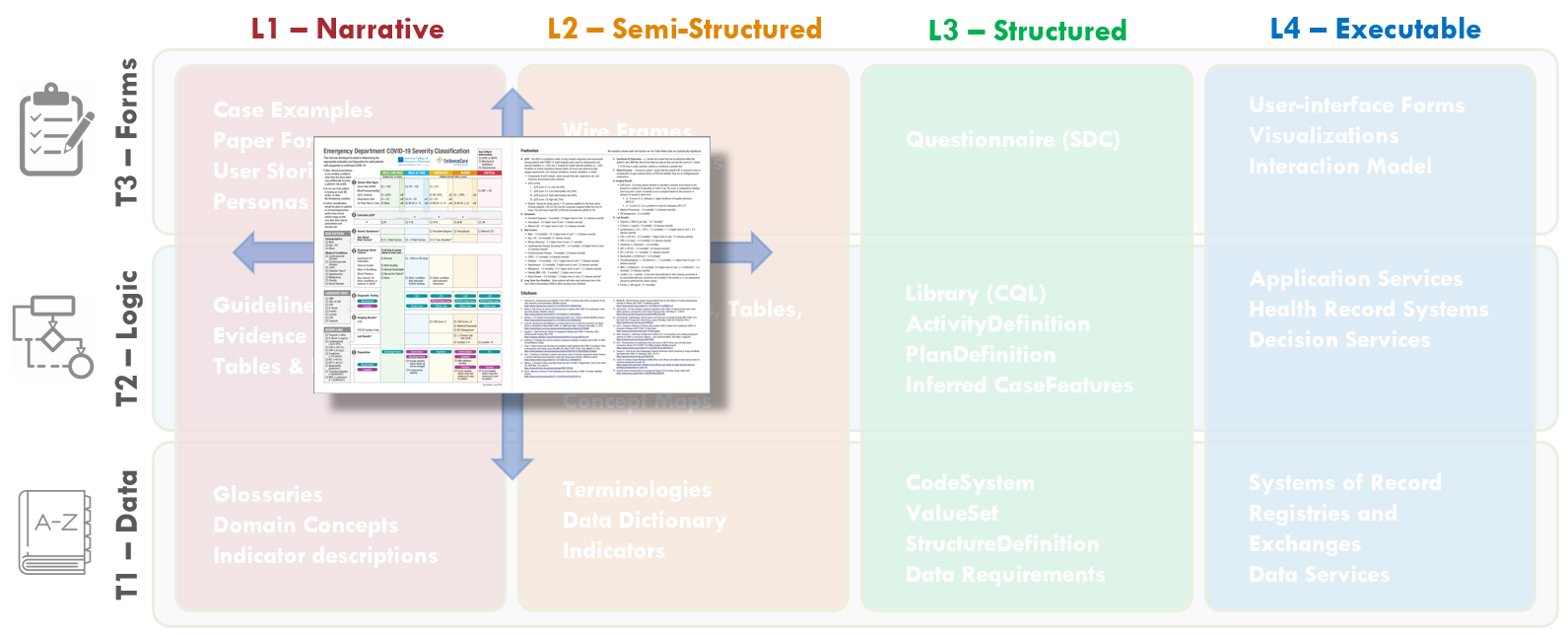
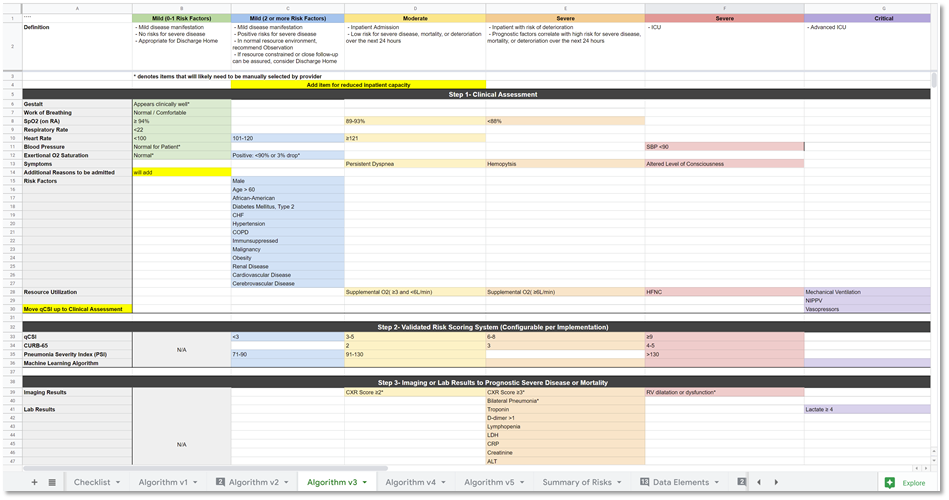
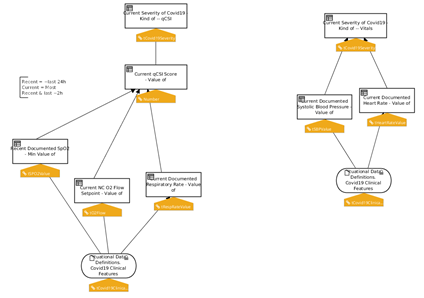
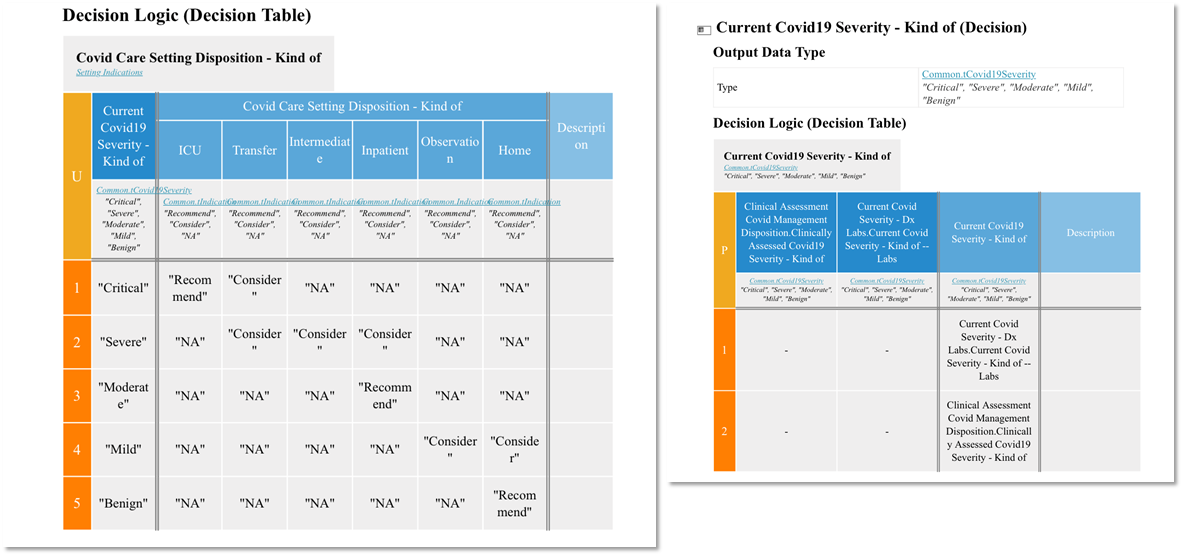
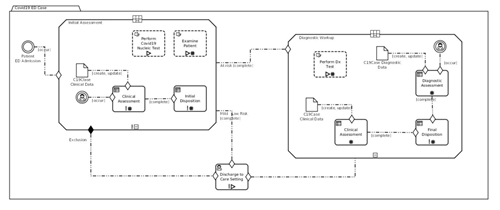
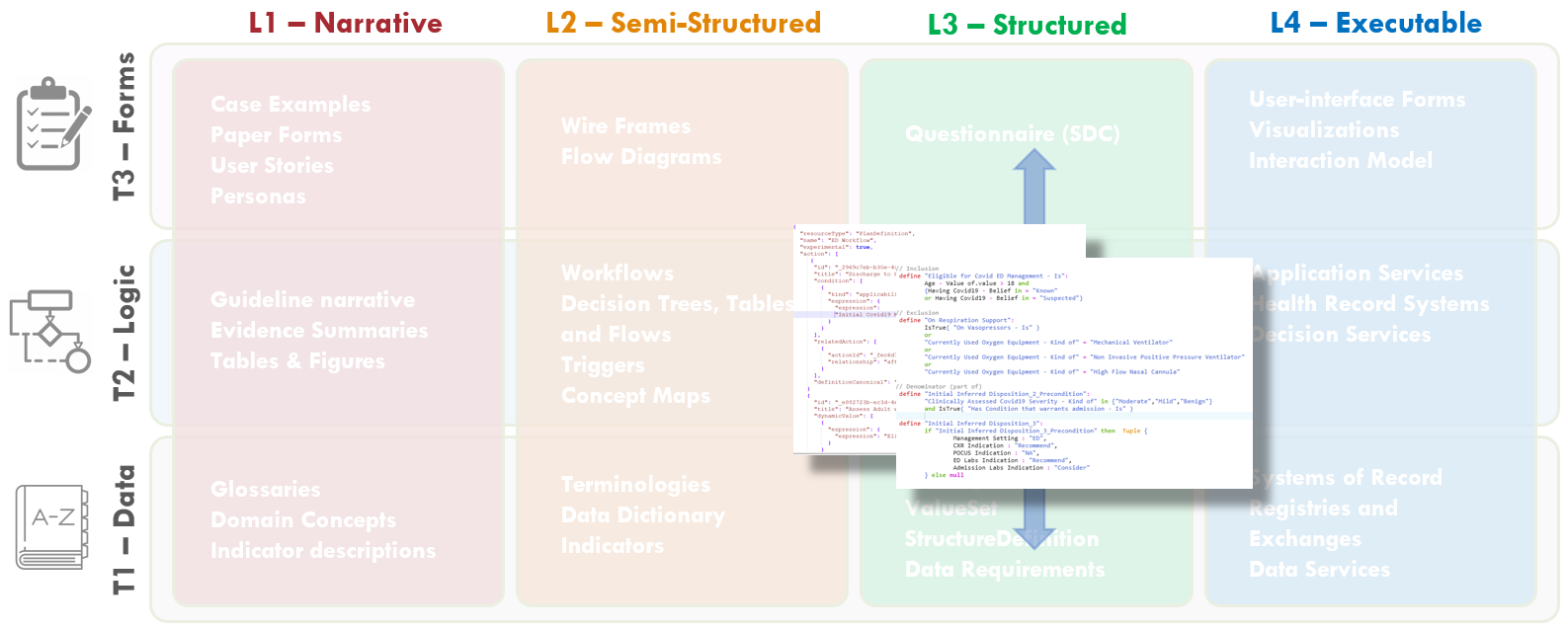
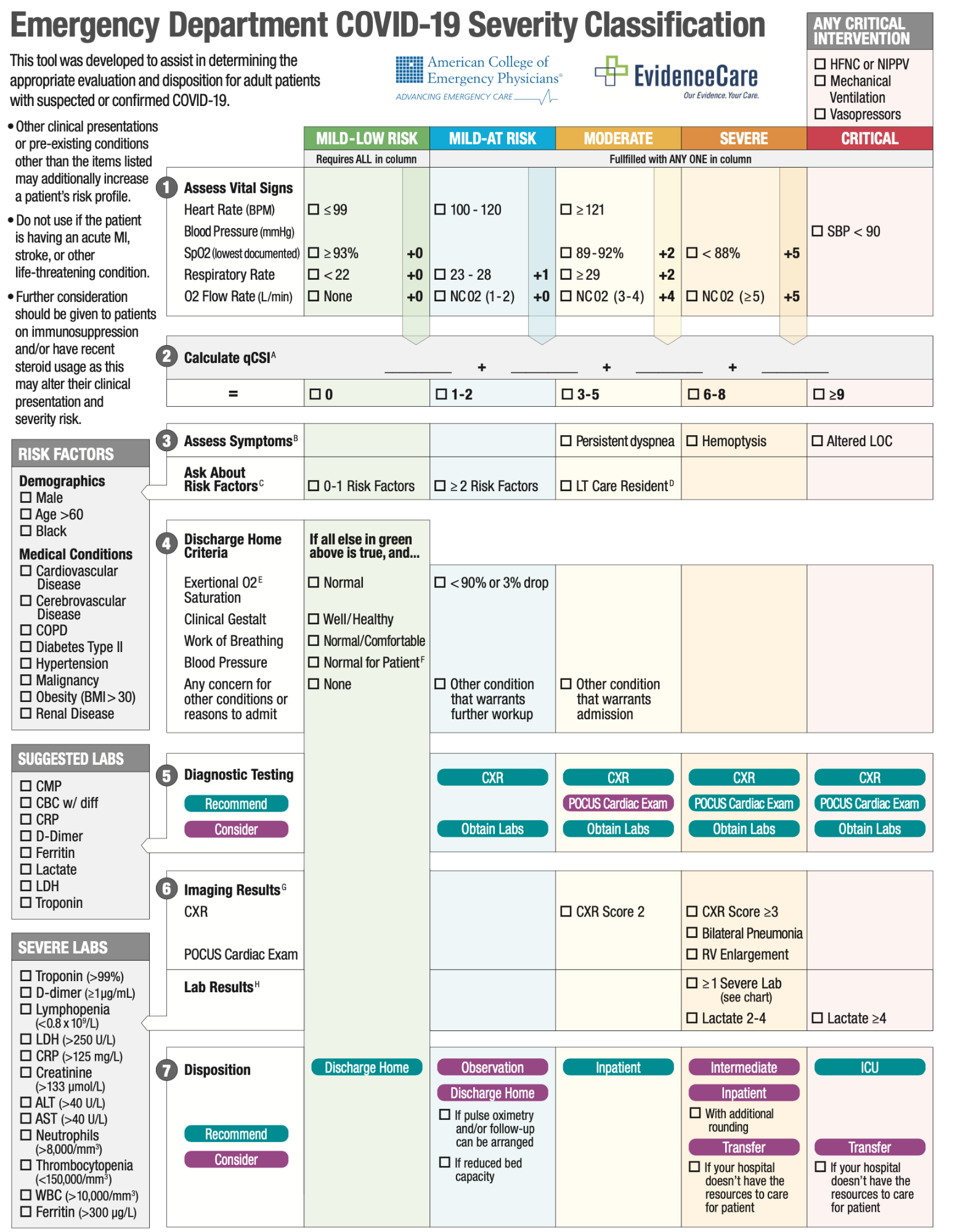
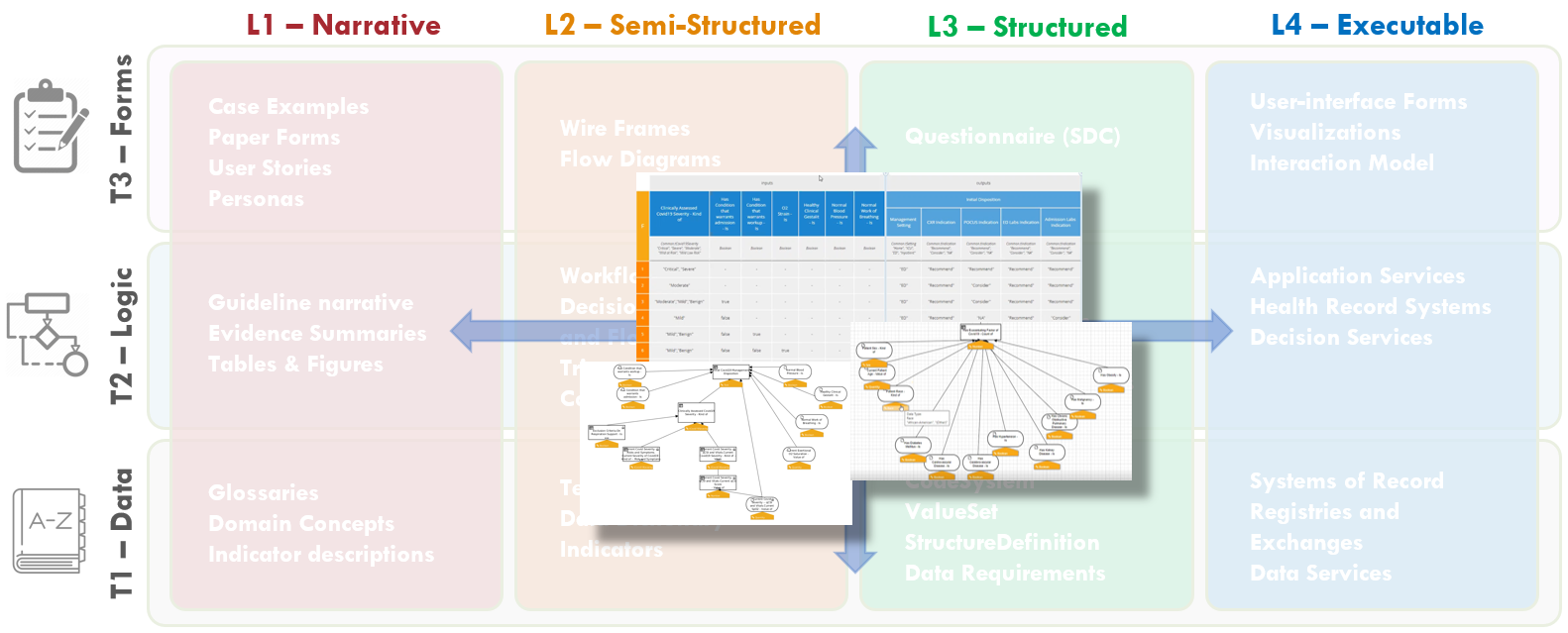
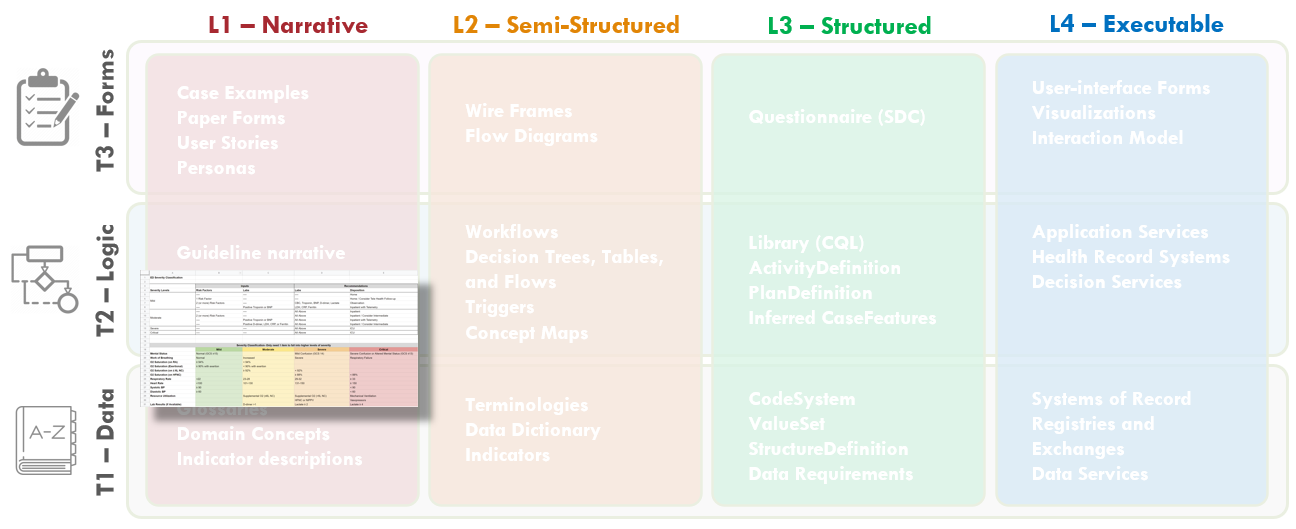
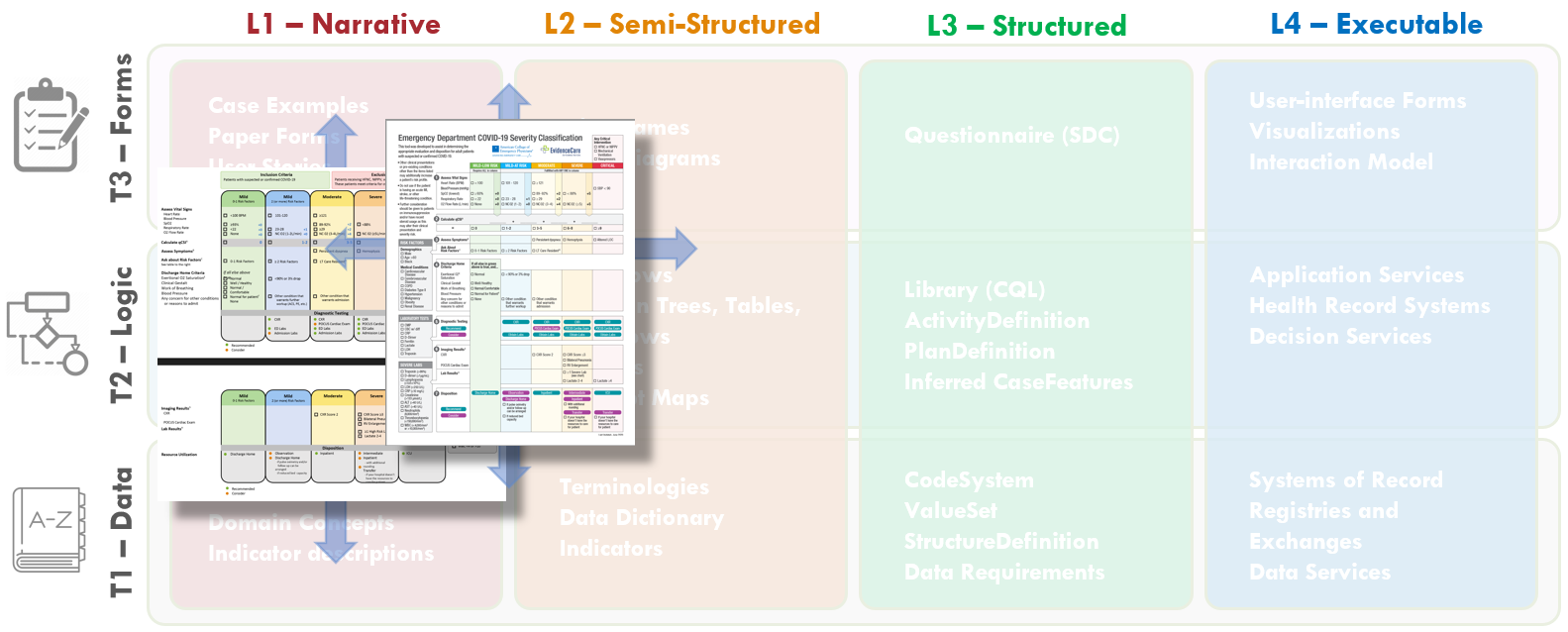
| web | www.google.com | The American College of Emergency Medicine’s (ACEP) Guidance on: COVID-19 ED Severity Classification and Disposition Recommendations can be found here and the PDF is found here . |
| web | www.google.com | The American College of Emergency Medicine’s (ACEP) Guidance on: COVID-19 ED Severity Classification and Disposition Recommendations can be found here and the PDF is found here . |
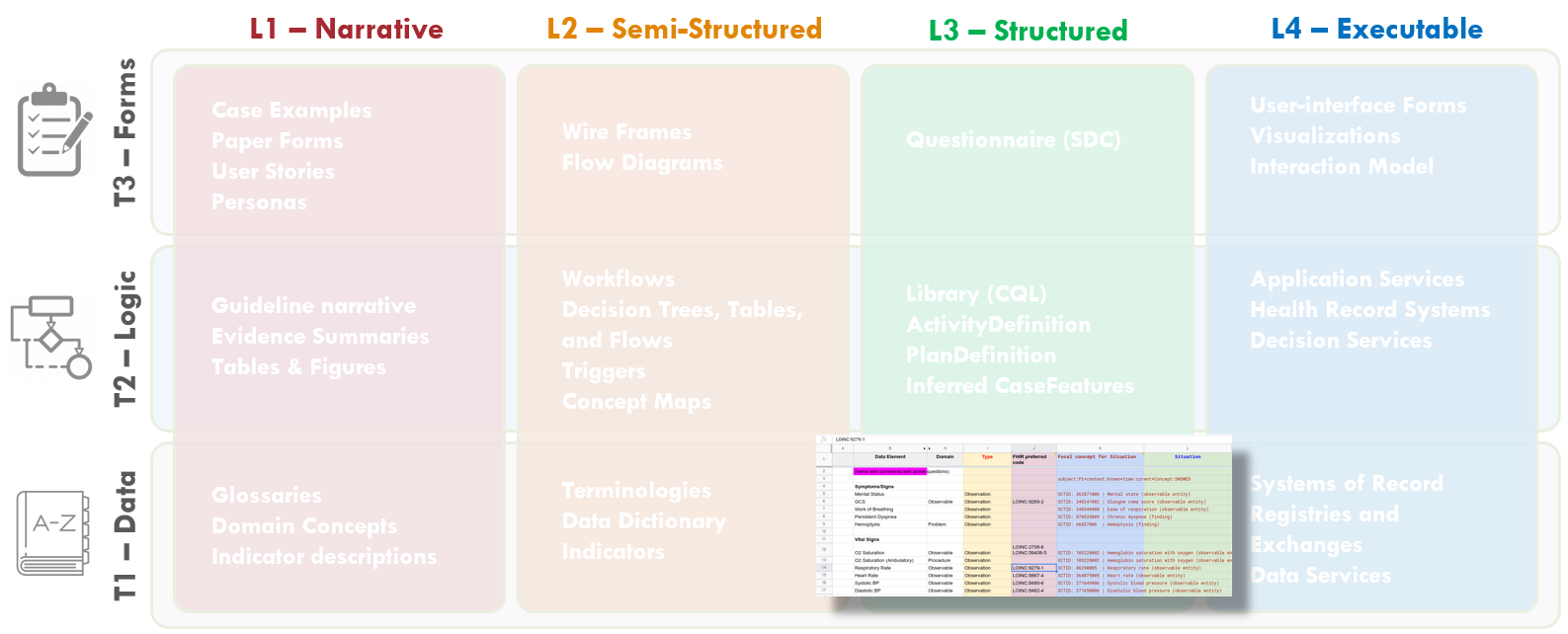
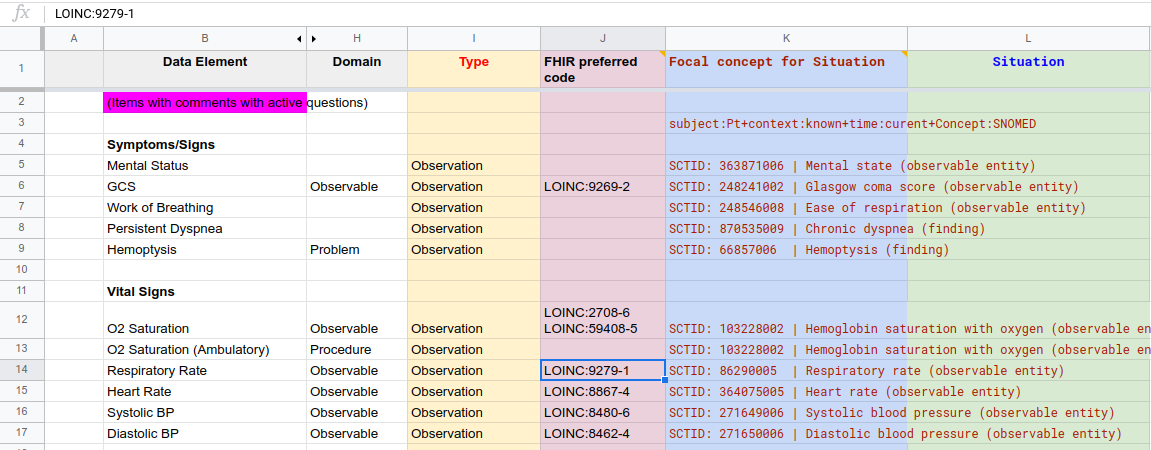
| web | www.google.com | Focal concept for Situation : the core SNOMED term that will be the basis for the situation to be created. These will be mostly SNOMED observables with some procedure codes included. See SNOMED Procedures vs Observations . |
| web | www.google.com | The dynamic URL for the guideline can be found here: COVID-19 Severity Classification Tool |
| web | www.who.int | To provide a potential starting point for formally identifying personas, this implementation guide provides a Common Personas CodeSystem based on the WHO recommendation for Classifying health workers . This recommendation uses codes from the International Standard Classification for Occupations but defines several additional categories of workers. In addition, the codes in that recommendation are focused on health workers, so codes for patient and care partner personas need to be considered as well. |
| web | www.ilo.org | To provide a potential starting point for formally identifying personas, this implementation guide provides a Common Personas CodeSystem based on the WHO recommendation for Classifying health workers . This recommendation uses codes from the International Standard Classification for Occupations but defines several additional categories of workers. In addition, the codes in that recommendation are focused on health workers, so codes for patient and care partner personas need to be considered as well. |
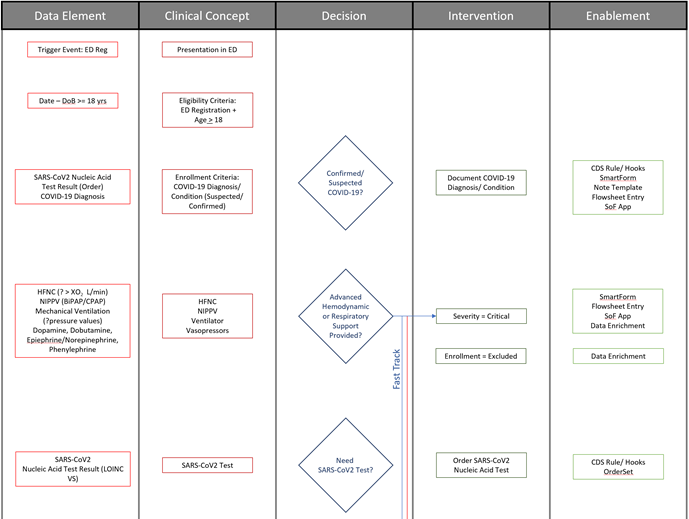
| web | en.wikipedia.org | There are a wide variety of methods and approaches available for representing and communicating the details of a workflow. One of the simplest, and most widely used is the flowchart , a versatile diagramming tool with virtually ubiquitous authoring and viewing support, and that is immediately understandable. For these reasons, this methodology focuses on the use of flowcharts to visually represent processes. In particular, the processes that have been most useful are simple flow diagrams that provide a visual representation of the functional description. |
| web | github.com | A complete walkthrough of this process using freely available open source tools is available at the Content IG Walkthrough . |
| web | github.com | As discussed in the content implementation guides section, a computable Clinical Practice Guideline (CPG) following this methodology is delivered as a FHIR Implementation Guide, and the first step to developing the content is to establish the content IG. This typically takes the form of a Github repository, similar to the Sample Content IG . |
| web | github.com | For criteria, the translate step involves expressing the inclusion and exclusion criteria, as well as any related logic, using Clinical Quality Language (CQL). This step is typically performed by a knowledge author using authoring environments such as CDS Connect or the Atom CQL Language Plugin . |
| web | github.com | As of the time of this writing, unit testing for Libraries can be accomplished using the VSCode CQL plugin by creating test folders for each test case. See the Adding Test Cases topic in the VSCode User's Guide for more information. |
| web | github.com | As of the time of this writing, unit testing for Libraries can be accomplished using the VSCode CQL plugin by creating test folders for each test case. See the Adding Test Cases topic in the VSCode User's Guide for more information. |
| web | github.com | See the Validation with CQF Ruler and CDS Hooks topic of the Content IG walkthrough for an example of how to perform this type of testing. |
|
../assets/images/001.svg
|
|
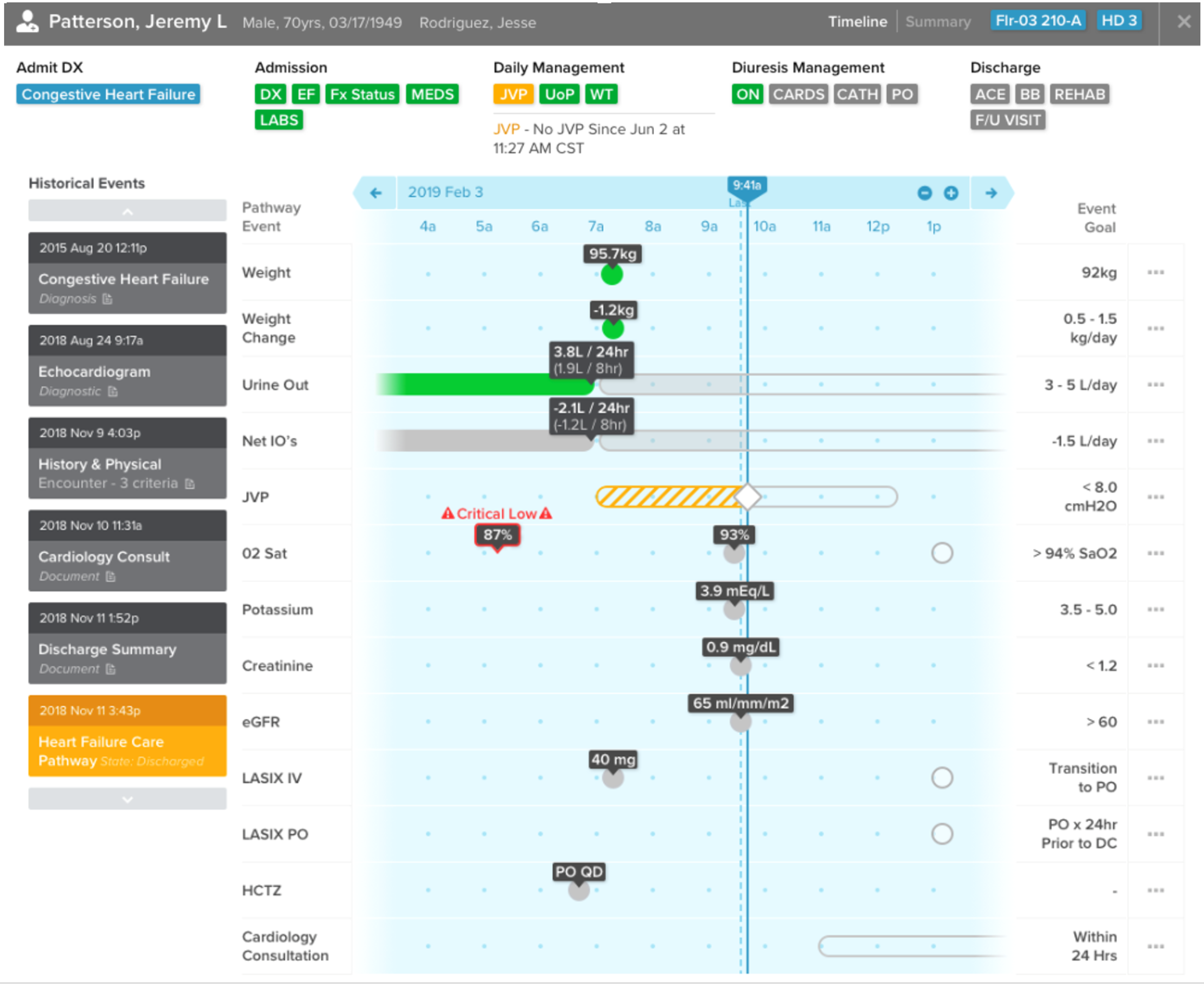
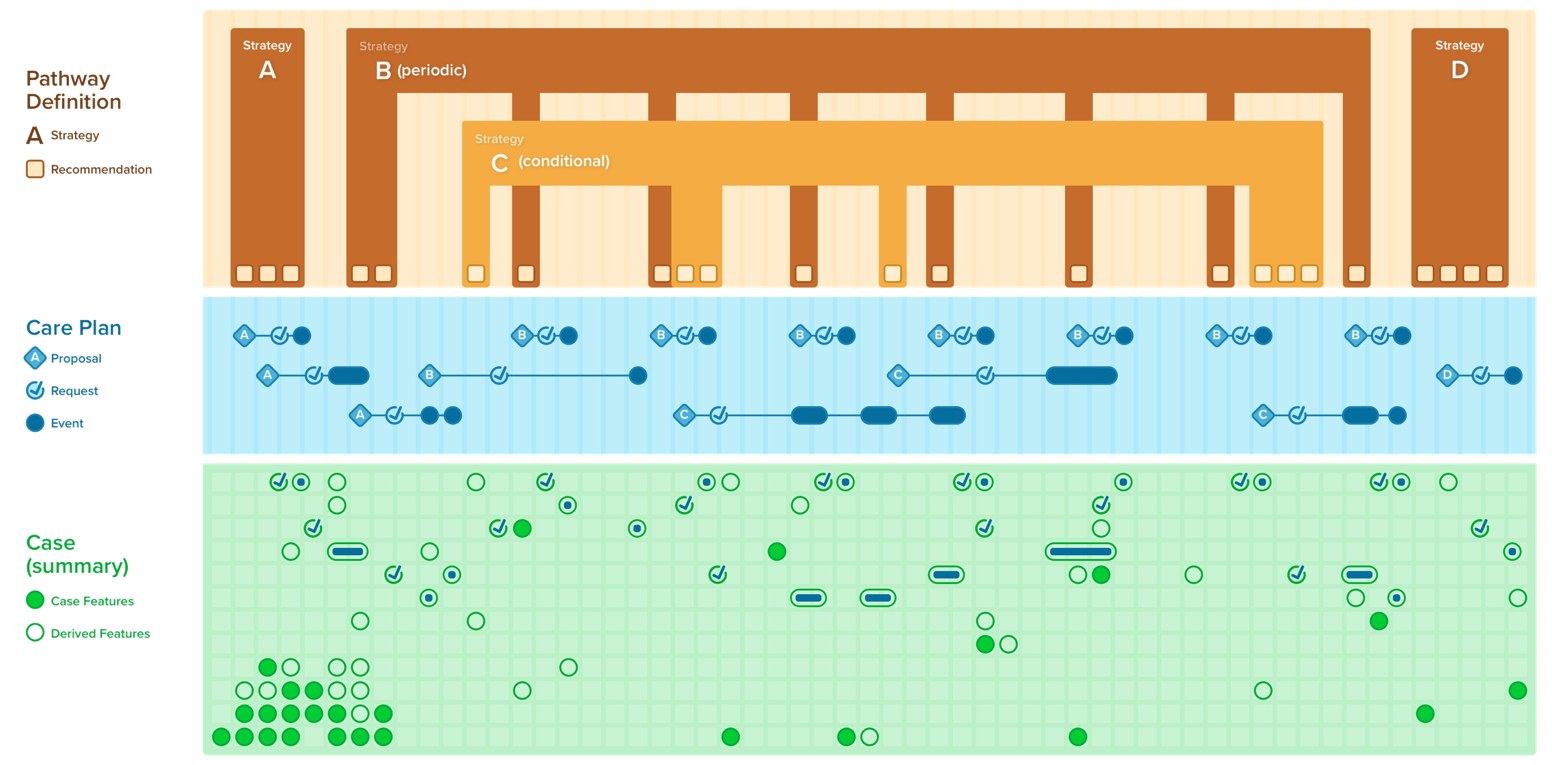
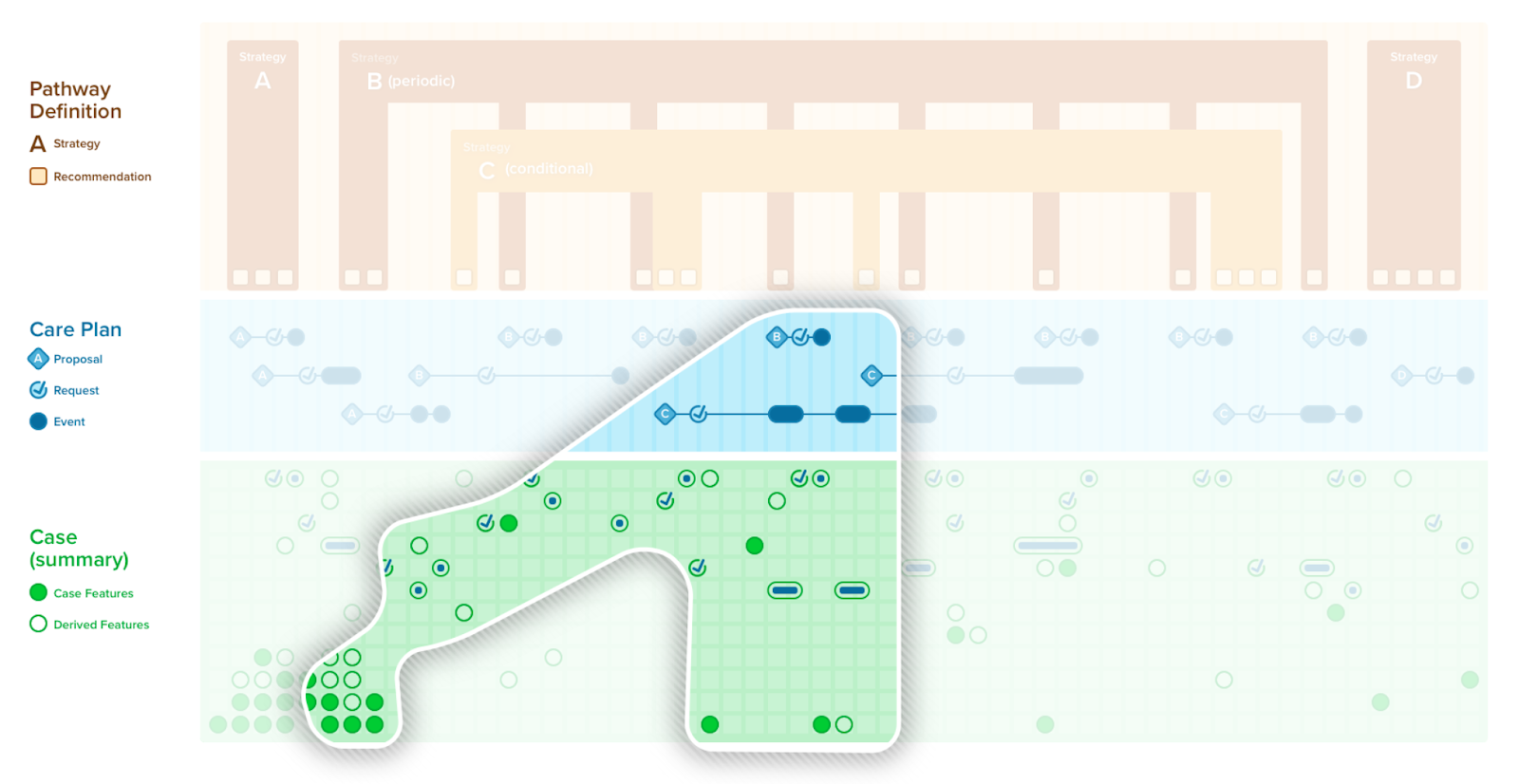
CHFCasePlanSummaryView.png
|
|
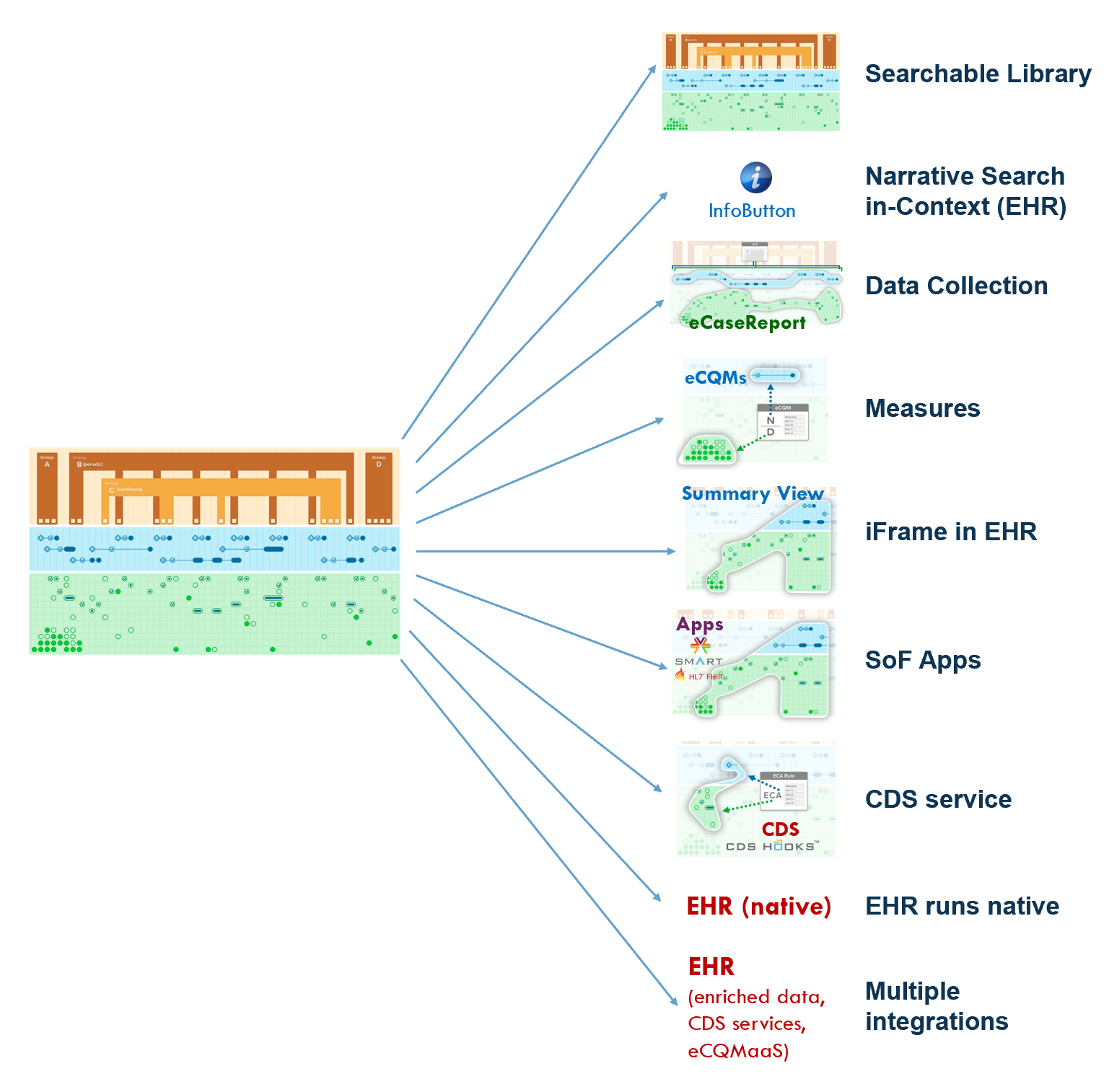
CPG-03-CPGEnablements.png
|
|
CPG-04-00.png
|
|
CPG-04-01.png
|
|
CPG-04-02.png
|
|
CPG-04-03.png
|
|
CPG-04.05-01.png
|
|
CPG-05-00.png
|
|
CPG-05-01.png
|
|
CPG-05-02.png
|
|
CPG-05-03.png
|
|
CPG-05-04.png
|
|
CPG-05-05.png
|
|
CPG-05.05-Agile.png
|
|
CPG-05.06-01.png
|
|
CPG-06.02-00.png
|
|
CPG-06.02-01.png
|
|
CPG-06.03-Architecture.png
|
|
CPG-06.03-CasePlan.png
|
|
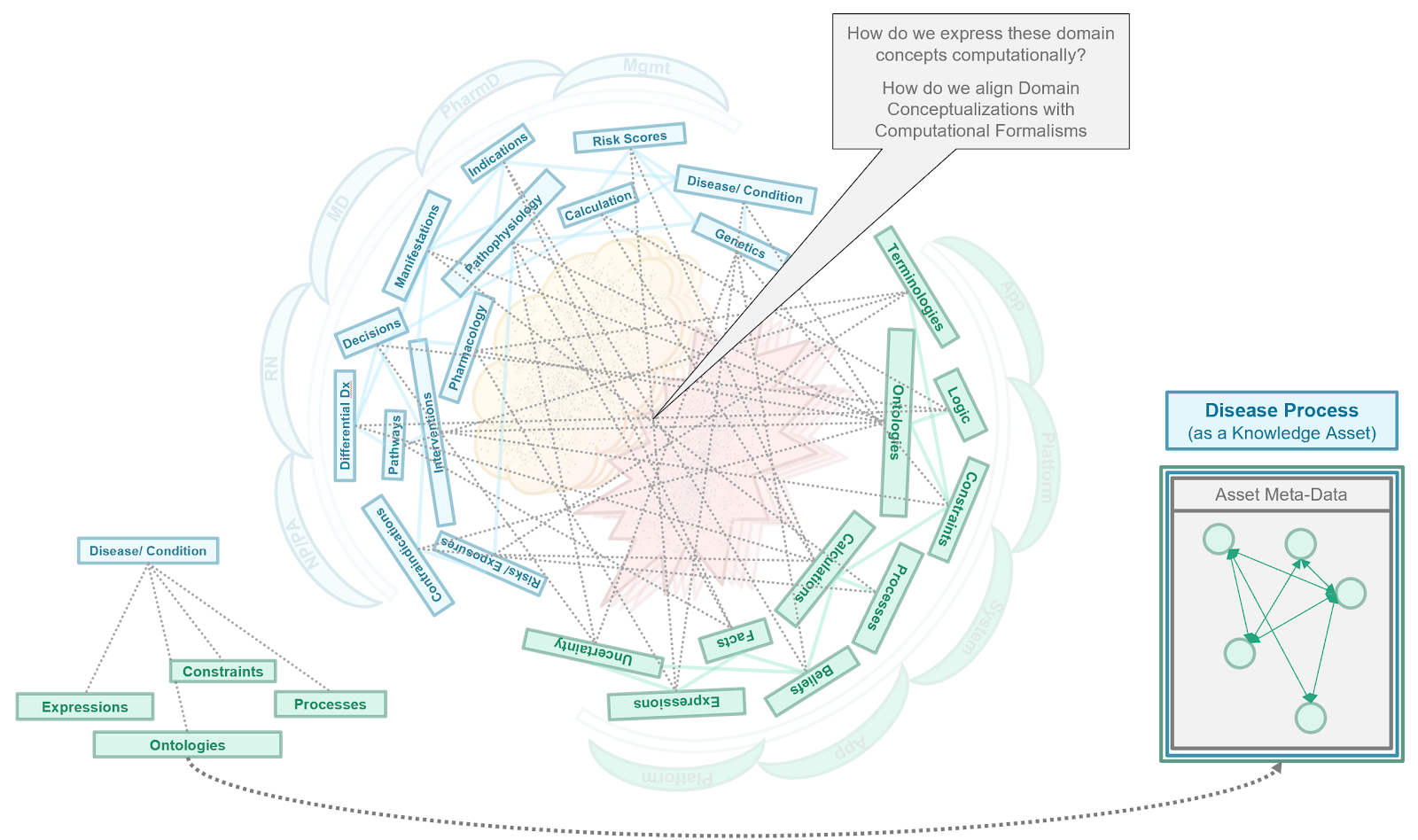
CPG-06.03-Concepts-Formalisms.png
|
|
CPG-06.03-DiseaseProcess.png
|
|
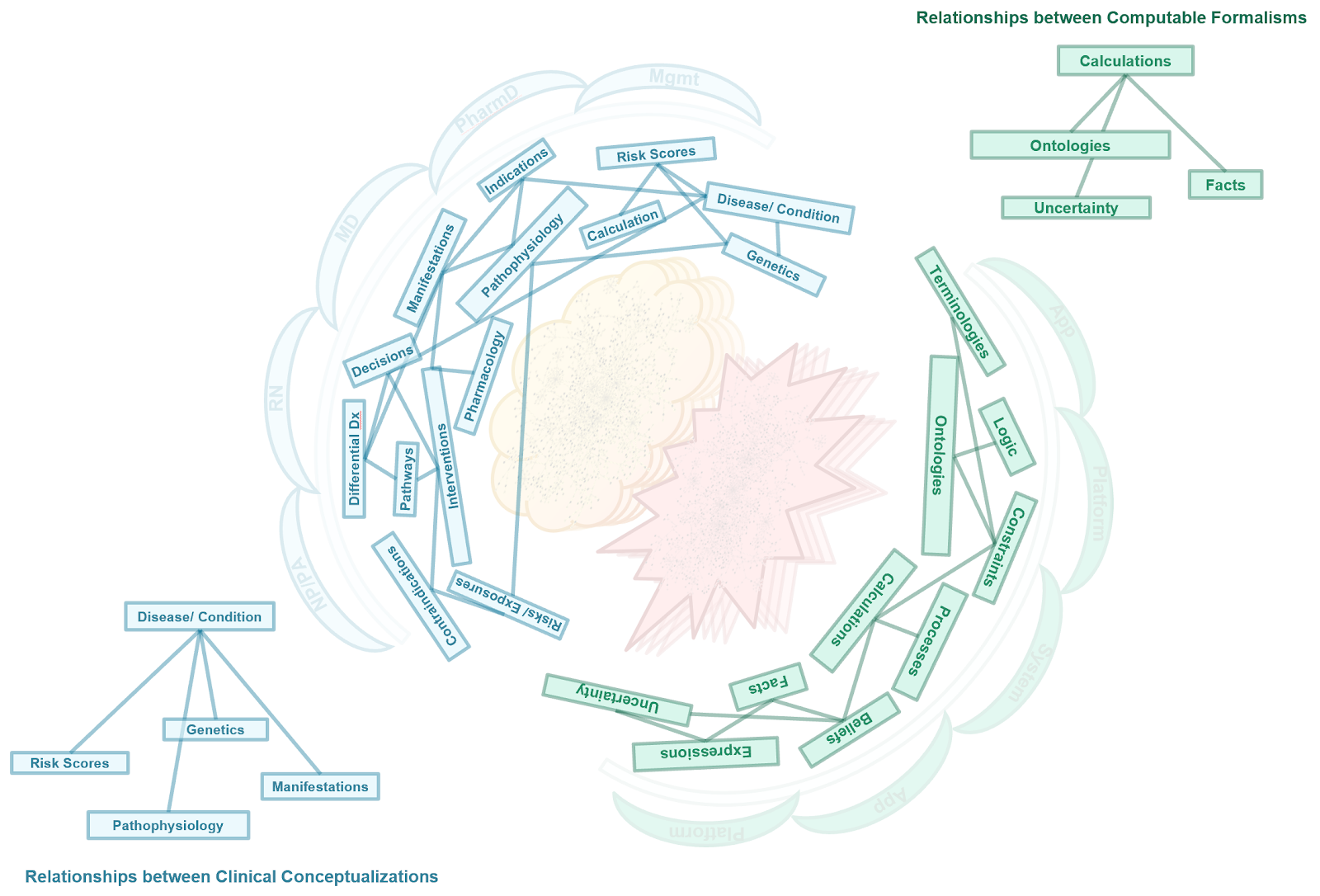
CPG-06.03-Relationships.png
|
|
CPG-12-00.png
|
|
CPG-12-01.png
|
|
CPG-12-02.png
|
|
CPG-12-03.png
|
|
CPG-12-04.png
|
|
CPG-12-05.png
|
|
CPG-12.07-00.png
|
|
CPG-12.07-01.png
|
|
CPG-12.07-05.png
|
|
CPG-12.07-GdlnDef.png
|
|
CPG-CasePlanSummary.png
|
|
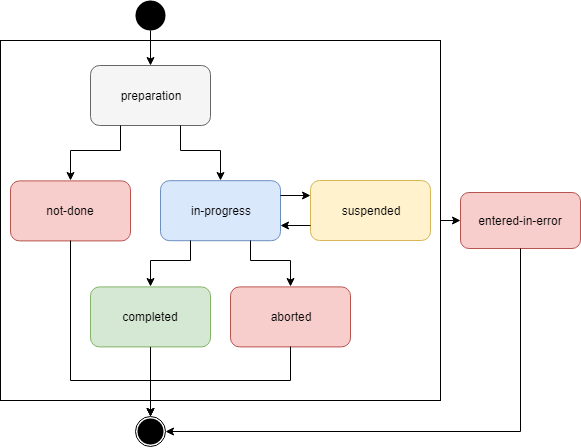
CPG-EventStatusFSM.png
|
|
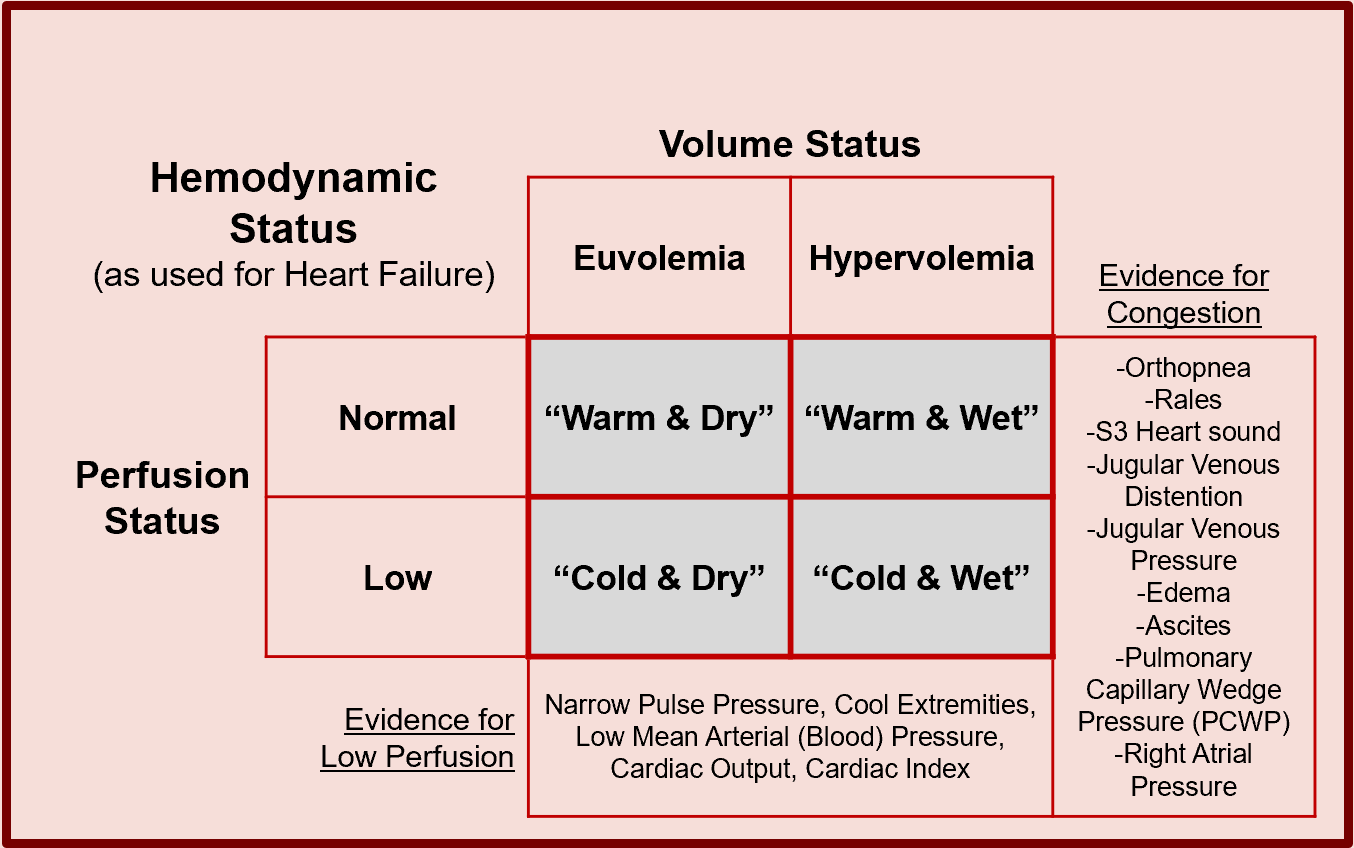
CPG-HemodynamicStatus.png
|
|
CPG-KCMS.png
|
|
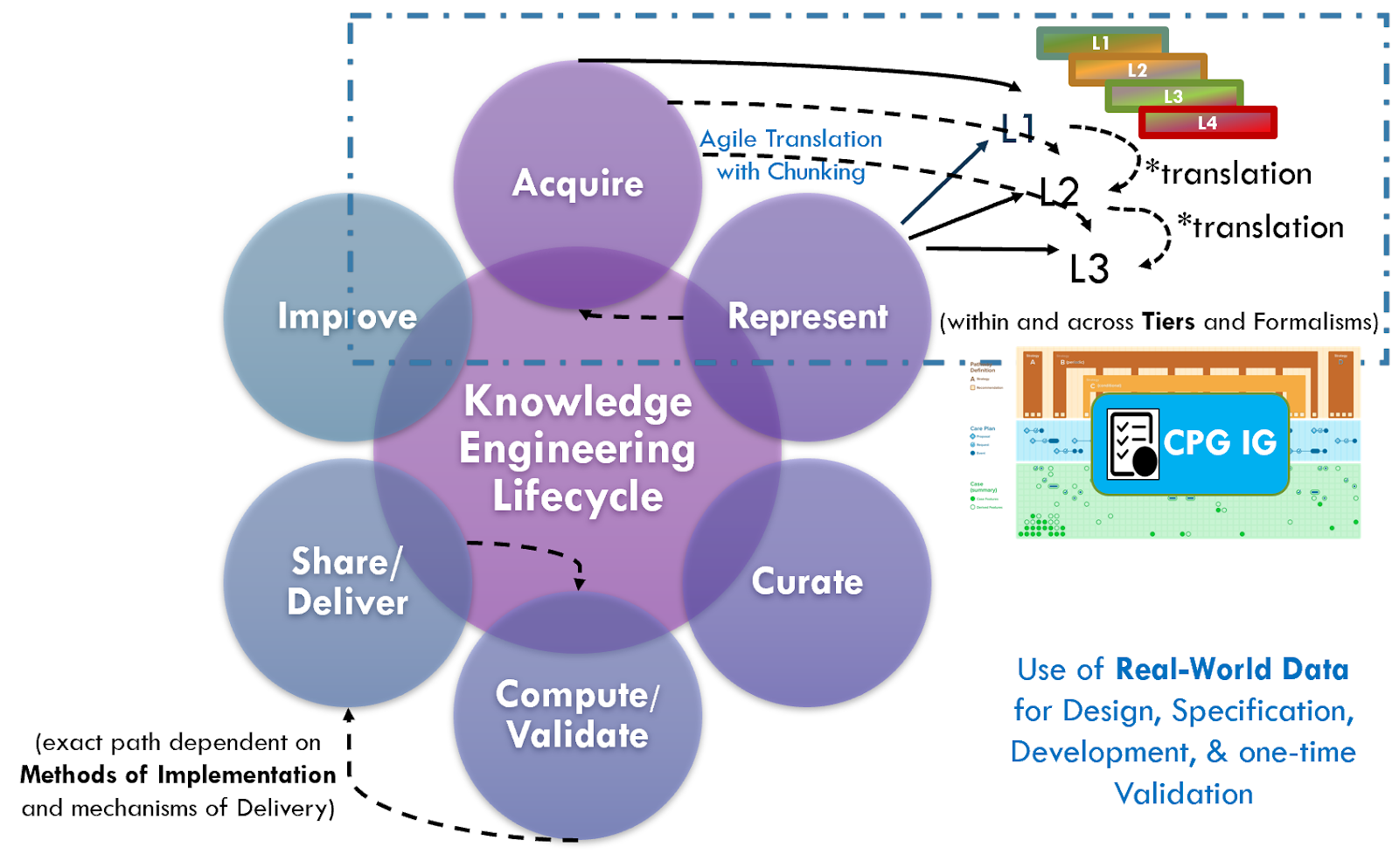
CPG-KnowledgeEngineering-w-Agile.png
|
|
CPG-KnowledgeValidation.png
|
|
CPG-Main-06-Legend.png
|
|
CPG-Main-06.png
|
|
CPG-Main-Case.png
|
|
CPG-Main-InstantiatedPlan.png
|
|
CPG-Main-LevelsAndTiers.png
|
|
CPG-Main-Plan.png
|
|
CPG-PatientLevelValidation.png
|
|
CPG-RequestStatusFSM.png
|
|
CPG-ResourcePatternsRelationship.png
|
|
CPG-TaskStatusFSM.png
|
|
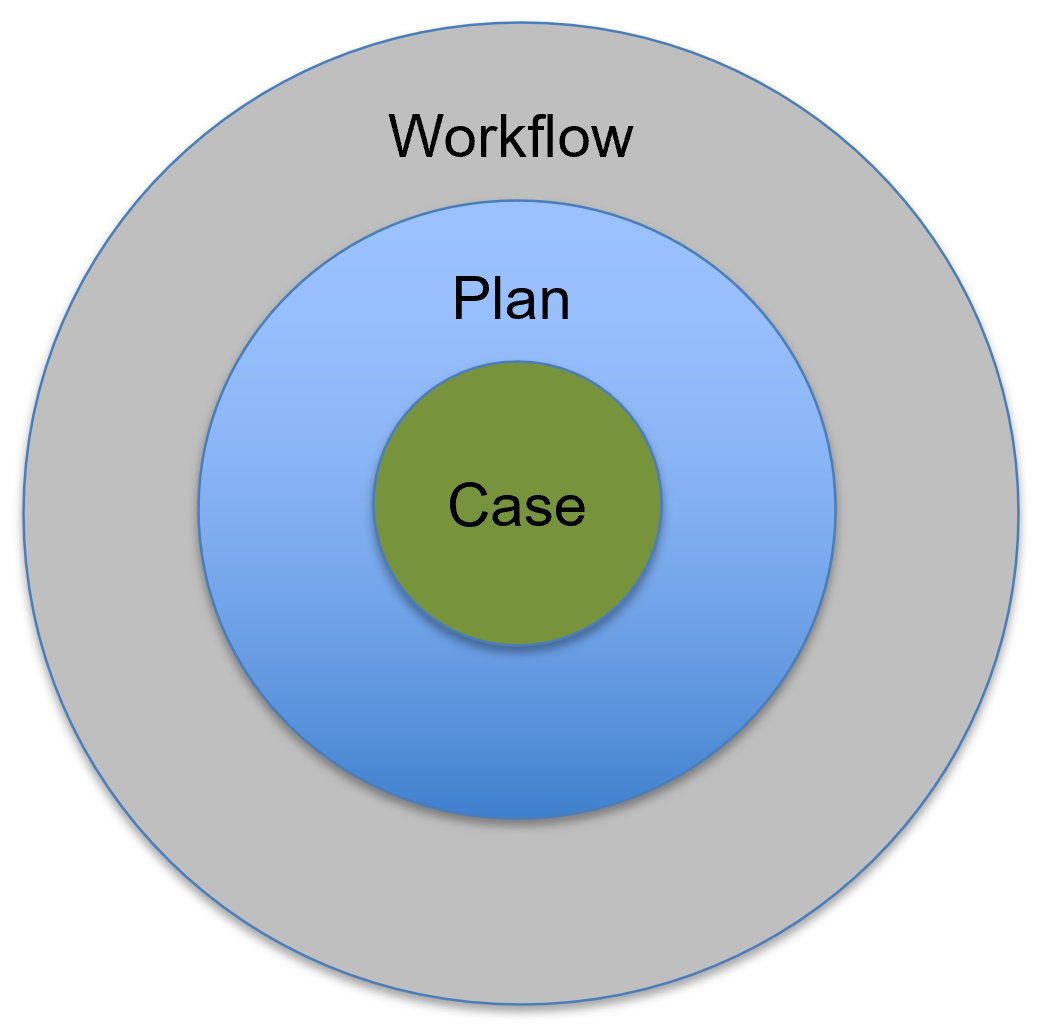
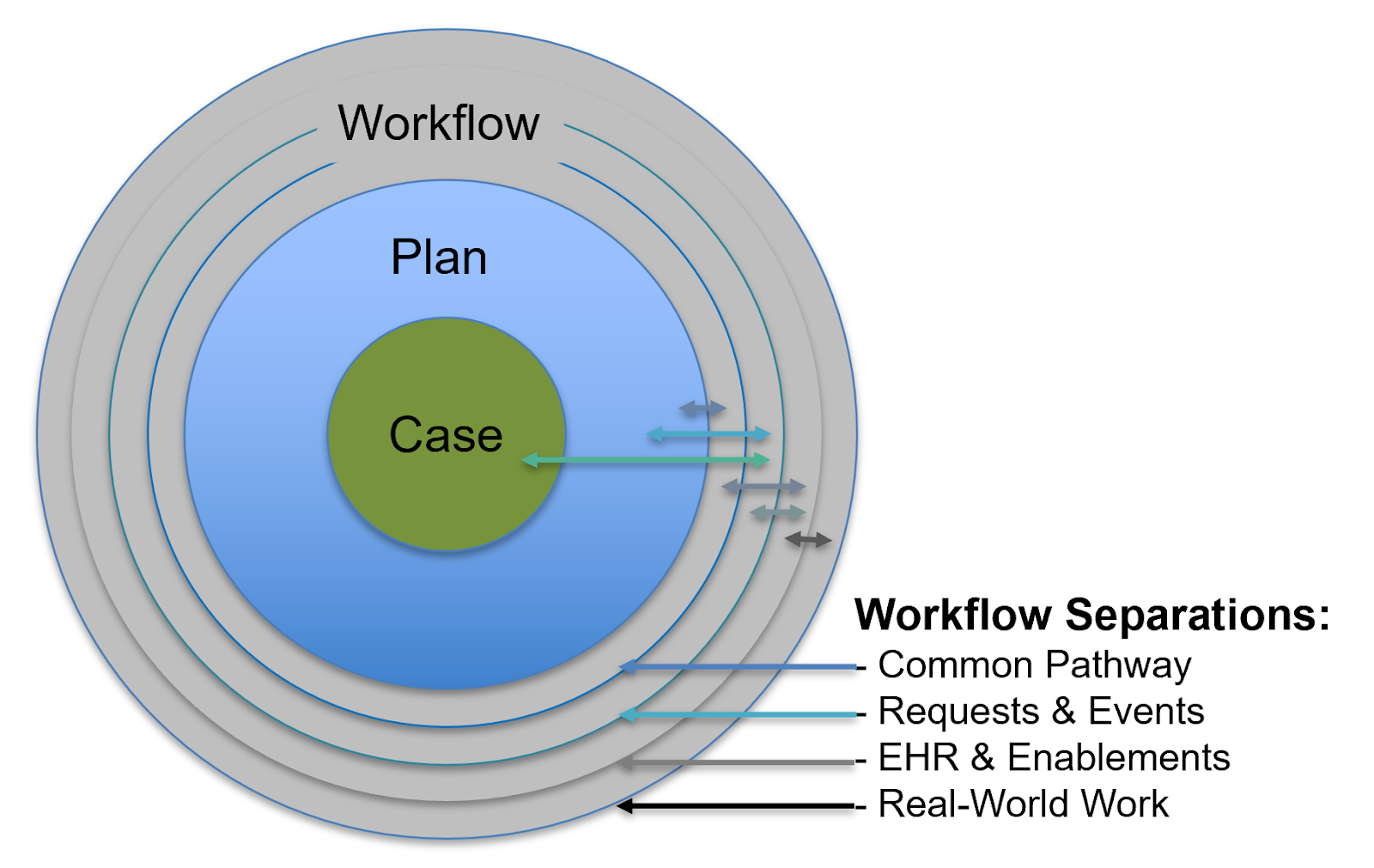
CPG-WorkflowSeparations.png
|
|
Guidelines-iterative-and-incremental-model-2.png
|
|
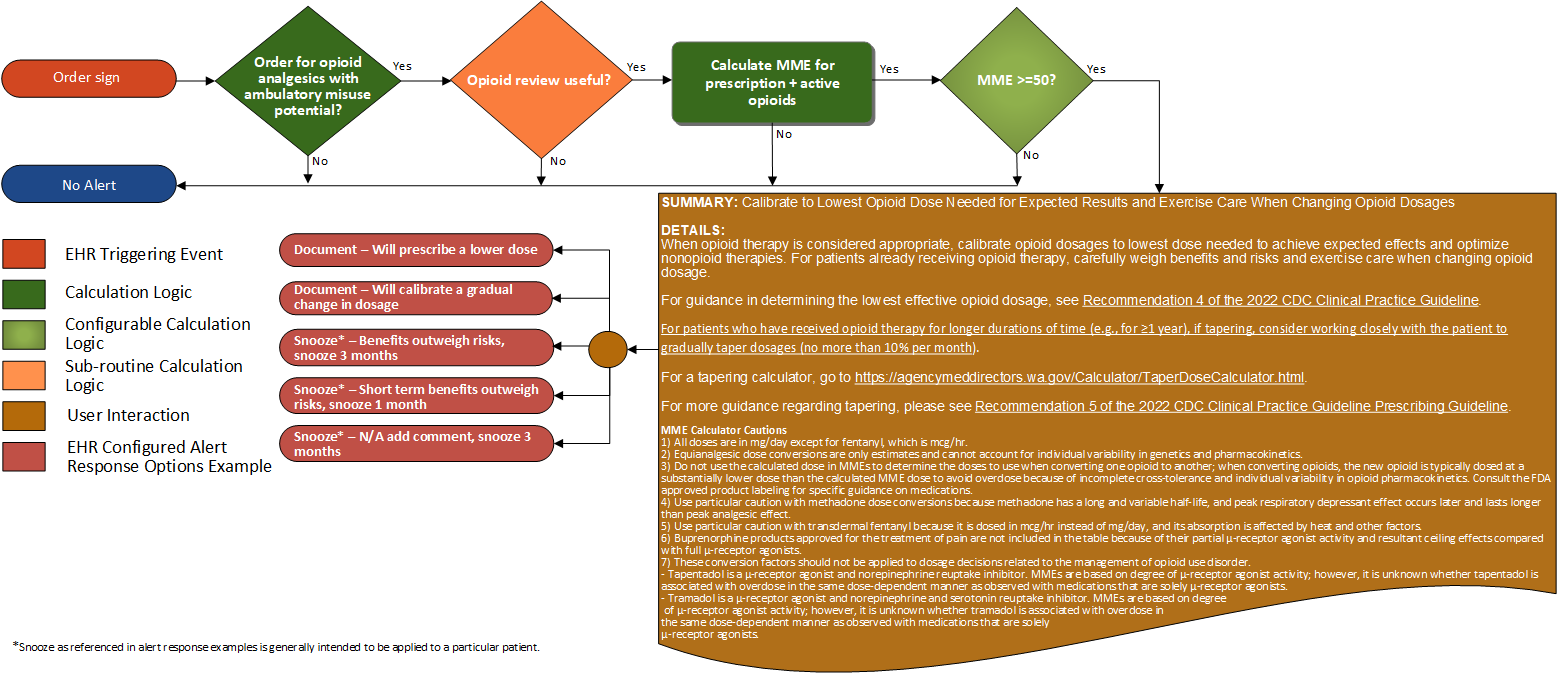
Recommendation04-05-flow.png
|
|
common-pathway.png
|
|
functionality-tiers.png
|
|
hiv-screening-protocol.png
|
|
image1.png
|
|
image10.png
|
|
image11.png
|
|
image12.png
|
|
image13.png
|
|
image14.png
|
|
image15.png
|
|
image16.png
|
|
image17.png
|
|
image18.png
|
|
image19.png
|
|
image2.png
|
|
image20.png
|
|
image21.png
|
|
image22.png
|
|
image23.png
|
|
image24.png
|
|
image25.png
|
|
image26.png
|
|
image27.png
|
|
image28.png
|
|
image29.png
|
|
image3.png
|
|
image30.png
|
|
image31.png
|
|
image32.png
|
|
image33.png
|
|
image34.png
|
|
image35.png
|
|
image36.png
|
|
image37.png
|
|
image4.png
|
|
image5.png
|
|
image6.png
|
|
image7.png
|
|
image8.png
|
|
image9.png
|
|
integration-content-application.png
|
|
integration-content-enrichment.png
|
|
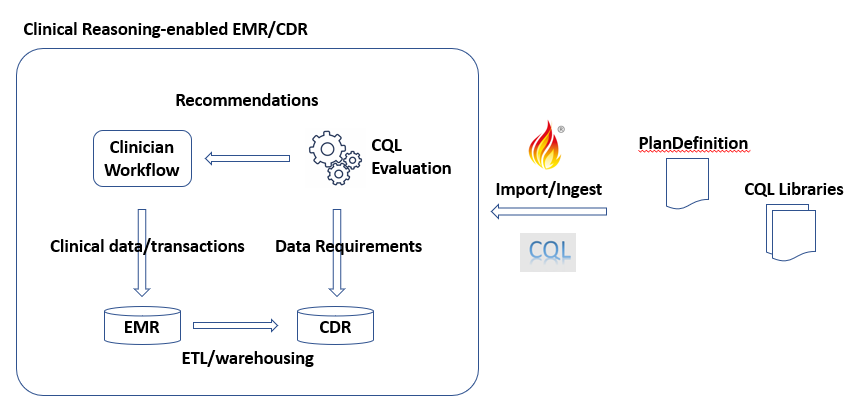
integration-content-ingestion.png
|
|
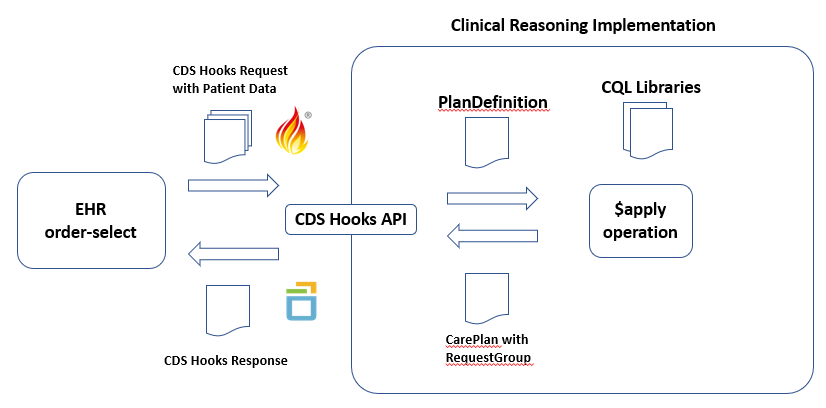
integration-content-service.png
|
|
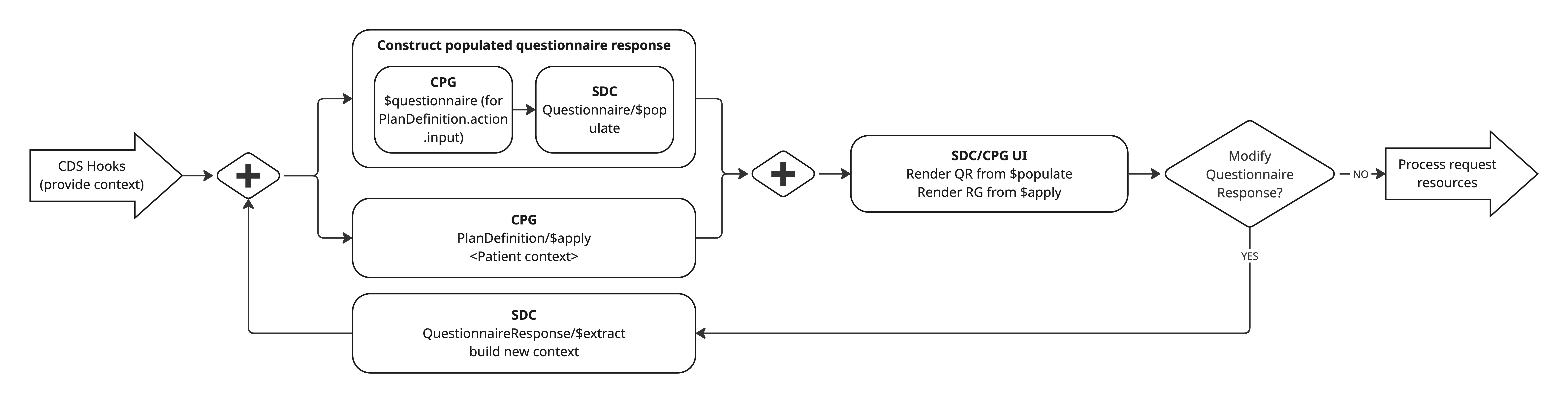
interactive-cds.png
|
|
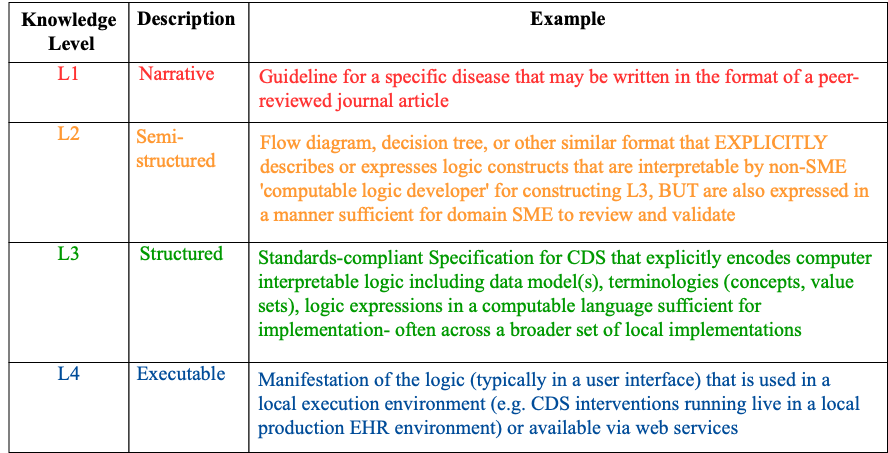
knowledge-levels.png
|
|
methods-of-implementation.png
|
|
process-pattern-exclusiveSplit.png
|
|
process-pattern-parallelSplit.png
|
|
process-pattern-sequenceFlow.png
|
|
process-pattern-timedStart.png
|
|
transformation-process.png
|
|
tree-filter.png
|
|
types-of-igs.png
|
|
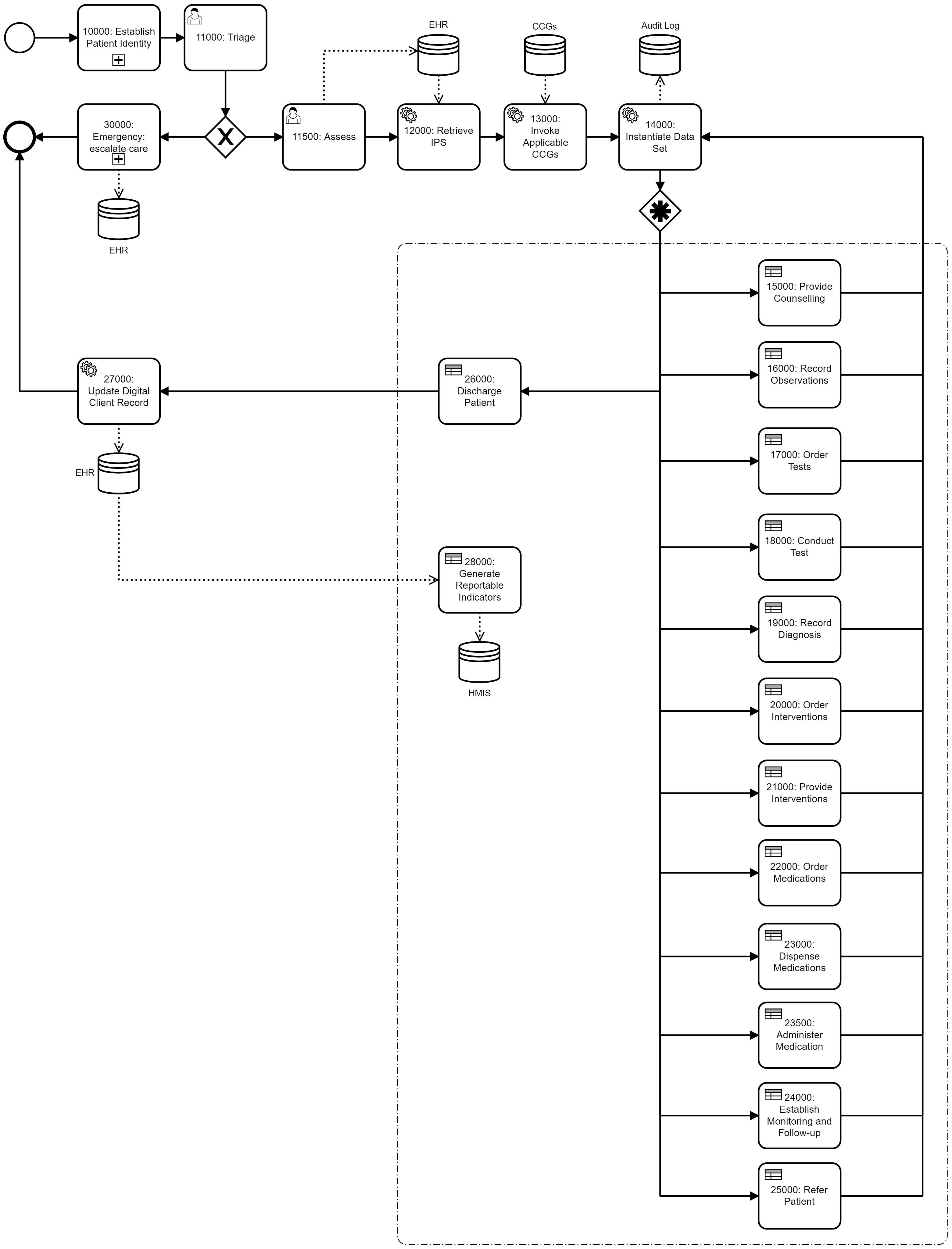
unified-activity-flow.png
|