Guidance for FHIR IG Creation
0.1.0 - CI Build

Guidance for FHIR IG Creation
0.1.0 - CI Build
Guidance for FHIR IG Creation, published by HL7 International - FHIR Management Group. This guide is not an authorized publication; it is the continuous build for version 0.1.0 built by the FHIR (HL7® FHIR® Standard) CI Build. This version is based on the current content of https://github.com/FHIR/ig-guidance/ and changes regularly. See the Directory of published versions
All FHIR IGs are authored in a single primary language that is the master language, and then additional languages are provided through the use of translation infrastructure. The primary language does not have to be in english (even though most existing IGs and the core FHIR specifications use english). Note that the external resources to the IG are also have a single primary language, but may provide translations.
Text in the final IG comes from 6 different sources:
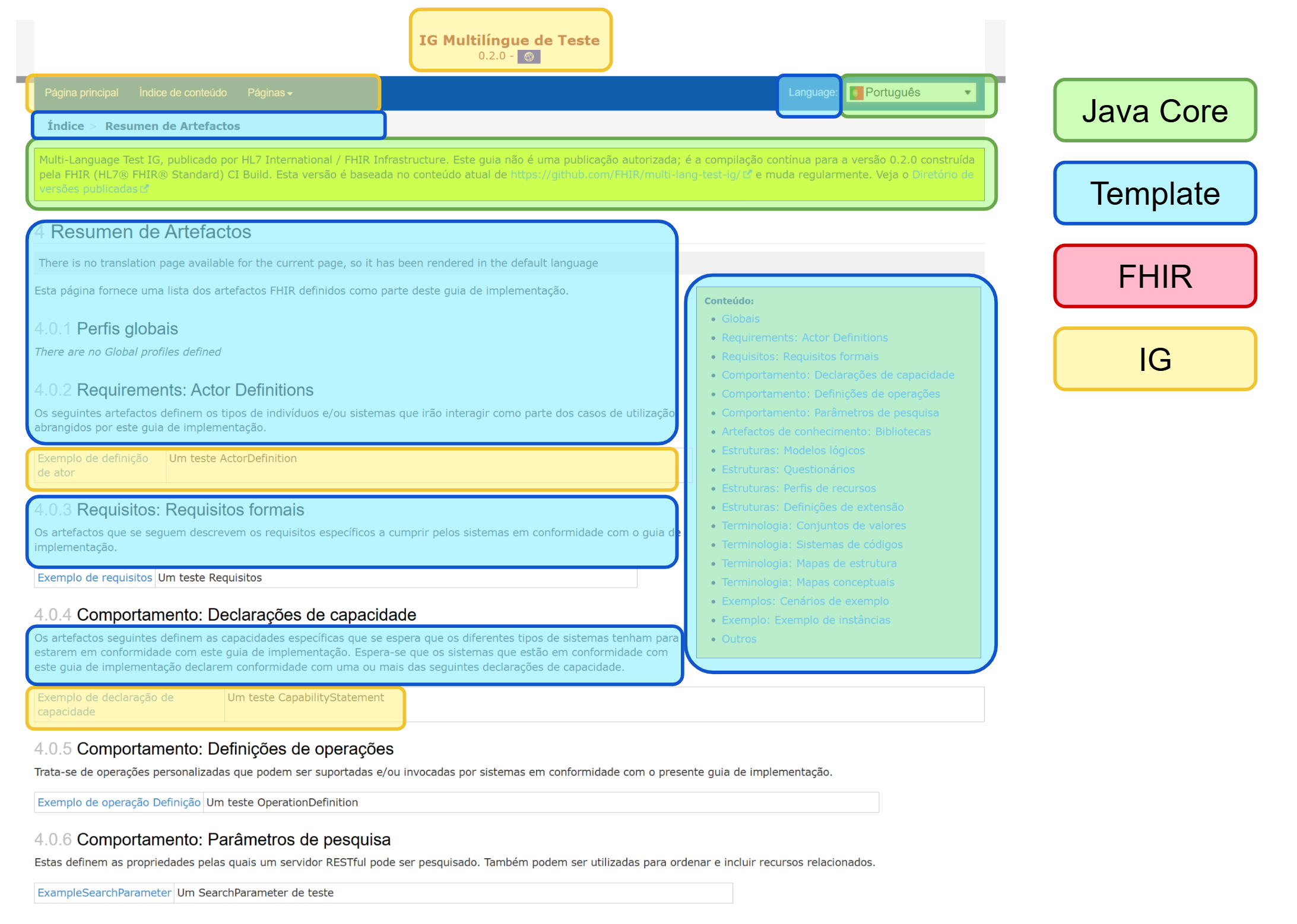
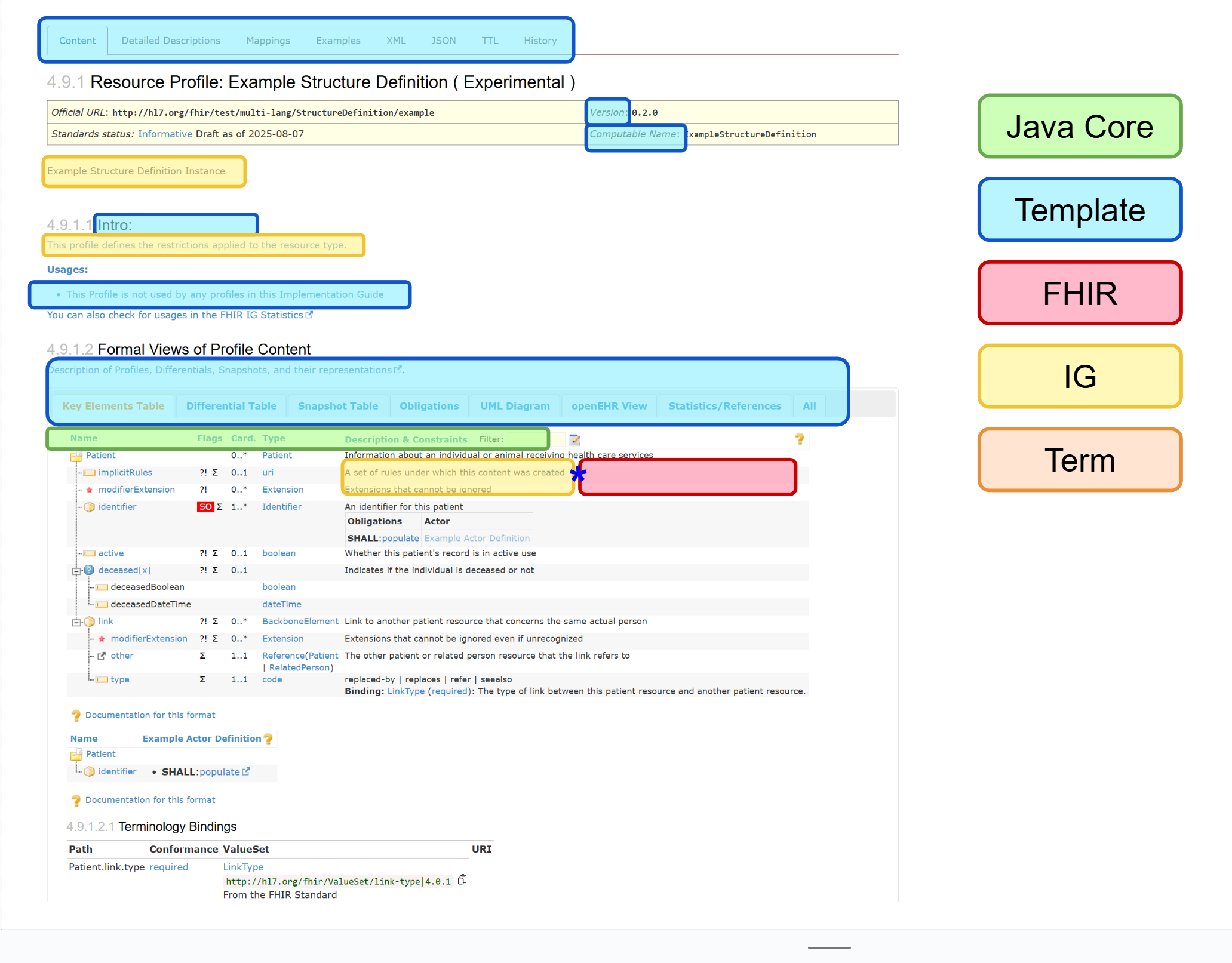
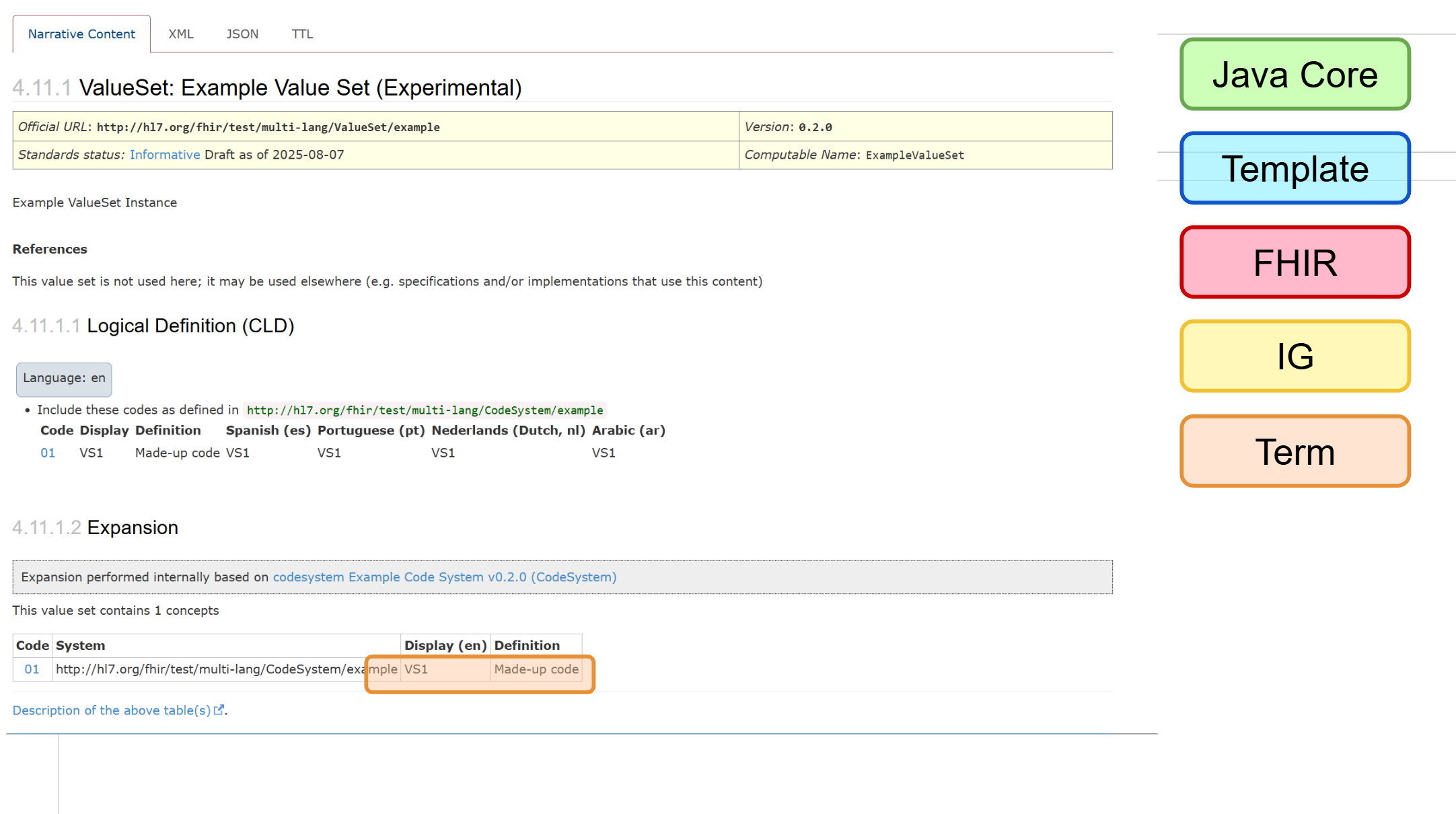
A fully multi-lingual IG must provide translations for all this content.
This list summarizes the expected source materials for each of these sources.
Translations are provided as part of the IG using the IG translation mechanism described below.
Each page that is authored - as md or xml - has a matching file in the translation source folder (see below) that translates the page. See Narrative translation
The core specification and the HL7 terminology are developed and delivered in English. "Language Packs" are developed by communities of interest that represent regions that use particular languages that provide translations of some of the content to other langages to support IGs and implementations that depend on the content.
The IG references the language pack(s) of relevance, and the translations they provide are automatically in scope.
You need to use an reference language pack, or create and reference your own. See below for how to create Language Packs.
The java code uses standard java internationalization techniques internally, but for translator convenience, the master copy of the translations are stored in .po files in GitHub with the FHIR Core code. Contributions are welcome, and this file lists who to contact for existing translations.
See below for some additional documentation.
External terminologies such as SCT and LOINC have some translations, and these are supported by the approved terminology services. If the terminology or one of the servers doesn't support your language for the terminology, contact either the terminology authority, or the terminology service provider (e.g. zulip for tx.fhir.org).
See below for how to specify which SNOMED CT distribution to use.
Translation of the template text happens in the template - see below.
The IG publication tooling supports three formats for providing translations:
.po).xliff).json)In most uses, PO is required, except for translating resources, when any format can be used, but the .po format
is still preferred because - this format has the best support for plural forms, and the overall translation process.
Note, that only the java translations use the plural forms, and the .po format is required in that context.
The .po format is also required in the template translations.